












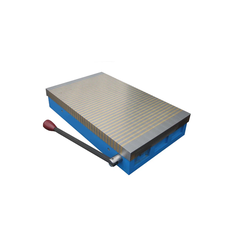


Modern technology depends on magnets which power electric motors and medical imaging systems among many other modern technological applications. All identified magnets in the world possess two distinctive regions which are the north and south poles. Is it possible to create a magnet that operates by using only one single pole? Scientists along with engineers and industries across the board maintained a strong interest in this concept labeled monopolar magnet for multiple decades now.
The potential application of monopolar magnets extends to improving both energy storage systems and industrial motor design and medical device technology. Theoretical discussions about monopolar magnets exist but do experts believe they will serve practical functions in real-life applications? The article outlines the scientific foundation of monopolar magnets as well as the development obstacles and their industrial application potential.

Introduction to Mono-polar Magnets
Definition of Monopolar Magnets
A monopolar magnet is a hypothetical magnet that has only one pole, either north or south, without the existence of the opposite pole. Unlike traditional magnets, which always have both poles, a true monopolar magnet would generate a unique, one-sided magnetic field.
Theoretical Background and Scientific Curiosity
Theoretical physics brought forth the concept of monopolar magnets. Scientific curiosity about magnetic monopoles has persisted for many years because researchers believe their discovery would significantly transform both electromagnetism and quantum mechanical research. Paul Dirac introduced the idea in 1931 and scientists have worked continuously since then to detect monopolar magnets.
Common Misconceptions About Monopolar Magnets
There are many misleading claims about monopolar magnets. Some companies market magnetic discs or blocks as "monopolar magnets," but in reality, these products are carefully engineered dipolar magnets that mimic some monopolar-like behaviors.
The Science Behind Monopolar Magnets
Understanding the Fundamental Nature of Magnetic Fields
Magnets create invisible forces known as magnetic fields, which flow from north to south externally and return internally. This is why even if you break a magnet in half, each piece still retains two poles.
Why Traditional Physics Rejects Monopolar Magnets
According to Maxwell's equations, magnetic fields always form closed loops, meaning an isolated magnetic pole cannot exist. This principle is fundamental to electromagnetic theory and has been consistently observed in nature.
Magnetic Monopoles in Theoretical Physics (Dirac's Theory)
Paul Dirac proposed that if magnetic monopoles existed, they could explain why electric charge is quantized (exists in discrete values). While fascinating, no experiment has ever confirmed their existence.
Are Monopolar Magnets Real?
Scientific Experiments and Findings
Researchers have conducted high-energy physics experiments searching for evidence of monopolar particles, particularly in:
1. Particle accelerators like the Large Hadron Collider (LHC).
2. Cosmic ray studies.
3. Superconducting materials.
Although some anomalous results hint at monopole-like effects, no definitive proof has been found.
Current Research and Developments in the Field
Scientists continue to investigate synthetic structures that might simulate monopolar behavior. Some researchers have created quasi-monopoles in condensed matter systems, but these are not true monopolar magnets.

Challenges in Isolating Monopoles
1. No known natural material exhibits true monopolar behavior.
2. Extreme conditions (high energy, quantum-scale interactions) may be required.
3. If found, harnessing their power for industrial use is another challenge.
How Do Monopolar Magnets Work?
Theoretical Working Mechanism
If a monopolar magnet existed, its field would radiate outward from a single pole, rather than forming a closed loop. This could result in:
1. Stronger, more directed magnetic fields.
2. More efficient energy applications.
Differences Between Monopolar and Bipolar Magnets
1. Bipolar magnets have balanced north and south poles, while monopolar magnets would emit force from one pole only.
2. Conventional motors, generators, and industrial equipment rely on dipolar fields, adjusting for monopolar magnets would require an entirely new engineering approach.
Possible Industrial Implications
If monopolar magnets exist, they could:
1. Revolutionize motor designs by eliminating the need for alternating poles.
2. Improve electromagnetic energy transmission.
3. Offer new ways to store magnetic energy.
Monopolar vs. Bipolar Magnet Differences
|
Feature |
Bipolar Magnets |
Hypothetical Monopolar Magnets |
|
Magnetic Poles |
Two (North & South) |
One (Only North or Only South) |
|
Field Behavior |
Forms closed loops |
Radiates outward from a single pole |
|
Practical Use |
Used in motors, electronics, and MRI machines |
Theoretical & unproven |
|
Scientific Evidence |
Confirmed & well-studied |
Theoretical & unverified |
Monopolar magnets remain unproven, all current industrial applications still rely on bipolar magnets.

Monopolar Magnet Applications in Industrial Motors
Potential Benefits in Motor Efficiency
If monopolar magnets were possible, they could:
1. Reduce energy loss in electric motors.
2. Simplify motor designs.
3. Increase efficiency in high-performance applications.
Hypothetical Uses in Electric Vehicle Motors
Electric vehicles (EVs) rely on strong magnetic fields to generate motion. Monopolar magnets could improve efficiency and reduce heat losses.
Currently, there is no evidence monopolar magnets can be implemented. Most industries continue to focus on optimizing bipolar magnet performance.
High-Gauss Monopolar Magnets for Medical Devices
Potential Use in MRI and Imaging Technology
MRI machines use strong magnetic fields for imaging. A monopolar magnet could create more focused fields, improving scan resolution.
Therapeutic Applications
Magnetic therapy devices could potentially benefit from monopolar behavior.
Research Progress in Medical Fields
Currently, no medical devices use monopolar magnets, as they are still theoretical.
Corrosion-Resistant Monopolar Magnets
Since monopolar magnets do not yet exist, corrosion resistance remains hypothetical. However, industries require magnets that withstand harsh conditions for use in:
1. Aerospace.
2. Marine environments.
3. Renewable energy applications.
Buy Monopolar Magnets Wholesale: Commercial Feasibility
Challenges in Sourcing Monopolar Magnets
1. Lack of scientific confirmation.
2. Misleading marketing tactics.
NdFeB Monopolar Magnet Suppliers: Reality or Myth?
Some suppliers claim to sell monopolar NdFeB magnets, but these are misrepresentations of normal neodymium magnets.
Innovations in Rare Earth Magnet Production
China maintains its position as the global leader in producing and supplying rare earth magnet types including NdFeB, SmCo, and ferrite magnets. China has made significant advancements in rare earth magnet production, including:
1. Improved sintering techniques for stronger neodymium magnets.
2. High-temperature-resistant coatings for industrial applications.
3. Eco-friendly magnet production to reduce the environmental impact of rare earth mining.
Can Monopolar Magnets Be Customized?
Some suppliers advertise "monopolar" magnets, but these are misleading claims. In reality, these products are designed to manipulate magnetic fields in a way that mimics a monopolar effect but does not break the fundamental rules of magnetism.
For example:
1. Single-sided magnetic sheets appear to have only one active side due to careful engineering.
2. Halbach arrays concentrate the magnetic field on one side, reducing the field on the opposite side.
If you encounter a supplier claiming to customize monopolar magnets, request scientific documentation before making any purchase.

Precast Concrete Monopolar Magnetic Systems
Use of Magnetism in Construction and Engineering
Magnets are widely used in construction for applications such as:
1. Precast concrete forming.
2. Reinforcement alignment.
3. Shuttering systems for mold-making.
In precast concrete manufacturing, magnetic formwork systems allow for quick and precise positioning of molds, reducing labor time and improving accuracy.
Alternatives to Traditional Magnetic Systems
Since true monopolar magnets do not exist, construction companies use engineered magnetic systems such as:
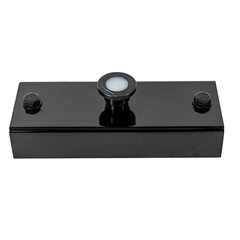
1. Neodymium-based magnetic shutters for securing formwork.
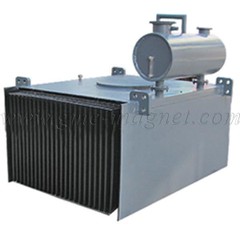
2. Electromagnetic lifting solutions for handling steel structures.
3. Permanent magnet assemblies with customized field distribution.
These solutions enhance efficiency and durability, even though they rely on conventional dipolar magnets.
Efficiency in Large-Scale Construction Projects
Using strong magnetic formwork systems improves:
1. Precision: No need for manual positioning adjustments.
2. Speed: Faster assembly and disassembly of concrete molds.
3. Cost-effectiveness: Reduces waste and enhances material reuse.
Although monopolar magnets are not yet a reality, current magnetic innovations continue to revolutionize the construction industry.
Durability Testing for Monopolar Magnets
How Durability is Measured in Magnetic Materials
Since monopolar magnets do not exist, testing procedures focus on standard industrial magnets, such as neodymium (NdFeB) and ferrite magnets. Durability testing measures:
1. Magnetic field retention over time.
2. Resistance to demagnetization under extreme temperatures.
3. Corrosion resistance in humid and chemically aggressive environments.
Testing Procedures and Industry Standards
Industrial magnets undergo several tests to ensure long-term performance:
1. Magnetic Strength Testing: Measures the Gauss rating to determine field intensity.
2. High-Temperature Stability Testing: Exposes magnets to extreme heat to check their ability to retain magnetization.
3. Corrosion Resistance Testing: Salt spray tests (ASTM B117) assess oxidation resistance.
4. Mechanical Durability Testing: Measures impact resistance and structural integrity under stress.
These procedures ensure that magnets used in automotive, aerospace, and medical applications meet strict performance standards.
Future Advancements in Magnet Longevity
Research is focusing on new protective coatings and alloy compositions that:
1. Increase thermal stability.
2. Reduce corrosion vulnerability.
3. Improve energy efficiency in applications like EV motors and wind turbines.
While true monopolar magnets remain hypothetical, advances in permanent magnet durability continue to push industrial innovation forward.
Conclusion: The Future of Monopolar Magnets
Monopolar magnets exist only as theoretical concepts without any practical application in the present day. The extensive research conducted throughout the decades has failed to show evidence of magnetic monopoles and their possible industrial applications. The laws of magnetism explain through Maxwell's equations and classical physics that natural or manufactured monopolar magnets are both impossible with existing technological capabilities.
The search for magnetic monopoles promotes innovative advancements throughout quantum physics through condensed matter research and advanced material sciences. Scientific observation of quasi-monopolar effects in specialized environments has not led to the development of usable industrial-grade monopolar magnets.
Businesses looking to invest in advanced magnetic technology should focus on tested and available commercial magnets including neodymium (NdFeB), ferrite, and samarium-cobalt magnets. The materials persistently provide power for electric vehicles alongside renewable energy systems medical imaging equipment and industrial automation devices which depend on magnetic efficiency for operational success.