











Neodymium Magnets Manufacturer
GME supplies sintered neodymium magnets for motors, sensors, automation equipment, magnetic holding systems, and OEM products. You can specify the magnet grade, shape, dimensions, coating, tolerance, and magnetization direction according to your application.
Send us your drawing, sample, or technical requirements, and our team will help you confirm a practical magnet specification for sampling and volume production.
Grades: N35–N52 and high-temperature grades
Shapes: Disc, block, ring, cylinder, arc and custom shapes
Coatings: Nickel, zinc, epoxy and other options
Customization: Dimensions, tolerances, magnetization and packaging
-
![Custom Circle Magnets]() Custom Circle MagnetsRound Magnet, Permanent Magnet, Disc Magnet, Strong Circle Magnet, Neodymium Disc Magnet, Rare Earth Magnet,Custom Round Magnets, Custom Circle Magnetsread more
Custom Circle MagnetsRound Magnet, Permanent Magnet, Disc Magnet, Strong Circle Magnet, Neodymium Disc Magnet, Rare Earth Magnet,Custom Round Magnets, Custom Circle Magnetsread more -
![N35-N52 Permanent Strong Neodymium Round Magnets]() N35-N52 Permanent Strong Neodymium Round MagnetsAmong those famous round magnets manufacturers, it is a professional supplier in China, welcome to wholesale small round magnets, neodymium disc magnets, magnet disc, strong round magnets from ourread more
N35-N52 Permanent Strong Neodymium Round MagnetsAmong those famous round magnets manufacturers, it is a professional supplier in China, welcome to wholesale small round magnets, neodymium disc magnets, magnet disc, strong round magnets from ourread more -
![Single Pole Magnet]() Single Pole Magnetmagnet with single pole is a functional material that is magnetic on one side and non-magnetic on the other side. It is made of a composite magnetic layer and a backing adhesive substrate. It hasread more
Single Pole Magnetmagnet with single pole is a functional material that is magnetic on one side and non-magnetic on the other side. It is made of a composite magnetic layer and a backing adhesive substrate. It hasread more -
![Neodymium Magnet Pushpin]() Neodymium Magnet PushpinMagnetic Push Pin can be applied to any Magnetic, Metallic surface such as a Magnetic Whiteboard, Refrigerator, Magnetic Board, Magnetic Map, Magnetic Calendar, Cabinets and Lockers.Designed to makeread more
Neodymium Magnet PushpinMagnetic Push Pin can be applied to any Magnetic, Metallic surface such as a Magnetic Whiteboard, Refrigerator, Magnetic Board, Magnetic Map, Magnetic Calendar, Cabinets and Lockers.Designed to makeread more -
![Special Shaped Neodymium Magnet Rare Earth Customized Step Magnet]() Special Shaped Neodymium Magnet Rare Earth Customized Ste...Step Magnet is a custom magnet, Neodymium magnets can be made in different shapes/different sizes. NdFeB magnets refer to their size and magnetic force designed and customized according to customerread more
Special Shaped Neodymium Magnet Rare Earth Customized Ste...Step Magnet is a custom magnet, Neodymium magnets can be made in different shapes/different sizes. NdFeB magnets refer to their size and magnetic force designed and customized according to customerread more -
![Mitre Neodymium Magnets Customize Ndfeb Magnets Factory]() Mitre Neodymium Magnets Customize Ndfeb Magnets FactoryNeodymium magnets are the most powerful of all permanent magnets. They are often called Super Magnets. GME can customize magnets of various shapes, Circle Magnet, Neodymium Disc Magnet, Rare Earthread more
Mitre Neodymium Magnets Customize Ndfeb Magnets FactoryNeodymium magnets are the most powerful of all permanent magnets. They are often called Super Magnets. GME can customize magnets of various shapes, Circle Magnet, Neodymium Disc Magnet, Rare Earthread more -
![Neodymium Round Base Cup Magnet Strong Rare Earth Magnets]() Neodymium Round Base Cup Magnet Strong Rare Earth Magnets1. Neodymium Round Base Cup Magnet Strong Rare Earth Magnets Describetion: Material: Stainless Steel +magnet base Magnet material: NdFeB, SmCo, Ferrite, AlNiCo The pot magnets are made of strong rareread more
Neodymium Round Base Cup Magnet Strong Rare Earth Magnets1. Neodymium Round Base Cup Magnet Strong Rare Earth Magnets Describetion: Material: Stainless Steel +magnet base Magnet material: NdFeB, SmCo, Ferrite, AlNiCo The pot magnets are made of strong rareread more -
![Customized Neodymium NdFeB Strong Magnet Rare Earth Magnet]() Customized Neodymium NdFeB Strong Magnet Rare Earth MagnetNeodymium magnets offer the strongest magnetic power today. They are particularly suitable for high-volume production in a wide variety of shapes and sizes. Precise dimensional control is achieved inread more
Customized Neodymium NdFeB Strong Magnet Rare Earth MagnetNeodymium magnets offer the strongest magnetic power today. They are particularly suitable for high-volume production in a wide variety of shapes and sizes. Precise dimensional control is achieved inread more -
![China Magnet Supplier Customized Shape Rare Earth Magnets]() China Magnet Supplier Customized Shape Rare Earth MagnetsCustomized Shape Rare Earth Magnets, China Magnet, Magnet Supplier, Neodymium Ring Magnet.Incredibly strong neodymium magnets at affordable prices. Large variety of stock rare earth magnets available.read more
China Magnet Supplier Customized Shape Rare Earth MagnetsCustomized Shape Rare Earth Magnets, China Magnet, Magnet Supplier, Neodymium Ring Magnet.Incredibly strong neodymium magnets at affordable prices. Large variety of stock rare earth magnets available.read more -
![Rare Earth Ring Magnets]() Rare Earth Ring MagnetsMagnet Ring, Neodymium Ring Magnets, Small Round Magnets, Neodymium Disc Magnets, Round Magnet with Hole, Custom Magnets. Rare earth magnets are the strongest type of permanent magnet currently made.read more
Rare Earth Ring MagnetsMagnet Ring, Neodymium Ring Magnets, Small Round Magnets, Neodymium Disc Magnets, Round Magnet with Hole, Custom Magnets. Rare earth magnets are the strongest type of permanent magnet currently made.read more -
![Neo Magnet Ball Cube Neodymium Sphere Magnetic Balls]() Neo Magnet Ball Cube Neodymium Sphere Magnetic BallsMade from rare earth, neodymium magnets, Speks magnetic balls are possibly the most popular desk toy ever made. Speks are like magnetic putty, a stress ball and adult building blocks all in one. Mashread more
Neo Magnet Ball Cube Neodymium Sphere Magnetic BallsMade from rare earth, neodymium magnets, Speks magnetic balls are possibly the most popular desk toy ever made. Speks are like magnetic putty, a stress ball and adult building blocks all in one. Mashread more -
![High Quality Neodymium Magnet Ball Cube]() High Quality Neodymium Magnet Ball CubeMagnetic balls are a very popular toy in recent years. They are made of magnetic stainless steel iron beads. Because of the mutual attraction of magnetic fields, magnetic balls can be formed intoread more
High Quality Neodymium Magnet Ball CubeMagnetic balls are a very popular toy in recent years. They are made of magnetic stainless steel iron beads. Because of the mutual attraction of magnetic fields, magnetic balls can be formed intoread more


Neodymium Magnet Products We Supply

Neodymium Disc Magnets

Neodymium Block Magnets

Neodymium Ring Magnets

Neodymium Cylinder Magnets

Neodymium Arc Magnets

Countersunk Neodymium Magnets

Neodymium Bar Magnets

Neodymium Sphere Magnets
Neodymium Magnet Grades
N35, N42 and N52 are among the most commonly requested neodymium magnet grades. The grade number relates to the magnetic energy of the material, but it does not directly tell you the finished magnets' pull force.
|
Grade range |
Main characteristic |
Typical selection |
|
N35–N40 |
Balanced performance and cost |
General industrial and holding applications |
|
N42–N48 |
Higher magnetic output in a compact size |
Sensors, motors and space-limited products |
|
N50–N52 |
High magnetic strength for the same volume |
Applications requiring maximum compactness |
|
High-temperature grades |
Improved resistance to thermal demagnetization |
Motors and heat-generating equipment |
N52 is not always the best choice. If N42 already provides sufficient magnetic performance, using N52 may increase cost without creating a meaningful benefit. For high-temperature applications, temperature resistance may be more important than selecting the highest grade.
Neodymium Magnet Coating Options
Sintered neodymium magnets contain iron and may corrode when exposed to humidity, salt, or certain chemicals. Selecting the right coating helps protect the magnet during storage, assembly, and operation.
|
Coating |
Main characteristics |
Typical applications |
|
Nickel-Copper-Nickel |
Smooth surface and good wear resistance |
General indoor products and industrial assemblies |
|
Zinc |
Economical with relatively thin coverage |
General industrial and bonding applications |
|
Epoxy |
Improved resistance to moisture and salt exposure |
Motors, outdoor products, and humid environments |
|
Nickel + Epoxy |
Plated base with additional protective coverage |
More demanding industrial environments |
|
Phosphate |
Thin treatment suitable for bonding |
Magnets installed inside protected assemblies |
|
Parylene |
Thin and uniform barrier coating |
Sensors, electronics, and precision components |
|
Gold or Silver |
Conductive and specialized surface properties |
Electronics and special-purpose applications |
Your coating should be selected based on actual humidity, corrosion risk, friction, chemical exposure, and assembly method. If the magnet will be bonded, press-fitted, or overmolded, please tell us during the specification review.
Neodymium Magnet Process
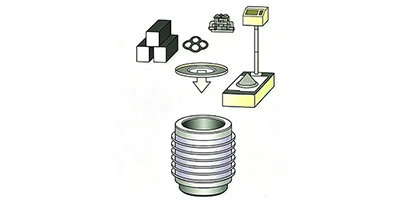
Check the appearance, do the ICP test
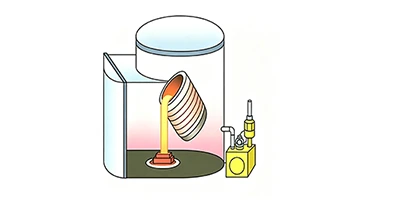
Check the ingredients, thickness, appearance, color, and metallographic structure of the strip cast.

Test the hydrogen and oxygen contents

Test powder granularity and distribution

Check the magnet appearance and size after pressing

Check the magnet appearance and density

Final inspection before shipment
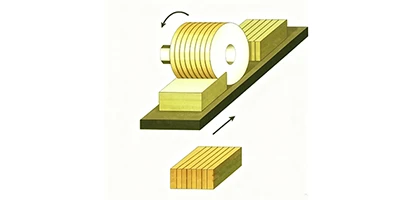
Check packing: the final product placement, packing status
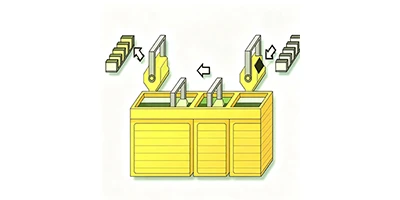
Check the appearance, size, and performance

Measure coating thickness, check adhesion and corrosion resistance

Check the magnet appearance and size after machining

Check the magnet size, performance, curves, oxygen content, metallography, etc after sintering

Neodymium Magnetization Directions
Magnetization direction determines where the north and south poles appear and how the magnet works inside your product. A magnet with the correct dimensions but the wrong magnetization direction may not function in the assembly.
Axial Magnetization
The poles are located on the two flat faces of the magnet. This is the most common direction for discs, rings, and blocks used for direct holding.
Diametrical Magnetization
The poles are positioned on opposite curved sides of a cylinder or ring. Diametrical magnetization is often used in rotary sensors, encoders, and switches.
Radial Magnetization
The magnetic field runs between the inner and outer surfaces of a ring or arc magnet. This arrangement is used in certain motors, rotors, and magnetic couplings.
Multipole Magnetization
Several alternating north and south poles are created around a ring or on a magnet surface. The pole count, pole pitch, and alignment must match the motor or sensor design.
Neodymium Magnets vs Other Permanent Magnets
The table below compares neodymium magnets with other common permanent magnet materials to help you quickly evaluate their magnetic strength, temperature resistance, corrosion resistance, cost, and typical applications.
| Comparison |
Neodymium Magnets |
SmCo Magnets |
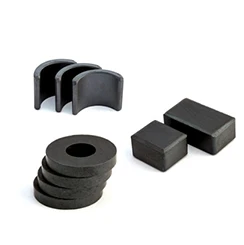 Ferrite Magnets |
AlnicoMagnets |
|---|---|---|---|---|
| Magnetic Strength | Very High | High | Low to Medium | Medium |
| Temperature Resistance | Medium to High, depending on grade | Excellent | Good | Excellent |
| Corrosion Resistance | Usually requires protective coating | Excellent | Excellent | Good |
| Cost Level | Medium to High | High | Low | Medium to High |
| Size Efficiency | Excellent for compact designs | Very Good | Lower | Moderate |
| Typical Applications | Motors, sensors, encoders, automation, magnetic couplings | Aerospace, high-temperature motors, sensors, precision equipment | Speakers, appliances, separators, cost-sensitive products | Instruments, meters, sensors, high-temperature applications |
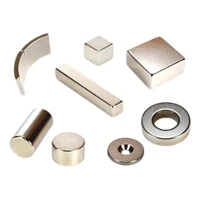


Quality Control System Testing Machines

Magnetic Tester

Laser Granularity Analyzer

Scanning Electron Microscope

3D Flash Measuring Instrument

EF5 Electronic Fluxmeter

Oxygen Analyzer

Hast Tester

Inductively Coupled Plasms
Trusted by Leading Industrial Brands
GME provides NdFeB magnets and magnetic solutions to customers across sectors such as electric motors, power systems, home appliances, industrial automation, and aerospace equipment. Our partners include renowned brands such as WEG, China Wanxiang, Dyson, and Lexy. By exercising strict control over magnet grades, dimensions, coatings, magnetization directions, and batch consistency, we help our customers ensure reliable magnet performance throughout the entire process—from prototype testing to mass production.


NdFeB Magnet Production Equipment

Strip Casting Furnace

Hydrogen Decarburization Furnace

400 Jet Milling

Slicing Machines

Automatic Pressing Machine

Isostatic Pressing Machine

Vacuum Sintering Furnace

Chamfering Machine
How to Separate and Reassemble Magnets
To separate neodymium magnets safely, slide one magnet sideways off the stack instead of pulling it straight up. Keep your fingers away from the contact surfaces and do not allow the magnets to snap together. When reassembling them, check the pole direction, align the magnets carefully, and slide them slowly back into place. This helps prevent pinched fingers, chipped coatings, cracked magnets, and incorrect pole positioning.


Applications of Neodymium Magnets
Neodymium magnets are used in many industrial and commercial products where strong magnetic performance and compact size are required.
Electric Motors and Generators
Arc, block and ring magnets are used in permanent-magnet motors, generators and rotors. Grade, temperature resistance and magnetization direction are important selection factors.
Household Appliances
NdFeB magnets are used in appliance motors, pumps, switches, closures and other internal components.
Industrial Automation
Neodymium magnets are used in positioning systems, fixtures, robotic equipment, and automated production devices.
Limitations of Neodymium Magnets
Understanding the limitations of NdFeB helps you avoid premature corrosion, cracking, and magnetic performance loss.
Temperature Sensitivity
Magnetic output decreases as temperature rises. Excessive heat may cause irreversible demagnetization, especially when the selected grade does not match the operating temperature.
Corrosion Risk
Unprotected NdFeB can corrode in humid, salty, or chemically aggressive environments. A suitable coating or sealed assembly is usually required.
Brittle Material
Neodymium magnets are hard but brittle. They may chip or crack if dropped, struck, over-tightened, or allowed to snap together.
Difficult to Machine After Magnetization
Finished neodymium magnets should not normally be drilled, cut, or ground. Special holes and profiles should be produced before coating and magnetization.
Strong Attraction Force
Large magnets can cause pinch injuries and may interfere with electronic devices, sensors, and medical implants. Suitable handling and packaging procedures are necessary.
FAQ
Q: What neodymium magnet grades do you supply?
A: We supply standard grades from N35 to N52, as well as M, H, SH, UH, EH, and AH grades for applications requiring higher resistance to demagnetization and elevated operating temperatures.
Q: Is N52 always the best neodymium magnet grade?
A: No. N52 provides a high maximum energy product, but it is not always the most suitable or economical option. The correct grade also depends on operating temperature, magnet dimensions, air gap, magnetic-circuit design, and required resistance to demagnetization.
Q: Which coating should I choose for neodymium magnets?
A: Ni-Cu-Ni is commonly used for general indoor applications. Zinc is a cost-effective option for less demanding environments, while epoxy and other protective coatings may be more suitable for humid or corrosive conditions. The final choice should be based on the working environment and assembly method.
Q: What magnetization directions are available?
A: Available options include axial, diametrical, radial, segmental and multipole magnetization. The correct direction depends on the magnet shape, installation structure and required magnetic-field distribution.
Q: What applications are neodymium magnets suitable for?
A: Neodymium magnets are commonly used in electric motors, generators, sensors, encoders, household appliances, industrial automation, automotive systems, speakers, magnetic couplings and custom magnetic assemblies.
Great Magtech (Xiamen) Electric Co., Ltd is one of the most experienced neodymium magnets manufacturers and suppliers in China. Welcome to wholesale neodymium magnets from our factory.
Neodymium Ring, Magnet Rings, Neodym Magnet , Neodymium Magnet , NdFeB Magnet , Strong Magnet , Industrial Magnets , Neodym Magnet , Strongest Magnet , Permanent Magnet