



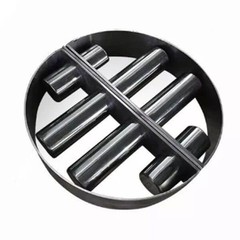
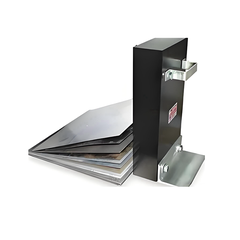


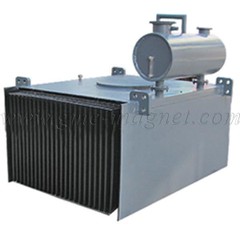

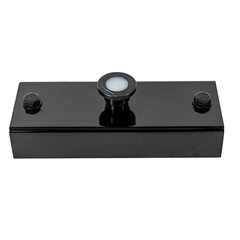






Magnetic Trap, also named as Magnetic Liquid Filters, is a magnetic separator designed to separate the ferrous contaminants from liquid, semi-liquid materials and air conveying powder materials with different viscosity in order to purify these materials in the production process and equipment. Strong bar separators inside the liquid trap housing filtrates the flow and picks out the unwanted ferrous metal.
-
![Magnetic Filter Liquid Trap Magnet]() Magnetic Filter Liquid Trap MagnetMagnetic Liquid Traps or Magnetic Liquid Filters are designed for liquid or semi-liquid flow systems to remove ferrous contamination from liquid with different viscosity level.read more
Magnetic Filter Liquid Trap MagnetMagnetic Liquid Traps or Magnetic Liquid Filters are designed for liquid or semi-liquid flow systems to remove ferrous contamination from liquid with different viscosity level.read more -
![Liquid Line Magnets]() Liquid Line MagnetsMagnetic Separator for Liquid/Slurry are engineered to remove ferrous contaminants from liquid and slurry lines.read more
Liquid Line MagnetsMagnetic Separator for Liquid/Slurry are engineered to remove ferrous contaminants from liquid and slurry lines.read more -
![Sanitary & Industrial Liquid Trap Magnets]() Sanitary & Industrial Liquid Trap MagnetsMagnetic Separator for Liquid/Slurry are engineered to remove ferrous contaminants from liquid and slurry lines.read more
Sanitary & Industrial Liquid Trap MagnetsMagnetic Separator for Liquid/Slurry are engineered to remove ferrous contaminants from liquid and slurry lines.read more -
![Magnetic Liquid Trap]() Magnetic Liquid TrapDescription of the Magnetic liquid trap: Magnetic Liquid Traps, or magnetic filters, also called magnetic fluid iron separator or magnetic fluid filter, is used in fluid, semi fluid and other viscousread more
Magnetic Liquid TrapDescription of the Magnetic liquid trap: Magnetic Liquid Traps, or magnetic filters, also called magnetic fluid iron separator or magnetic fluid filter, is used in fluid, semi fluid and other viscousread more -
![Liquid Trap Magnets For Recycling Industries]() Liquid Trap Magnets For Recycling IndustriesMagnetic Separators for Liquid/Slurry is engineered to remove ferrous contaminants from liquid and slurry lines. they migrate to the rear of the tubes where they remain protected from wash-off untilread more
Liquid Trap Magnets For Recycling IndustriesMagnetic Separators for Liquid/Slurry is engineered to remove ferrous contaminants from liquid and slurry lines. they migrate to the rear of the tubes where they remain protected from wash-off untilread more -
![Magnetic Filters Oil Filter Magnet Magnetic Water Filtration]() Magnetic Filters Oil Filter Magnet Magnetic Water FiltrationMagnetic filters, Iron Filling Removal Machine, magnetic filter, magnetic water filter, magnetic drain plug, oil filter magnet, magnetic water filtration, filter magnet, Magnetic filters oil filterread more
Magnetic Filters Oil Filter Magnet Magnetic Water FiltrationMagnetic filters, Iron Filling Removal Machine, magnetic filter, magnetic water filter, magnetic drain plug, oil filter magnet, magnetic water filtration, filter magnet, Magnetic filters oil filterread more -
![Industrial Magnetic Separators Liquid Magnetic Separators Magnetic Trap]() Industrial Magnetic Separators Liquid Magnetic Separators...Among those famous liquid magnetic separators, Magnetic Trap, Liquid Line Magnetic Separator, Magnetic Tube Trap, Trap Magnet, Magnetic Liquid Traps, manufacturers, it is a professional supplier inread more
Industrial Magnetic Separators Liquid Magnetic Separators...Among those famous liquid magnetic separators, Magnetic Trap, Liquid Line Magnetic Separator, Magnetic Tube Trap, Trap Magnet, Magnetic Liquid Traps, manufacturers, it is a professional supplier inread more -
![Slurry Separator, Pipe Type 5 Tube]() Slurry Separator, Pipe Type 5 TubePipes-type slurry separator is mainly used to remove ferromagnetic impurities in liquid and slurry, widely used in ceramics, electricity, mining, plastics, chemicals, rubber, pharmaceutical, food,read more
Slurry Separator, Pipe Type 5 TubePipes-type slurry separator is mainly used to remove ferromagnetic impurities in liquid and slurry, widely used in ceramics, electricity, mining, plastics, chemicals, rubber, pharmaceutical, food,read more


What Is a Magnetic Trap?
A magnetic trap (also called a magnetic liquid trap or liquid line magnetic separator) is an inline magnetic filter you install in a pipeline to capture fine ferrous contamination from liquids, slurries, and semi-fluid materials. When your product flows through the housing, it passes a high-intensity magnetic zone created by magnetic rods inside. Tiny steel chips, rust, and wear debris stick to the rods instead of traveling downstream to damage pumps, clog nozzles, or end up in your finished product.
You typically use a magnetic trap in pressurized transfer lines, especially before pumps, valves, and filling points. It’s a simple way to improve product purity, reduce downtime, and cut quality complaints without consumable filter media.
Characteristics of magnetic liquid traps
1. Many different styles are available for different materials.
2. The max magnetic strength can reach 12,000GS for N style, 8000Gs for E style.
3. Standard working temperature at ≤ 80℃, max working temperature can be chosen from 80¡æ to 350¡æ, the same as magnetic bars if needed.
4. Connection can be through ferrule, bolt plate, flange, uneven head, etc.
5. Stainless steel 304 or 316L is available for the shell material
6. A properly designed magnetic configuration ensures maximum magnetic effect without impeding liquid flow.
7. Pressure design or another special requirement can be custom-made.

Magnetic trap type specifications
1. Standard Magnetic Liquid Trap

|
Item No. |
Flange/Connector |
A |
B |
C |
D |
G |
H |
Bar Quantity |
|
JL-159032 |
DN32 |
Ф159 |
230 |
80 |
Ф39 |
Ф110 |
Ф25 |
5 |
|
JL-159040 |
DN40 |
Ф159 |
230 |
80 |
Ф46 |
Ф110 |
Ф25 |
5 |
|
JL-159050 |
DN50 |
Ф159 |
230 |
80 |
Ф59 |
Ф110 |
Ф25 |
5 |
|
JL-219065 |
DN65 |
Ф219 |
300 |
100 |
Ф78 |
Ф150 |
Ф25 |
7 |
|
JL-219080 |
DN80 |
Ф219 |
300 |
100 |
Ф91 |
Ф150 |
Ф25 |
7 |
|
JL-219100 |
DN100 |
Ф219 |
300 |
100 |
Ф110 |
Ф150 |
Ф25 |
7 |
|
JL-273125 |
DN125 |
Ф273 |
330 |
100 |
Ф135 |
Ф200&Ф100 |
Ф25 |
10 |
|
JL-273150 |
DN150 |
Ф273 |
330 |
100 |
Ф161 |
Ф200&Ф100 |
Ф25 |
10 |
|
JL-325200 |
DN200 |
Ф325 |
360 |
114 |
Ф222 |
Ф250&Ф125 |
Ф25 |
13 |
|
JL-377250 |
DN250 |
Ф377 |
420 |
116 |
Ф276 |
Ф300&Ф160 |
Ф25 |
15 |
|
JL-426300 |
DN300 |
Ф426 |
460 |
118 |
Ф328 |
Ф340&Ф175 |
Ф25 |
17 |
|
JL-480350 |
DN350 |
Ф480 |
510 |
120 |
Ф381 |
Ф380&Ф200 |
Ф25 |
19 |
|
JL-630400 |
DN400 |
Ф630 |
700 |
135 |
Ф426 |
|
Ф25 |
21 |
2. Pipeline Liquid Magnetic Filter Separator

|
Item No. |
A |
ΦB |
C |
ΦD |
E |
F |
L |
|
GM-E10 |
2S |
47.8 |
1S |
23 |
55 |
200 |
359 |
|
GM-E15 |
2S |
47.8 |
1.5S |
35.7 |
70 |
200 |
359 |
|
GM-E20 |
2.5S |
59.5 |
2S |
47.8 |
82 |
250 |
416 |

|
Item No. |
A |
ΦB |
C |
ΦD |
E |
F |
L |
|
GM-E10 |
2S |
47.8 |
1S |
23 |
60 |
226 |
350 |
|
GM-E10-1 |
2S |
47.8 |
1S |
23 |
55 |
226 |
340 |
|
GM-E15 |
2S |
47.8 |
1.5S |
35.7 |
70 |
226 |
350 |
|
GM-E20 |
2.5S |
59.5 |
2S |
47.8 |
82 |
226 |
450 |
3. Quick Interface Connector Magnetic Liquid Trap

|
Item No. |
A |
B |
C |
D |
E |
L |
H |
No.of rods |
|
GM-S15-25 |
1.5S |
35.7 |
4.5S |
130 |
114 |
330 |
240 |
5 |
|
GM-S20-25 |
2S |
47.8 |
4.5S |
130 |
114 |
330 |
240 |
5 |
|
GM-S25-25 |
2.5S |
59.5 |
5.5S |
155 |
140 |
420 |
260 |
7 |
|
GM-S30-25 |
3S |
72.3 |
5.5S |
155 |
140 |
420 |
260 |
7 |
|
GM-S35-25 |
3.5S |
85.1 |
5.5S |
155 |
140 |
420 |
260 |
7 |

|
Item No. |
A |
B |
C |
D |
E |
L |
H |
No.of rods |
|
GM-OS15-25 |
1.5S |
35.7 |
4.5S |
130 |
114.3 |
330 |
180 |
5 |
|
GM-OS20-25 |
2S |
47.8 |
4.5S |
130 |
114.3 |
330 |
180 |
5 |
|
GM-OS25-25 |
2.5S |
59.5 |
5.5S |
155 |
139.8 |
420 |
205 |
7 |
|
GM-OS30-25 |
3S |
72.3 |
5.5S |
155 |
139.8 |
420 |
205 |
7 |
|
GM-OS35-25 |
3.5S |
85.1 |
5.5S |
155 |
139.8 |
420 |
205 |
7 |
If you would like more information, please contact us.

How magnetic liquid filter Works
A trap magnet works by forcing your liquid or slurry to flow through a high-intensity magnetic field inside the housing. As the product enters the magnetic trap, it passes around one or multiple magnetic rods or a rod bundle that creates a strong capture zone across the flow path. Any ferrous contamination, such as fine steel chips, rust flakes, or wear debris,s gets pulled out of the stream and held tightly on the rod surfaces instead of moving downstream.
You keep the process running while the trap magnet continuously collects metal. When it’s time to clean, you depressurize the line, open the cover, and pull out the magnet assembly. The trapped metal wipes off easily, then you reinstall the assembly and return to operation with minimal downtime.
Installation and use of the Magnetic Water Filtration trap magnets
To install and use a Magnetic Water Filtration Magnetic Trap, connect the filter’s flanged inlet/outlet to your slurry or liquid pipeline and make sure the flow direction matches the arrow on the housing (if marked). Start the line and let the material flow evenly through the trap. During the first run, monitor how quickly ferrous debris builds up on the magnetic assembly. This trial period helps you set a practical cleaning cycle based on your contamination level and uptime needs.
When cleaning is required, stop the line and depressurize the pipe first. Loosen the clamping screws, remove the cover, and carefully pull out the magnet assembly. The iron impurities collected inside the housing will drop off as the magnet is removed, making the wipe-down faster. After cleaning, reinstall the cover, tighten the clamps, reinsert the magnet bars, and resume operation.
Why Choose GME
One-stop Solution
You don’t need to manage multiple vendors. GME can match your magnetic trap with related magnetic separators and pipeline accessories, so your procurement is simpler, and your installation is more consistent.
Fast Selection Support
You send your pipe size, connection type, flow rate, pressure, temperature, and media viscosity, and you get a clear model recommendation with a quote-ready configuration, saving you back-and-forth time.
Built for Real Production
You choose sanitary or industrial builds, with 304/316/316L stainless options and practical, easy-clean designs that help you reduce downtime and keep your line stable.
Reliable Delivery & Export Packaging
You receive careful QC, secure export packaging, and responsive communication so your order arrives ready to install and your project stays on schedule.
Applications for liquid magnet trap
Food & Beverage Processing: You use a magnetic trap in liquid lines for syrup, chocolate, sauces, dairy, and juice to capture fine ferrous particles before they reach pumps, fillers, or packaging, helping you protect product purity and reduce quality complaints.
Chemical, Paint & Resin Lines: You install a magnetic trap on transfer pipelines for resins, coatings, adhesives, and chemical liquids to remove wear debris from pumps and valves, reducing clogging, unplanned stops, and downstream equipment damage.
Pharma & Cosmetics: You choose a sanitary magnetic trap for hygienic process lines where cleanliness and fast maintenance matter, so you can control metal contamination risk while keeping cleaning and changeovers efficient.
Slurry & High-Viscosity Media: You apply a magnetic trap in slurry or paste lines to capture iron contamination that can otherwise build up in nozzles or filters, while selecting the right size to keep flow stable.

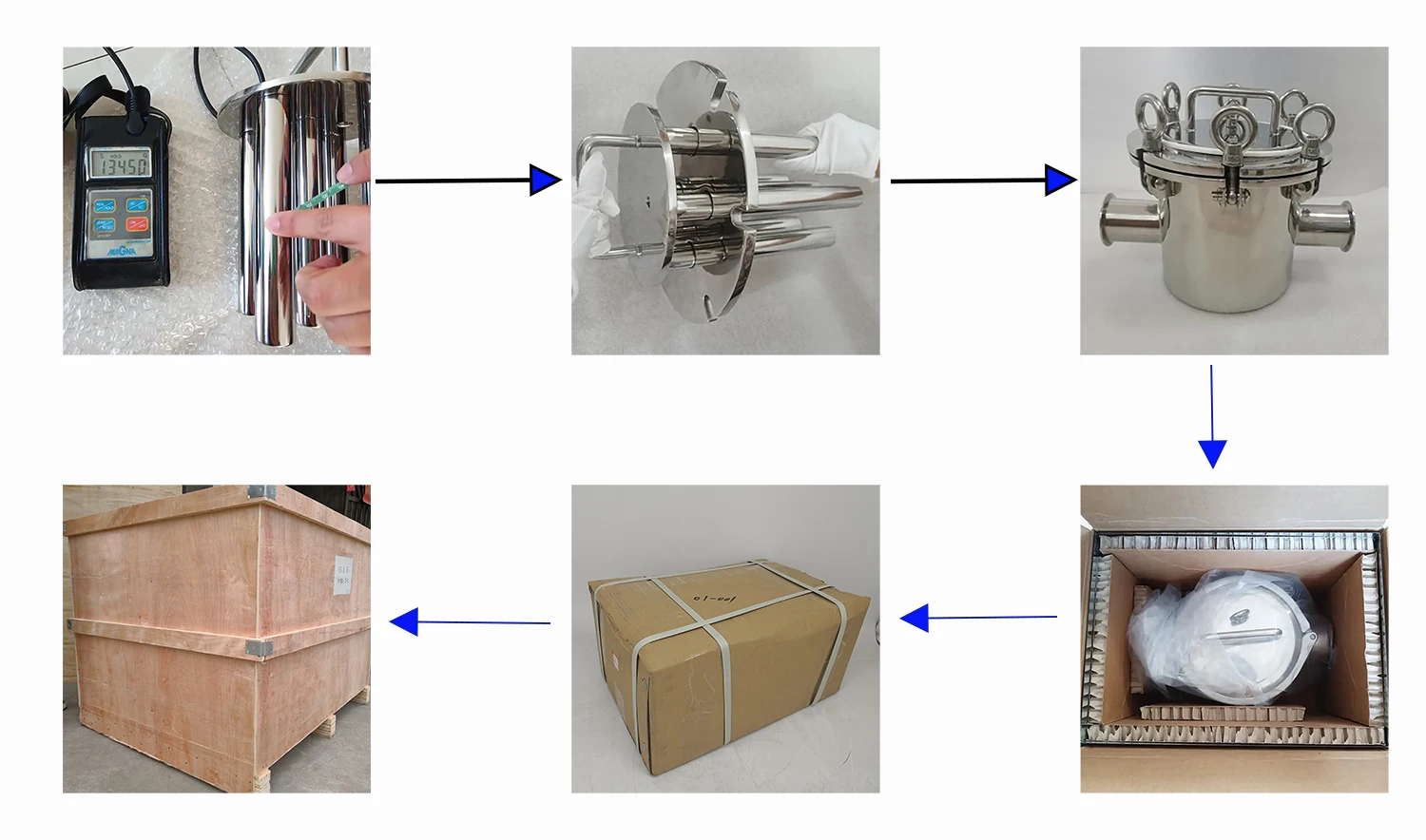
Magnet Strength Check
You get a verified magnetic rod assembly before packing. Each set is checked with a Gauss meter, so you know the magnetic performance is confirmed before shipment.
Clean Assembly & Protection
You receive the magnetic rod bundle, assembled and protected, to prevent scratches, dents, or contamination on key surfaces during handling.
Final Product Assembly Inspection
You receive the complete magnetic trap unit for inspection after assembly to ensure the cover, clamps, and interfaces are secure and ready for installation.
Inner Protection in Carton
You receive the unit wrapped and cushioned inside a strong carton with edge and impact protection, helping prevent movement and shock damage.
Carton Strapping for Stability
You get the carton tightly strapped to reduce shifting during transport and improve stacking safety in warehouses and containers.
Wooden Crate for Long-Distance Export
You can choose a reinforced wooden crate for maximum protection on sea freight or long-distance logistics, minimizing risk during loading and unloading.
How to connection Magnetic trap and the butterfly valve Thread
To connect a magnetic trap to a threaded butterfly valve, first confirm the thread standard and size on both sides, e.g., NPT, BSPP/BSPT, and the pipe diameter. If your valve and magnetic trap threads don’t match, use the correct thread adapter, male-to-female reducer, union, or sanitary adapter rather than forcing the connection. Wrap PTFE tape or apply thread sealant on the male thread, then hand-tighten and finish with a wrench avoid over-tightening to prevent distortion. Make sure you keep enough clearance to open the trap for cleaning, then pressure-test the line for leaks before running production.
FAQ
Q: How do I determine if a Magnetic Trap is suitable for my operating conditions?
A: If you are transporting liquids, slurries, or semi-fluids, and are concerned about iron filings/wear debris/rust entering the pump, valves, nozzles, or finished product, then a magnetic trap for online interception is suitable for you. You only need to confirm the interface size, flow rate, pressure, temperature, and medium viscosity, and we can help you determine if a larger pipe diameter or a multi-magnet structure is required.
Q: Will a Magnetic Trap cause a pressure drop and affect the flow rate?
A: There will be some pressure drop, especially when your medium has high viscosity, high flow rate, and a small pipe diameter. Provide us with the flow rate, viscosity, and pipe diameter, and we will suggest appropriate housing diameter, flow channel structure, and number of magnets to keep the pressure drop within an acceptable range.
Q: How often should I clean it? Is cleaning troublesome?
A: You can run it for a period of time to observe the adsorption capacity before determining the cleaning cycle. Heavily contaminated sections may require cleaning daily/per shift, while lightly contaminated sections may require cleaning once a week. Cleaning is simple: stop the machine and depressurize → open the cover → remove the magnetic rod → wipe → reassemble. This usually takes only a few minutes.
Q: How high should the magnetic field strength be?
A: It depends on the size of the target impurities, the flow rate, viscosity, and cleanliness requirements. Higher flow rates, higher viscosity, or the need to intercept finer particles require a stronger magnetic field or a larger magnetic rod area. We will provide a recommended range based on your operating conditions.
Q: What are the cleaning steps? Does the machine need to be stopped?
A: You need to stop the machine and depressurize first. Open the top cover/clamp, remove the magnetic rod assembly; iron filings will fall off more easily and can be wiped and collected. After cleaning, reassemble to resume production. This usually only takes a few minutes to a dozen minutes.
Great Magtech (Xiamen) Electric Co., Ltd is one of the most experienced magnetic trap manufacturers and suppliers in China. Welcome to wholesale magnetic trap from our factory.
Liquid Magnetic Trap Separator, Magnetic Ferrous Traps, Liquid Magnetic Separators , Magnetic Liquid Traps , Magnetic Separator , Magnetic Filters , Liquid Line Magnetic Separator , Magnetic Tube Trap