











Permanent Magnet Manufacturer & Supplier NdFeB, SmCo, Alnico GME
Factory-direct permanent magnet manufacturer since 2015. NdFeB N35–N52, SmCo, Alnico · OEM/ODM custom shapes · ISO9001 · CE· RoHS· Shipped to 60+ countries. Quote in 24h.
🏭Factory Direct
Sintered NdFeB and SmCo Magnets Manufactured in Ningbo, China.
🌍60+ Countries
Supplying OEM magnet orders to Europe, North America, the Middle East & Southeast Asia.
📋ISO9001 · CE
Certified sintered NdFeB magnet manufacturer, with full compliance documentation on request.
⚙️OEM / ODM
Custom magnet shapes, grades & coatings, low MOQ, drawings accepted.
⚡Quote in 24 Hours
Send specs for sintered NdFeB, SmCo, ferrite, or alnico pricing returned the same business day.
-
![Custom Circle Magnets]() Custom Circle MagnetsRound Magnet, Permanent Magnet, Disc Magnet, Strong Circle Magnet, Neodymium Disc Magnet, Rare Earth Magnet,Custom Round Magnets, Custom Circle Magnetsread more
Custom Circle MagnetsRound Magnet, Permanent Magnet, Disc Magnet, Strong Circle Magnet, Neodymium Disc Magnet, Rare Earth Magnet,Custom Round Magnets, Custom Circle Magnetsread more -
![Bonded NdFeB Magnet For Gate Motors]() Bonded NdFeB Magnet For Gate MotorsBonded neodymium magnets are a product made by mixing neodymium powder with a polymer and then pressing or extruding it. They can be designed into complex patterns with multiple poles, and while theyread more
Bonded NdFeB Magnet For Gate MotorsBonded neodymium magnets are a product made by mixing neodymium powder with a polymer and then pressing or extruding it. They can be designed into complex patterns with multiple poles, and while theyread more -
![N35-N52 Permanent Strong Neodymium Round Magnets]() N35-N52 Permanent Strong Neodymium Round MagnetsAmong those famous round magnets manufacturers, it is a professional supplier in China, welcome to wholesale small round magnets, neodymium disc magnets, magnet disc, strong round magnets from ourread more
N35-N52 Permanent Strong Neodymium Round MagnetsAmong those famous round magnets manufacturers, it is a professional supplier in China, welcome to wholesale small round magnets, neodymium disc magnets, magnet disc, strong round magnets from ourread more -
![Relieving Magnet Bracelet Magnet Balls]() Relieving Magnet Bracelet Magnet BallsBracelets are made of strong high-quality hematite beads, magnetic hematite is beneficial for health. used to help alleviate pain, reduce inflammation, and improve blood circulation. also reduceread more
Relieving Magnet Bracelet Magnet BallsBracelets are made of strong high-quality hematite beads, magnetic hematite is beneficial for health. used to help alleviate pain, reduce inflammation, and improve blood circulation. also reduceread more -
![WT103 Gauss Meter Digital Tesla Meter]() WT103 Gauss Meter Digital Tesla MeterWT103 gauss meter digital Tesla meter magnetic detector magnetic field tester magnetic meter level 1 accuracy.A Gaussmeter is a device used to measure the strength and direction of magnetic fields. Aread more
WT103 Gauss Meter Digital Tesla MeterWT103 gauss meter digital Tesla meter magnetic detector magnetic field tester magnetic meter level 1 accuracy.A Gaussmeter is a device used to measure the strength and direction of magnetic fields. Aread more -
![TM-801EXP Magnetism Tester Tesla Gauss Meter]() TM-801EXP Magnetism Tester Tesla Gauss MeterTM-801EXP Magnetism Tester Tesla Gauss Meter Electromagnetic Det. A Gaussmeter is a device used to measure the strength and direction of magnetic fields. A Gaussmeter typically consists of a sensorread more
TM-801EXP Magnetism Tester Tesla Gauss MeterTM-801EXP Magnetism Tester Tesla Gauss Meter Electromagnetic Det. A Gaussmeter is a device used to measure the strength and direction of magnetic fields. A Gaussmeter typically consists of a sensorread more -
![Bonded NdFeB Magnet For Floor Scrubber Motors]() Bonded NdFeB Magnet For Floor Scrubber MotorsThe excellent magnetic properties of bonded NdFeB permanent magnet materials can establish a strong permanent magnetic field without additional energy after magnetization. The NdFeB permanent magnetread more
Bonded NdFeB Magnet For Floor Scrubber MotorsThe excellent magnetic properties of bonded NdFeB permanent magnet materials can establish a strong permanent magnetic field without additional energy after magnetization. The NdFeB permanent magnetread more -
![Hair Dryer Nozzle Multipole Ring Bonded Ndfeb Magnet]() Hair Dryer Nozzle Multipole Ring Bonded Ndfeb MagnetBonded NdFeB magnets are ideal materials for the use of annular bonded NdFeB magnets in hair dryer vents due to their high magnetic properties, miniaturization and light weight, cost-effectiveness,read more
Hair Dryer Nozzle Multipole Ring Bonded Ndfeb MagnetBonded NdFeB magnets are ideal materials for the use of annular bonded NdFeB magnets in hair dryer vents due to their high magnetic properties, miniaturization and light weight, cost-effectiveness,read more -
![Bonded Ndfeb Magnet Arc Magnet]() Bonded Ndfeb Magnet Arc MagnetBonded NdFeB products have high dimensional accuracy and can be made into relatively complex magnetic components with one-time molding and multi-pole orientation. After drying, molding, curing,read more
Bonded Ndfeb Magnet Arc MagnetBonded NdFeB products have high dimensional accuracy and can be made into relatively complex magnetic components with one-time molding and multi-pole orientation. After drying, molding, curing,read more -
![Bonded NdFeB Magnet For Brushless Motor]() Bonded NdFeB Magnet For Brushless MotorBonded NdFeB has the characteristics of high remanence, high coercivity and high magnetic energy product, which make it perform well in permanent magnet motors. The magnetic energy product of NdFeBread more
Bonded NdFeB Magnet For Brushless MotorBonded NdFeB has the characteristics of high remanence, high coercivity and high magnetic energy product, which make it perform well in permanent magnet motors. The magnetic energy product of NdFeBread more -
![Bonded Ndfeb Magnet For Stepper Motor]() Bonded Ndfeb Magnet For Stepper MotorBonded NdFeB magnets are very suitable for stepper motors due to their high remanence density and high coercivity, which allows stepper motors to be miniaturized. In addition, bonded NdFeB magnetsread more
Bonded Ndfeb Magnet For Stepper MotorBonded NdFeB magnets are very suitable for stepper motors due to their high remanence density and high coercivity, which allows stepper motors to be miniaturized. In addition, bonded NdFeB magnetsread more -
![Single Pole Magnet]() Single Pole Magnetmagnet with single pole is a functional material that is magnetic on one side and non-magnetic on the other side. It is made of a composite magnetic layer and a backing adhesive substrate. It hasread more
Single Pole Magnetmagnet with single pole is a functional material that is magnetic on one side and non-magnetic on the other side. It is made of a composite magnetic layer and a backing adhesive substrate. It hasread more


What Is a Permanent Magnet?
A permanent magnet is a material that generates a persistent magnetic field without requiring an external power source. Unlike electromagnets, which only produce magnetism when electric current flows, permanent magnets retain their magnetization indefinitely under normal operating conditions.

Permanent Magnet Physics Definition
At the atomic level, permanent magnetism arises from the alignment of magnetic domains: microscopic regions where groups of atoms orient their magnetic moments in the same direction. When a sufficient proportion of these domains align through a manufacturing process called "magnetization," the material produces a net external magnetic field strong enough for practical use.
Three key properties define a permanent magnet's performance
|
Property |
What It Means |
Why It Matters |
|
Remanence (Br) |
Residual flux density after the magnetizing field is removed |
Determines how strong the magnet is |
|
Coercivity (Hc) |
Resistance to demagnetization |
Determines stability in harsh environments |
|
Maximum Energy Product (BHmax) |
Overall magnetic energy output per unit volume |
The single most-used spec for magnet selection |
Types of Permanent Magnets by Material
In product design, selecting the wrong magnet material is one of the most costly mistakes one can make. The following text provides a structured overview of the three dominant categories of permanent magnets currently available on the market, accompanied by intuitive comparative data, with the aim of offering you robust support during the material selection process.

Neodymium (NdFeB)
GME supplies sintered neodymium (NdFeB) magnets in grades N35–N52, factory-direct with OEM/ODM custom shapes, the world's strongest permanent magnet material.
BHmax Range: 33 – 52 MGOe
Max. Working Temp: 80°C – 200°C
Grades Available: N35–N52, M, H, SH, UH, EH
Coating Required: Yes (NiCuNi / Epoxy)
Applications: EV Motors, Wind Turbines, Robotics
MRI Adjacent, Consumer Electronics.
Samarium Cobalt (SmCo)
GME manufactures samarium cobalt (SmCo) magnets for aerospace, defense, and downhole applications requiring uncompromising high-temperature performance.
(BHmax) Range: 16 – 32 MGOe
Maximum Operating Temperature: 250°C – 350°C
Available Grades: Sm2Co5, Sm2Co17
Coating Requirement: Typically requires no coating
Applications: Aerospace, Downhole Oil & Gas Exploration, Defense Sensors, Satellite Systems.

Alnico
GME supplies Alnico magnets by both casting and sintering.
Maximum Energy Product (BHmax) Range: 1.5 – 11 MGOe
Maximum Operating Temperature: 540°C
Temperature Coefficient (Br): -0.02%/°C (Lowest)
Manufacturing Process: Casting or Sintering
Applications: Guitar Pickups, Aerospace Instrumentation, Flow Meters, High-Temperature Sensors.
How to Choose the Right Permanent Magnet Material
Material selection is the single most critical decision in magnet procurement. The wrong choice costs you in rework, warranty claims, and performance failures. Use this decision matrix
|
Application Condition |
Best Choice |
Second Choice |
Avoid |
|
Maximum strength in a small volume |
NdFeB (N52) |
SmCo |
Ferrite, Alnico |
|
Operating above 180°C |
SmCo (2:17) |
NdFeB (EH grade) |
Standard NdFeB |
|
Outdoor/wet/corrosive environment |
Ferrite or SmCo |
NdFeB + Epoxy coating |
Uncoated NdFeB |
|
Guitar pickups/audio |
Alnico 2 or 5 |
NdFeB (with EQ tuning) |
Ferrite |
|
Oil & gas / downhole tools |
SmCo |
NdFeB EH |
Ferrite, Alnico |
|
EV / Hybrid motors |
NdFeB (SH/UH) |
SmCo |
Ferrite |
|
Medical implants / MRI-adjacent |
SmCo |
NdFeB |
Alnico |
|
High-temp sensors/instruments |
Alnico |
SmCo |
NdFeB |
|
Wind turbine generators |
NdFeB (H/SH) |
Ferrite |
Alnico |
Examples and Industrial Applications of Permanent Magnets
From everyday consumer devices to critical industrial systems, permanent magnets are at the core of how the modern world moves, senses, and generates power.

Smartphone Speakers
NdFeB disc magnets in earpieces convert signals to sound.

Hard Disk Drives
NdFeB arc magnets position read/write heads with nanometer precision.

EV Traction Motors
High-grade NdFeB (SH/UH) arc magnets in rotor assemblies.
Guitar Pickups
Alnico 2/5 for vintage tone; NdFeB for modern high-output.

Refrigerator Door Seals
Flexible ferrite strips maintain an airtight closure without latches.

Headphones & Earbuds
NdFeB drivers deliver a wide frequency response in compact form.

E-Bike Hub Motors
NdFeB arc magnets for silent, efficient propulsion.

MagSafe / Wireless Charging
NdFeB ring arrays for precise alignment and power transfer.

Magnetic Door Catches
Pot magnets in steel cups provide tool-free secure closure.

Electric Toothbrushes
NdFeB magnets in silent brushless motors.
Uses of Permanent Magnets in Industry
⚙️Electric Motors & Generators
Permanent magnet motors outperform induction motors by 5–15% in energy efficiency. NdFeB and ferrite magnets power servo motors, BLDC motors, and EV traction motors globally.
GME supplies motor-grade NdFeB arc and block magnets in grades N35–N52 and SH/UH series, with tight flux consistency tolerances for high-volume motor OEMs.
🔩Magnetic Separation & Metal Recovery
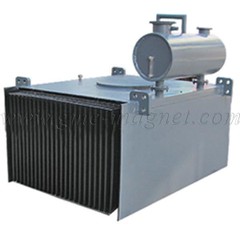
Overband suspension magnets remove ferrous contaminants from conveyors in mining, recycling, food processing, and cement production.
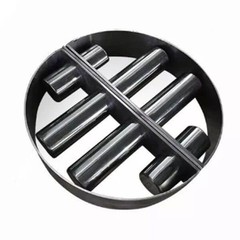
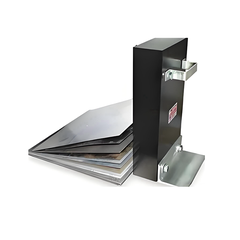
GME manufactures NdFeB and ferrite magnet cores for suspension separators, magnetic bars, and drawer magnets, supplying them directly to separator system integrators worldwide.
🏗️Precast Concrete & Construction
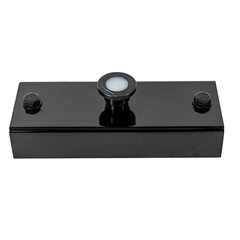
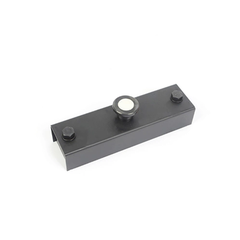
Shuttering magnets hold formwork templates on steel tables in precast concrete plants. GME serves major precast manufacturers across Europe, the Middle East, and Southeast Asia.
GME supplies shuttering magnets to precast concrete manufacturers across Europe, the Middle East, and Southeast Asia.
🤖Robotics & Automation
Magnetic grippers replace pneumatic claws for ferrous part handling. Permanent magnets in encoders and Hall-effect sensors provide position feedback with zero contact wear.
GME supplies precision NdFeB disc and ring magnets for robotic encoders, sensors, and gripper assemblies with tight tolerances and consistent batch performance.
🌬️Renewable Energy
Wind turbine direct-drive generators use NdFeB arc magnets (H or SH grade), eliminating the gearbox and dramatically reducing maintenance requirements and downtime.
GME supplies NdFeB arc magnets (H/SH grade)for direct-drive wind turbine generators.
🩺Medical Devices
SmCo magnets are used in MRI gradient coil assemblies, surgical robotics, and implantable devices, where biocompatibility and thermal stability under sterilization are required.
GME supplies samarium cobalt blocks, discs, and custom-shaped magnets to medical device OEMs and offers coating options.
- Magnets for EV & Hybrid Motors
- Magnets for Wind Turbine Generators
- Magnets for Precast Concrete
- Magnets for Medical Devices
- Magnets for Industrial Separation

How Do Permanent Magnets Work?
Permanent magnets work because their internal magnetic domains are aligned. When these domains point in the same general direction, the material creates a magnetic field around itself. This magnetic field can attract ferromagnetic materials and interact with other magnetic fields.
Magnetic Domain Theory and Field Generation
Every atom with unpaired electrons acts as a tiny magnetic dipole, a microscopic bar magnet. In most materials, these atomic dipoles point in random directions and cancel each other out, producing no net magnetic field.
In ferromagnetic materials (iron, nickel, cobalt, and their alloys), quantum mechanical exchange interactions force neighboring atomic moments to align parallel. This alignment forms magnetic domains: regions typically 10–100 micrometers in size where millions of atoms collectively point in the same direction.
Before magnetization: Domains exist, but they point in random directions, with a net external field of zero.
After magnetization: An external field above the material's saturation threshold forces domains to align with the net external field, strong and persistent.
Once aligned, the domain walls cannot easily reverse their orientation due to the material's magnetocrystalline anisotropy. This is what makes NdFeB magnets so powerful: the Nd₂Fe₁₄B crystal structure has exceptionally high anisotropy energy.
Understanding Coercivity, Remanence, and the BH Curve
The BH curve is the fundamental tool for characterizing and comparing permanent magnets. Every magnet datasheet references it.
|
Parameter |
Symbol |
Definition |
High Value Means |
|
Remanence |
Br |
Flux density when H=0 after full magnetization |
Stronger magnet |
|
Coercive Force |
Hc |
Field required to reduce B to zero |
More resistant to external fields |
|
Intrinsic Coercivity |
Hci |
Field required to demagnetize the material fully |
Better stability in motors/EV applications |
|
Max Energy Product |
BHmax |
Area of the largest rectangle under the B-H curve |
Overall magnet efficiency |
Comparisons: Permanent Magnets vs. Temporary Magnets vs. Electromagnets
|
Feature |
Permanent Magnet |
Temporary Magnet |
Electromagnet |
|
Power Required |
❌ None |
❌ None |
✅ Continuous electrical power |
|
Magnetism Control |
Fixed (or switchable pot magnet) |
Induced by an external field only |
On/Off via current control |
|
Strength |
High to extremely high (NdFeB up to 52 MGOe) |
Low (soft iron, mild steel) |
Very high (scalable with current) |
|
Temperature Sensitivity |
Moderate (varies by grade) |
Low |
Generates heat, needs cooling |
|
Durability |
Excellent (decades of service life) |
Poor (degrades quickly) |
Depends on the coil/cooling system |
|
Fail-Safe Behavior |
✅ Holds load if power fails |
❌ Releases the load if the field is removed |
❌ Releases the load if power fails |
|
Energy Efficiency |
✅ Zero operating energy |
Low efficiency |
Low efficiency (I²R losses) |
|
Cost (long-term) |
Lower TCO (no power cost) |
Low upfront |
Higher (power + cooling + maintenance) |
|
Best Application |
Motors, sensors, holding, separation |
Temporary picking/sorting |
Lifting, MRI machines, and industrial clutches |
|
Typical Materials |
NdFeB, SmCo, Ferrite, Alnico |
Low-carbon steel, soft iron |
Iron core + copper coil |
Do Permanent Magnets Lose Their Magnetism Over Time?
This is one of the most common questions from engineers specifying magnets for long-life applications. The short answer: a well-specified permanent magnet, properly handled, will retain >95% of its original flux density for decades, sometimes over 100 years.
The Four Real Causes of Demagnetization
1. Elevated Temperature (Most Common)
Exceeding the maximum working temperature causes partial, potentially irreversible flux loss. Standard N-grade NdFeB has a max of 80°C; EH-grade extends this to 200°C. Always operate at least 30°C below the rated maximum.
2. Opposing Magnetic Fields
External fields opposing the magnet's field and exceeding its intrinsic coercivity (Hci) can partially or fully demagnetize it. This is why high-Hci grades (SH, UH, EH) are critical in motor applications.
3. Physical Shock and Vibration
Severe mechanical impact can jolt domain walls out of alignment. More of a concern for Alnico (lower coercivity) than for NdFeB or SmCo. Handle large magnets (50mm+) with dedicated separation tools.
4. Corrosion (NdFeB Specific)
Uncoated NdFeB in humid or salt-spray environments will corrode and lose magnetic performance. Always specify the correct coating (NiCuNi, Epoxy, Gold) based on your operating environment.
Custom Magnet Shapes & OEM Manufacturing
GME manufactures custom permanent magnets from 2D/3D drawings in any shape: disc, block, ring, arc, countersunk, or fully custom profile.

Shape: Disc / Cylinder Magnet
Typical Applications: Sensors, speakers, medical devices, pot magnets
Available Materials: NdFeB, SmCo, Alnico, Ferrite

Shape: Block / Rectangle Magnet
Applications: Magnetic chucks, holding fixtures, motor assemblies
Available Materials: NdFeB, SmCo, Alnico, Ferrite

Shape: Ring / Annular Magnet
Applications: Bearings, loudspeakers, rotary encoders
Available Materials: NdFeB, SmCo, Ferrite

Shape: Arc / Segment Magnet
Applications: Motor rotors, generator assemblies, wind turbines
Available Materials: NdFeB, SmCo, Ferrite

Shape: Countersunk Magnet
Applications: Mechanical fastening, furniture, fixtures
Available Materials: NdFeB, Ferrite

Shape: Custom Magnet
Applications: Per 2D/3D drawing any shape within material constraints
Available Materials: NdFeB, SmCo
Surface Coating Options
NdFeB magnets require surface protection in most applications. The coating you choose affects corrosion resistance, operating temperature range, electrical conductivity, and cost.
|
Coating |
Salt Spray Hours |
Max. Temp |
Electrical |
Appearance |
Best For |
|
NiCuNi (Triple Layer) |
24–72h |
200°C |
Conductive |
Bright silver |
General industrial, motors, standard use |
|
Zinc (Zn) |
12–24h |
150°C |
Conductive |
Matte silver-gray |
Cost-sensitive applications, indoor use |
|
Epoxy |
72–200h |
120°C |
Insulating |
Matte black |
Outdoor, humid, chemical environments |
|
Gold (Au) |
200h+ |
150°C |
Conductive |
Gold |
Medical devices, precision instruments, aerospace |
|
Parylene |
500h+ |
125°C |
Insulating |
Transparent |
Implantables, extreme moisture |
|
Phosphating |
12h |
200°C |
Semi |
Gray |
Pre-bonding adhesion layer |
How to Order Custom Magnets from GME:
Submit your drawing (DXF/STEP/PDF) or describe your requirements.
Receive material recommendation + DFM feedback within 24h.
Approve sample - production in 15-30 days.
Quality Assurance: Testing and Compliance Standards
GME's in-house QA lab tests every production batch against IEC 60404-5 (coercivity), IEC 60404-8-1 (remanence), and ASTM A977 (BHmax). Coating reliability is verified by ISO 9227 salt spray testing (24–200h depending on coating type) and ISO 2409 adhesion cross-cut. All dimensional data is logged to ±0.05mm tolerance. ISO 9001:2008 certified. CE and RoHS documentation available for every standard product line.
In-Process Quality Controls
Every production batch at our Xiamen facility goes through a documented, multi-stage quality control process, not just a final inspection.
Raw Material Verification Every incoming NdFeB and SmCo alloy batch is verified by XRF composition analysis before it enters production. Particle size distribution and density are measured post-sintering to confirm the batch meets grade specification before magnetization.
Magnetic Performance Testing. This is where most suppliers cut corners. GME tests every production batch, not just samples, against the following parameters:
|
Test Parameter |
Instrument |
Reference Standard |
|
Remanence (Br) |
Helmholtz coil / Gaussmeter |
IEC 60404-8-1 |
|
Coercivity (Hc, Hci) |
Hysteresisgraph |
IEC 60404-5 |
|
Max Energy Product (BHmax) |
Permeameter |
ASTM A977 |
|
Pull Force |
Calibrated tensile test stand |
Per customer specification |
|
Surface Flux Distribution |
Hall probe mapping |
Per drawing requirement |
Coating & Reliability Testing: A magnet that tests well magnetically but fails in the field due to coating delamination is still a defective product. GME applies the following coating verification tests:
|
Test |
Method |
Standard |
|
Salt Spray |
NSS |
ISO 9227 |
|
Coating Adhesion |
Cross-cut test |
ISO 2409 |
|
Thermal Cycling |
-40°C to +150°C, 100 cycles |
Internal + customer spec |
|
High Humidity |
85°C / 85% RH, up to 1000h |
For critical applications |


Certifications Overview
|
Certificate |
Issuing Body |
Product Scope |
Standard |
|
CE — NdFeB Magnets |
Third-party EUT lab |
NdFeB Magnets |
EN 60335 / EN 61000 series |
|
RoHS Test Report |
SGS |
NdFeB Magnets & Assemblies |
EU RoHS 2011/65/EU |
|
SGS Supplier Audit |
SGS / Made-in-China |
Full product range |
SGS Audit Protocol |
|
ISO 9001:2008 |
WIT |
Sintered NdFeB & Assemblies |
GB/T 19001-2008 |
|
ISO 14001:2004 |
WIT |
Sintered NdFeB & Assemblies |
GB/T 24001-2004 |

CE

RoHS Test Report

SGS

ISO 14001:2004

ISO 9001:2008
Safety Handling and Shipping Guidelines for Strong Magnets
"Strong magnets, especially neodymium, require careful handling and proper storage to ensure safety for both personnel and equipment.
How to Safely Handle Powerful Neodymium Magnets
Strong NdFeB magnets are capable of causing serious injury and equipment damage. The following guidelines are mandatory for safe handling:
Personal Protection:
✅ Always wear leather
cards, hard drives, and magnetic media (permanent data loss risk).
Separation and Handling: Technician gloves; magnet chips are sharp and can lacerate skin.
✅ Wear eye protection when separating magnets above N45 grade or above 50mm size.
✅ Keep magnets away from pacemakers, cochlear implants, and other electronic medical devices (minimum 30cm).
✅ Keep away from credit cards, hard drives, and magnetic media (permanent data loss risk).
Separation and Handling Technique:
❌ Never allow two strong magnets to snap together. The impact can shatter the magnets and send fragments at high velocity.
✅ Sliding magnets apart rather than pulling directly requires significantly less force and prevents snapping.
✅ For magnets above 80mm: use dedicated separator tools or hardwood wedges; never use bare hands.
✅ Store magnets with cardboard or plastic spacers between units and in individually labeled bags or trays.
Environmental Storage:
Keep in a dry, temperature-controlled environment (10–30°C, <60% RH).
Do not store near strong opposing magnetic fields or large ferromagnetic structures.
Keep NdFeB magnets in their original anti-corrosion packaging until the point of use.
Frequently Asked Questions About Permanent Magnets
Q: How long do permanent magnets last?
A: A properly specified and handled permanent magnet retains over 95% of its flux density for 50–100+ years. Properly stored sintered NdFeB shows less than 1% flux loss per decade. Age alone does not demagnetize permanent magnets.
Q: What is the difference between N35 and N52 neodymium magnets?
A: N52 has approximately 50% higher flux output per unit volume than N35. N52 costs more and is more brittle, but allows significantly smaller magnet sizes for the same force. For most industrial applications, N38–N45 offers the optimal cost-performance balance.
Q: Do I need to coat neodymium magnets?
A: In virtually all applications, yes. Uncoated NdFeB corrodes rapidly in humid or salt-spray environments. NiCuNi coating is standard for general industrial use; Epoxy or Gold for outdoor, marine, or medical applications.
Q: Can permanent magnets be used in food processing equipment?
A: Yes, with FDA-compliant stainless steel 316L housing and verification that they do not interfere with in-line metal detection systems. GME offers food-safe magnet assembly options for grain milling, dairy, and packaged food processing lines.
Q: What is the maximum operating temperature?
A: If your application exceeds 150°C, standard NdFeB (N-grade, max 80°C) will suffer irreversible flux loss over time. Switch to NdFeB SH/UH/EH grades for up to 200°C, or choose Samarium Cobalt (SmCo) for environments up to 350°C. Always operate at least 30°C below the rated maximum to ensure long-term stability.
Q: Will the magnet be exposed to moisture, chemicals, or saltwater?
A: Uncoated NdFeB corrodes rapidly in humid or salt-spray environments, often within weeks. If exposure is unavoidable, specify NdFeB with Epoxy or Gold coating for moderate conditions, or switch to Samarium Cobalt (inherently corrosion-resistant, no coating needed) or Ferrite for outdoor and wet industrial environments.
Q: Is size/weight the primary constraint?
A: If your design demands maximum magnetic force in the smallest possible footprint, NdFeB is almost always the answer. With BHmax up to 52 MGOe, roughly 10× that of ferrite NdFeB, it lets you achieve the same pull force with a fraction of the material volume, directly reducing component size and system weight.
Q: Not sure which grade fits your application?
A: Our engineering team reviews 50+ custom magnet specs per week. Submit your requirements and receive a material recommendation within 24 hours.
Great Magtech (Xiamen) Electric Co., Ltd is one of the most experienced magnets manufacturers and suppliers in China. Welcome to wholesale magnets from our factory.
Magnetic Materials , Strong Magnets , Permanent Magnet , SuperMagnet , Super Magnets , Magnetic Materials