










-
![Permanent Magnetic Lifter]() Permanent Magnetic LifterThe permanent magnetic lifter is composed of Ndfeb permanent magnetic material with a high-performance ferromagnetic system. The handle's movement changes the magnetic force of the ferromagneticread more
Permanent Magnetic LifterThe permanent magnetic lifter is composed of Ndfeb permanent magnetic material with a high-performance ferromagnetic system. The handle's movement changes the magnetic force of the ferromagneticread more -
![Lifting Magnet Permanent Magnetic Lifts]() Lifting Magnet Permanent Magnetic LiftsPermanent Magnetic Lifters are mainly used to lift steel plates, blocks, press molds, etc., and load / unload in machines during handling operations. They can hoist moving iron blocks and otherread more
Lifting Magnet Permanent Magnetic LiftsPermanent Magnetic Lifters are mainly used to lift steel plates, blocks, press molds, etc., and load / unload in machines during handling operations. They can hoist moving iron blocks and otherread more -
![Permanent Magnet Lifter]() Permanent Magnet LifterThe use of high-performance magnetic materials, making it smaller, lighter weight, strong holding force. Unique magnetic circuit design, the remanence is almost zero. The safety factor is high, andread more
Permanent Magnet LifterThe use of high-performance magnetic materials, making it smaller, lighter weight, strong holding force. Unique magnetic circuit design, the remanence is almost zero. The safety factor is high, andread more -
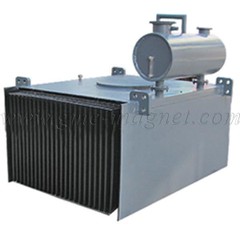
![Circular Lifting Electromagnetsfor Steel Scraps]() Circular Lifting Electromagnetsfor Steel ScrapsAmong those famous circular lifting electromagnetsfor steel scraps manufacturers, it is a professional supplier in China, welcome to wholesale circular lifting electromagnetsfor steel scraps from ourread more
Circular Lifting Electromagnetsfor Steel ScrapsAmong those famous circular lifting electromagnetsfor steel scraps manufacturers, it is a professional supplier in China, welcome to wholesale circular lifting electromagnetsfor steel scraps from ourread more


What is a Magnetic Lifter?
A magnetic lifter is a tool designed for hoisting and handling ferrous metal workpieces, such as steel plates, blocks, round bars, and molds. It generates a powerful magnetic attraction force, enabling you to move heavy materials more safely and efficiently during loading, unloading, or in-workshop transfer operations. Among various industrial applications, permanent magnetic lifters are particularly popular because they do not require a continuous power supply during operation. You can easily toggle the magnetic force on or off simply by using a handle, making daily operations both convenient and practical. A magnetic lifter is more than just a lifting tool; it is an effective solution that accelerates handling speeds, reduces manual labor intensity, and helps factories, warehouses, and metalworking workshops achieve safer steel handling practices.
Features of magnet lifters

Alloy Galvanized Lifting Ring
Galvanized anti-rust and corrosion-resistant High-strength lifting ring. Non-slip and durable. No deformation, no fracture.

Anti-Slip Handle
Dual-option rubber handle for a comfortable grip. Patterned handle, non-slip, and wear-resistant.

Left On and Right Off
Easy to operate, strong adsorption force when using magnets, and quick closing when demagnetizing.

High-Quality Magnetic Material
Strong adsorption, high-performance permanent
magnetic material, and no demagnetization.

Bottom U-Shaped Groove
Strong adsorption increases the magnetic contact area and gives full play to the magnetic
Force.
|
|
|


Types of magnet lifters

Permanent Magnetic Lifter

Steel Lifting Magnets

Industrial Lifting Magnets

Sheet Metal Lifting Magnets

Permanent Lifting Magnet

Metal Lifting Magnet

Heavy Lifting Magnets

Electromagnet Lifter
Specification of Permanent Magnetic Lifter

| Model | L | L1 | B | H1 | H2 | B1 | F | G | Weight(kg) |
| GME-PML-100A | 135 | 110 | 60 | 65 | 46 | 150 | 32 | 32 | 3.5 |
| GME-PML-300A | 203 | 165 | 87 | 89 | 68 | 223 | 45 | 38 | 10 |
| GME-PML-600A | 266 | 226 | 112 | 109 | 86 | 287 | 58 | 45 | 21 |
| GME-PML-1000A | 330 | 290 | 148 | 125 | 95 | 364 | 60 | 52 | 40 |
| GME-PML-1500A | 385 | 330 | 178 | 145 | 118 | 447 | 70 | 65 | 65 |
| GME-PML-2000A | 470 | 420 | 178 | 145 | 118 | 487 | 70 | 65 | 83 |
| Materials Shape | Steel Plate | Circular Steel Products | |||||
| Model | Max Hangs The Lifting Capacity (kg) | Min Thickness(mm) | Max Length(km) | Max Hangs The Lifting Capacity(kg) | Max Diameter(mm) | Max Length(mm) | Min Thickness(mm) |
| GME-PML-100A | 100 | 10 | 1000 | 50 | 100 | 1000 | 10 |
| GME-PML-300A | 300 | 20 | 1500 | 150 | 300 | 1500 | 12 |
| GME-PML-600A | 600 | 30 | 2000 | 300 | 400 | 2000 | 20 |
| GME-PML-1000A | 1000 | 40 | 3000 | 500 | 450 | 3000 | 28 |
| GME-PML-1500A | 1500 | 50 | 3000 | 750 | 500 | 3000 | 34 |
| GME-PML-2000A | 2000 | 60 | 3000 | 1000 | 600 | 3000 | 40 |

| Number | Rate capacity (kg) | Max tension(kg) | Size (mm) | |||
| L | B | H | R | |||
| GME-100 | 100 | 300 | 90 | 63 | 68 | 145 |
| GME-400 | 400 | 1200 | 160 | 95 | 180 | 160 |
| GME-600 | 600 | 1800 | 220 | 115 | 125 | 230 |
| GME-1000 | 1000 | 300 | 260 | 145 | 145 | 280 |
| GME-1500 | 1500 | 3750 | 310 | 145 | 145 | 280 |
| GME-2000 | 2000 | 5000 | 340 | 160 | 165 | 410 |

How Does a Magnetic Lifter Work?
A magnetic lifter operates by generating a powerful magnetic field to attract and lift ferromagnetic materials, such as steel plates, blocks, and round bars. When you rotate the handle on the permanent magnetic lifter, its internal magnetic circuit switches from the "off" state to the "on" state, thereby enabling the lifting device to adhere firmly to the metal surface. This mechanism allows you to safely and efficiently handle heavy loads without the need for a continuous power supply. Once the lifting operation is complete, return the handle to its original position to release the lifted material.
Permanent Magnetic Lifter vs Electromagnetic Lifter
|
Item |
Permanent Magnetic Lifter |
Electromagnet Lifter |
|
Working Principle |
Uses permanent magnets and a manual handle to switch the magnetic force on and off |
Uses electric current to generate a magnetic force |
|
Power Supply |
No continuous power supply required |
Requires a continuous power supply during lifting |
|
Safety |
Safer in case of power failure because the magnetic force remains active until manually released |
If power is cut off unexpectedly, the load may drop unless there is a backup system |
|
Operation |
Simple manual operation, easy to use |
Requires an electrical control system; operation is more complex |
|
Application |
Suitable for workshops, warehouses, steel plate handling, and daily lifting tasks |
Suitable for heavy-duty lifting, automated lines, and continuous industrial lifting |
|
Lifting Capacity |
Usually used for light to medium loads |
More suitable for medium to heavy loads |
|
Maintenance |
Lower maintenance cost, simpler structure |
Higher maintenance requirements due to electrical parts |
|
Running Cost |
Lower running costs because no electricity is needed during lifting |
Higher running costs because it consumes electricity |
|
Portability |
More portable and convenient to move |
Usually larger and less portable |
|
Common Materials |
Steel plates, steel blocks, round bars, molds |
Steel plates, slabs, billets, scrap, and other large ferrous loads |
|
Best Advantage |
Easy operation and no power dependence |
Strong lifting force and suitable for large-scale lifting |
|
Main Limitation |
Limited capacity compared with electromagnetic models |
Depends on electricity and the control system |
Our Products vs the Products of Others
| Our Products | Contrast | Products of Others |
|
Our magnetic lifters feature a professional slot design that makes operation easier and more convenient in daily use. This thoughtful detail helps improve handling comfort and reduces effort when switching the lifter on and off. |
|
Some ordinary products do not include this slot design, which can make operation harder and less user-friendly. In real workshop use, this may lead to a less smooth handling experience. |
|
Our design focuses on smoother and more practical operation, helping you use the magnetic lifter more efficiently during loading, unloading, and material transfer. A user-friendly structure means less hassle in daily work. |
|
Other products may look similar, but their structural details are often less practical. This can make the operation feel stiff, inconvenient, or less efficient during repeated lifting tasks. |
|
We pay attention not only to lifting force, but also to the overall user experience. With a more considerate design, our magnetic lifters are easier to handle and better suited for real industrial environments. |
|
Some products focus only on basic function and overlook usability. As a result, the handling experience may be less comfortable, especially in frequent daily operation. |
|
Our magnetic lifters are designed for practical industrial use, combining reliable lifting performance with convenient operation details. This helps improve working efficiency and makes the product more suitable for long-term use. |
|
Basic conventional designs may not fully consider real application needs. Without practical operating details, the product may be less convenient and less efficient in actual workshop conditions. |


Application of Permanent Magnetic Lifter
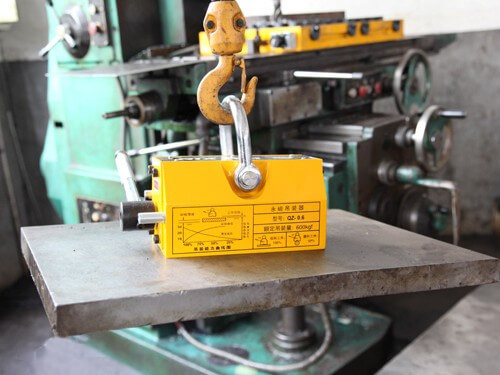
A permanent magnetic lifter is widely used when you need to move ferrous materials safely and efficiently in daily industrial work. You can use this magnetic lifter for handling steel plates, steel blocks, round bars, pipes, molds, and other heavy workpieces in workshops, warehouses, fabrication plants, and machine loading areas. Because this magnetic lifting device does not need a continuous power supply, it is a practical choice for many lifting tasks. Industrial lifting magnets are especially useful when you want to improve handling speed, reduce manual effort, and keep operations more convenient. Whether you need a lifting magnet for a steel plate or a solution for round materials, the right model helps you handle heavy loads more easily, making your lifting process safer, smoother, and more efficient.
Precautions When Using a Permanent Magnetic Lifter
1. Confirm the Material
A permanent magnetic lifter should be used for ferrous materials such as steel plates, blocks, and bars. Before lifting, you should confirm that the workpiece is magnetic and suitable for a magnetic lifter.
Before use, make sure the load weight is within the rated capacity of the magnetic lifting device. Overloading may affect safety and reduce lifting stability.
A clean and flat surface helps the magnetic lifter create better holding force. Rust, oil, paint, or dust may weaken magnetic contact.
The permanent magnetic lifter should fully contact the workpiece surface. Better contact usually means more stable and reliable lifting performance.
Before raising the load completely, you should lift it slightly first to check stability. This helps confirm that the industrial lifting magnets are holding the material securely.
Magnetic Lifter Operating Guide


Pull Out the Handle

Turn the Handle

Handle in Mag(ON) Position

Handle locked in Mag(ON) Position
What factors affect the actual performance of the magnetic lifter?
The performance of a magnetic lifter depends on the material type. Ferrous materials usually provide better magnetic holding force than materials with lower magnetic response.
Thicker materials often allow a permanent magnetic lifter to achieve better performance. Thin workpieces may not reach the full rated lifting capacity.
Rust, paint, oil, or rough surfaces can reduce the contact quality between the magnetic lifting device and the workpiece, which may weaken the lifting force.
A larger and more complete contact area helps the industrial lifting magnets work better. Poor or uneven contact may reduce holding performance.
Flat steel plates usually provide better lifting conditions than round bars or curved materials. For this reason, the actual lifting result may vary with load shape.
Any air gap between the magnetic lifter and the material can reduce the magnetic force. Keeping the contact surface close and even helps improve lifting stability.
Why Choose GME for Magnetic Lifters
Reliable Quality
We pay close attention to product quality so your magnetic lifter can perform more reliably in real lifting applications.
01
Stable Performance
Our permanent magnetic lifters are designed for practical industrial use, helping you handle steel materials with more confidence.
02
Strict Inspection
We value product inspection and quality control because stable quality is important for safer and smoother lifting work.
03
Professional Support
We do more than offer products. We also help you understand the right model for your lifting needs and application conditions.
04
Trustworthy Service
At GME, we focus on clear communication, dependable support, and long-term cooperation, so you can feel more confident when sending us your inquiry.
05
Packaging for Magnetic Lifters
At GME, we understand that good packaging is a crucial component of product quality. As shown in the picture, each magnetic crane is individually packaged with an internal protective film to reduce scratches, bumps, and damage that may occur during handling. After internal packaging, the product is placed in a sturdy outer carton for better protection during storage and transportation. We use solid wood packaging with clear weight labels for easy loading, unloading, and identification. This meticulous packaging helps protect the permanent magnet cranes during long-distance export shipments, giving you greater confidence in the condition of your goods upon arrival.

FAQ
Q: What is a magnetic lifter used for?
A: A magnetic lifter is used to lift, move, and position ferrous metal workpieces such as steel plates, blocks, bars, and molds. It is commonly used in workshops, warehouses, fabrication plants, and machine loading areas to improve handling efficiency and reduce manual effort. For many buyers, it is a practical lifting tool that helps make daily steel handling safer, faster, and more convenient.
Q: What materials can a magnetic lifter lift?
A: A magnetic lifter is mainly used for ferrous materials, including carbon steel, steel plates, steel blocks, round bars, pipes, and other magnetic steel workpieces. It works best on materials with good magnetic properties and proper surface contact. Non-ferrous metals such as aluminum, copper, and most stainless steel grades are generally not suitable for lifting with a permanent magnetic lifter.
Q: Can one magnetic lifter handle both flat and round steel?
A: Yes, many magnetic lifters can handle both flat and round steel, but the actual lifting capacity is usually different for each shape. Flat steel plates often provide better contact and stronger holding force, while round bars or curved materials may reduce the effective contact area. For this reason, you should always check whether the model is suitable for both flat and round loads before use.
Q: How do I choose the right magnetic lifter capacity?
A: To choose the right magnetic lifter capacity, you should consider the load weight, material type, thickness, shape, and surface condition of the workpiece. It is not enough to look only at the rated capacity, because actual lifting performance may vary depending on real working conditions. A better way is to send your application details to the supplier so the most suitable model can be recommended.
Q: Is a permanent magnetic lifter safer than other lifting methods?
A: A permanent magnetic lifter can be a safer choice in many applications because it does not rely on continuous electrical power during lifting. Compared with other lifting methods, it offers simpler operation and reduces the risk of an unexpected power failure. However, safety still depends on correct use, suitable materials, proper load selection, and adherence to operating precautions under real working conditions.
Great Magtech (Xiamen) Electric Co., Ltd is one of the most experienced magnetic lifter manufacturers and suppliers in China. Welcome to wholesale magnetic lifter from our factory.