











-
![Add-on Magnetic Head Pulleys]() Add-on Magnetic Head PulleysMagnetic head pulleys capture ferrous and weakly magnetic particles and continuously carry them away. Suitable for installation in existing belt conveyor systems, in the bulk transshipment orread more
Add-on Magnetic Head PulleysMagnetic head pulleys capture ferrous and weakly magnetic particles and continuously carry them away. Suitable for installation in existing belt conveyor systems, in the bulk transshipment orread more -
![GME RCT Type Magnetic Drum Magnetic Pulley]() GME RCT Type Magnetic Drum Magnetic PulleyMagnetic Pulleys always are placed at the head of conveyor belt to separate iron particle, iron scrap, tramp iron and other ferromagnetic objects from more bulk dry material flow such as iron ore,read more
GME RCT Type Magnetic Drum Magnetic PulleyMagnetic Pulleys always are placed at the head of conveyor belt to separate iron particle, iron scrap, tramp iron and other ferromagnetic objects from more bulk dry material flow such as iron ore,read more -
![GME Magnetic Drum Magnetic Pulley]() GME Magnetic Drum Magnetic PulleyMagnetic Pulleys always are placed at the head of conveyor belt to separate iron particle, iron scrap, tramp iron and other ferromagnetic objects from more bulk dry material flow such as iron ore,read more
GME Magnetic Drum Magnetic PulleyMagnetic Pulleys always are placed at the head of conveyor belt to separate iron particle, iron scrap, tramp iron and other ferromagnetic objects from more bulk dry material flow such as iron ore,read more -
![Permanent Magnetic Pulleys For Head Pulley]() Permanent Magnetic Pulleys For Head PulleyMagnetic Pulleys always are placed at the head of conveyor belt to separate iron particle, iron scrap, tramp iron and other ferromagnetic objects from more bulk dry material flow such as iron ore,read more
Permanent Magnetic Pulleys For Head PulleyMagnetic Pulleys always are placed at the head of conveyor belt to separate iron particle, iron scrap, tramp iron and other ferromagnetic objects from more bulk dry material flow such as iron ore,read more


Understanding Magnetic Drums
A magnetic conveyor pulley is a simple and effective solution when you need to separate ferrous contaminants from bulk materials. As material moves across the rotating drum, the internal magnetic system attracts and holds iron particles, while non-magnetic materials continue to flow normally. This helps you improve product purity, protect downstream equipment, and reduce manual sorting. If you handle powders, granules, or recycled materials, a magnetic drum can give you a more stable, efficient, and reliable separation process.
Features of the Magnetic Drum Separator
Efficient Iron Removal
You can remove ferrous contaminants quickly and continuously from bulk materials, helping improve product purity and reduce unwanted metal content.
Continuous Working Process
You can use the magnetic drum separator in continuous production lines, making your material handling more stable and efficient.
Strong Magnetic Performance
With a powerful magnetic system, you can separate fine and medium ferrous particles effectively from powders, granules, and other dry materials.
Low Maintenance Design
You can reduce maintenance time because the equipment has a simple structure, reliable performance, and smooth operation.

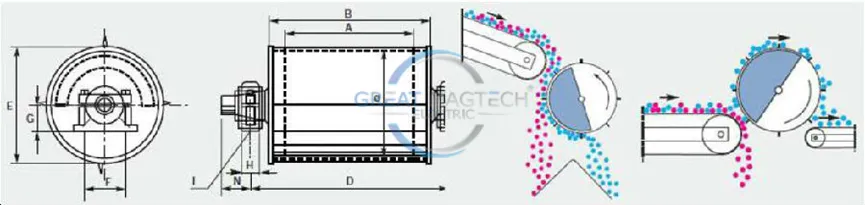
Specifications for permanent magnetic pulley
|
Item no. |
Belt |
ø |
Max. capacity (m3/h) |
Max Belt Speed (rpm) |
A |
C |
D |
F |
I |
J |
K |
Weight (KG) |
|
215-400 |
400 |
215 |
14 |
0.8 |
500 |
40 |
32 |
119 |
10 |
27 |
909 |
75 |
|
215-500 |
500 |
215 |
17 |
0.8 |
600 |
40 |
32 |
119 |
10 |
27 |
1009 |
90 |
|
215-600 |
600 |
215 |
21 |
0.8 |
700 |
40 |
32 |
119 |
10 |
27 |
1109 |
100 |
|
215-650 |
650 |
215 |
23 |
0.8 |
750 |
40 |
32 |
119 |
10 |
27 |
1159 |
110 |
|
215-800 |
800 |
215 |
28 |
0.8 |
950 |
40 |
32 |
119 |
10 |
27 |
1359 |
130 |
|
215-1000 |
1000 |
215 |
35 |
0.8 |
1150 |
40 |
32 |
119 |
10 |
27 |
1559 |
160 |
|
315-400 |
400 |
315 |
20 |
1.2 |
500 |
40 |
32 |
119 |
10 |
27 |
909 |
130 |
|
315-500 |
500 |
315 |
27 |
1.2 |
600 |
40 |
32 |
119 |
10 |
27 |
1009 |
140 |
|
315-600 |
600 |
315 |
30 |
1.2 |
700 |
50 |
48 |
153 |
14 |
42.5 |
1173 |
190 |
|
315-650 |
650 |
315 |
35 |
1.2 |
750 |
50 |
48 |
153 |
14 |
42.5 |
1223 |
195 |
|
315-800 |
800 |
315 |
45 |
1.2 |
950 |
50 |
48 |
153 |
14 |
42.5 |
1423 |
230 |
|
315-1000 |
1000 |
315 |
55 |
1.2 |
1150 |
65 |
55 |
207 |
16 |
49 |
1717 |
280 |
|
400-400 |
400 |
400 |
35 |
1.5 |
500 |
50 |
48 |
153 |
14 |
42.5 |
973 |
200 |
|
400-500 |
500 |
400 |
45 |
1.5 |
600 |
50 |
48 |
153 |
14 |
42.5 |
1073 |
220 |
|
400-600 |
600 |
400 |
55 |
1.5 |
700 |
50 |
48 |
153 |
14 |
42.5 |
1173 |
270 |
|
400-650 |
650 |
400 |
55 |
1.5 |
750 |
50 |
48 |
153 |
14 |
42.5 |
1223 |
280 |
|
400-800 |
800 |
400 |
70 |
1.5 |
950 |
65 |
55 |
207 |
16 |
49 |
1517 |
330 |
|
400-1000 |
1000 |
400 |
90 |
1.5 |
1150 |
65 |
55 |
207 |
16 |
49 |
1717 |
420 |
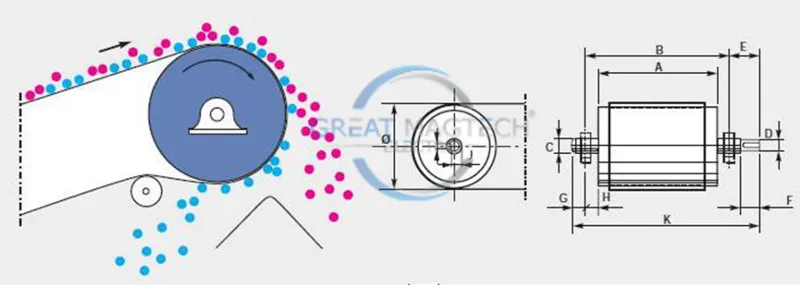
Head roller magnets for conveyor belt
|
Item no. |
Belt |
ø |
Max. capacity (m3/h) |
Max Belt Speed (rpm) |
A |
C |
D |
F |
I |
J |
K |
Weight (KG) |
|
215-400 |
400 |
215 |
14 |
0.8 |
500 |
40 |
32 |
119 |
10 |
27 |
909 |
75 |
|
215-500 |
500 |
215 |
17 |
0.8 |
600 |
40 |
32 |
119 |
10 |
27 |
1009 |
90 |
|
215-600 |
600 |
215 |
21 |
0.8 |
700 |
40 |
32 |
119 |
10 |
27 |
1109 |
100 |
|
215-650 |
650 |
215 |
23 |
0.8 |
750 |
40 |
32 |
119 |
10 |
27 |
1159 |
110 |
|
215-800 |
800 |
215 |
28 |
0.8 |
950 |
40 |
32 |
119 |
10 |
27 |
1359 |
130 |
|
215-1000 |
1000 |
215 |
35 |
0.8 |
1150 |
40 |
32 |
119 |
10 |
27 |
1559 |
160 |
|
315-400 |
400 |
315 |
20 |
1.2 |
500 |
40 |
32 |
119 |
10 |
27 |
909 |
130 |
|
315-500 |
500 |
315 |
27 |
1.2 |
600 |
40 |
32 |
119 |
10 |
27 |
1009 |
140 |
|
315-600 |
600 |
315 |
30 |
1.2 |
700 |
50 |
48 |
153 |
14 |
42.5 |
1173 |
190 |
|
315-650 |
650 |
315 |
35 |
1.2 |
750 |
50 |
48 |
153 |
14 |
42.5 |
1223 |
195 |
|
315-800 |
800 |
315 |
45 |
1.2 |
950 |
50 |
48 |
153 |
14 |
42.5 |
1423 |
230 |
|
315-1000 |
1000 |
315 |
55 |
1.2 |
1150 |
65 |
55 |
207 |
16 |
49 |
1717 |
280 |
|
400-400 |
400 |
400 |
35 |
1.5 |
500 |
50 |
48 |
153 |
14 |
42.5 |
973 |
200 |
|
400-500 |
500 |
400 |
45 |
1.5 |
600 |
50 |
48 |
153 |
14 |
42.5 |
1073 |
220 |
|
400-600 |
600 |
400 |
55 |
1.5 |
700 |
50 |
48 |
153 |
14 |
42.5 |
1173 |
270 |
|
400-650 |
650 |
400 |
55 |
1.5 |
750 |
50 |
48 |
153 |
14 |
42.5 |
1223 |
280 |
|
400-800 |
800 |
400 |
70 |
1.5 |
950 |
65 |
55 |
207 |
16 |
49 |
1517 |
330 |
|
400-1000 |
1000 |
400 |
90 |
1.5 |
1150 |
65 |
55 |
207 |
16 |
49 |
1717 |
420 |
 |
 |
 |
 |
 |
 |
Types of magnetic drum separator

Magnetic Pulley Installation in the Belt

Magnetic Pulley Head Installation

Magnetic Plate Central Installation

Magnetic Plate Central installation
Full Magnetic Drum vs Semi-Magnetic Drum
| Item | Full-Magnetic Drum | Semi-Magnetic Drum |
|---|---|---|
| Magnetic Coverage | The magnetic field covers almost the entire drum surface. | The magnetic field covers only part of the drum surface. |
| Material Discharge | Ferrous materials stay attached longer and are carried further before discharge. | Ferrous materials are attracted to the magnetic area and released earlier outside that zone. |
| Separation Purpose | More suitable when you need stronger magnetic holding and continuous iron removal. | More suitable when you need standard separation and easier discharge of magnetic materials. |
| Magnetic Strength Performance | Provides a larger magnetic working area and stronger overall holding effect. | Provides a focused magnetic zone with controlled separation performance. |
| Typical Applications | Often used in heavy-duty separation, continuous iron removal, and high-volume bulk material handling. | Often used in general tramp iron removal and routine ferrous separation in conveying lines. |
| Material Suitability | Better for materials with higher ferrous content or where stronger magnetic retention is needed. | Better for materials with lower ferrous contamination or simpler separation tasks. |
| Operation Characteristic | Offers more complete magnetic contact during drum rotation. | Offers partial magnetic contact and faster release of magnetic particles. |
| Selection Suggestion | A good choice if you want stronger separation performance and extended magnetic contact. | A good choice if you want a practical, cost-effective solution for regular iron removal. |

How a Magnetic Pulley Works?
A magnetic drum pulley separator works by using a rotating drum with a stationary magnetic system inside. As your material moves onto the drum surface, ferrous particles are attracted by the magnetic field and held against the drum, while non-magnetic materials continue to fall away naturally. As the drum rotates, the captured iron is carried further around the shell and released once it moves out of the magnetic zone. This allows you to achieve continuous and automatic separation without interrupting your production flow. If you need to remove iron contamination from powders, granules, or bulk materials, a magnetic drum can help you improve product purity, protect downstream equipment, and make your process more efficient and reliable
Applications of magnetic pulley conveyor
Mining and Minerals
You can use magnetic drums to remove tramp iron and ferrous contaminants from ores, sand, and other bulk minerals. This helps improve material purity and supports smoother downstream processing.
Recycling Industry
You can separate iron from mixed waste, scrap, and recycled materials more efficiently. This makes your recycling line cleaner and helps increase the value of recovered materials.
Food and Chemical Processing
You can use a magnetic pulley belt conveyor to remove unwanted ferrous particles from powders, grains, and raw materials. This helps you improve product safety and maintain a more stable quality.
Wood, Plastic, and Bulk Materials
You can install magnetic drums in conveying systems to protect crushers, grinders, and other equipment. This helps reduce equipment wear and keeps your production line running more reliably.
Our Testing Process

Magnetic Tester

Laser Granularity Analyzer

Scanning Electron Microscope

3D Flash Measuring Instrument

EF5 Electronic Fluxmeter

Oxygen Analyzer

Hast Tester

Inductively Coupled Plasma
Packaging for magnetic pulley separator
Before shipment, each magnetic drum is checked with Gauss testing to help ensure the magnetic strength meets the required standard for your application. We also inspect the overall condition of the product and arrange secure export packing to reduce the risk of damage during transportation. When you work with us, you can expect not only reliable packaging but also pre-shipment verification that gives you more confidence in the magnetic performance, product quality, and delivery safety. If you need a magnetic drum matched to your material and working conditions, send us your requirements, and we will help you recommend a suitable solution.

FAQ
Q: What materials can a magnetic drum separator handle?
A: A magnetic drum separator is mainly used to remove ferrous contaminants from powders, granules, and bulk materials. You can use it in mining, recycling, chemicals, food processing, plastics, and other industries where iron removal is important.
Q: What is the difference between a full-magnetic drum and a semi-magnetic drum?
A: A full-magnetic drum has a wider magnetic coverage area and is better for stronger, more continuous separation. A semi-magnetic drum has a partial magnetic zone and is often used for general iron removal with easier discharge of magnetic materials.
Q: Can a magnetic drum separator work continuously?
A: Yes. You can use a magnetic drum separator in continuous production lines. It helps you separate ferrous contaminants automatically during material flow, which improves efficiency and reduces manual work.
Q: What checks are done before shipment?
A: Before shipment, we can carry out Gauss testing to check whether the magnetic strength meets the required standard. We also inspect the product condition and packing to help ensure safe delivery and reliable performance.
Q: Can the magnetic drum separator be customized?
A: Yes. You can choose different sizes, magnetic strengths, and structural options based on your material and installation requirements. We can help you match a suitable solution for your production line.
Great Magtech (Xiamen) Electric Co., Ltd is one of the most experienced magnetic roll separator manufacturers and suppliers in China. Welcome to wholesale magnetic roll separator from our factory.
Overband, Wet High intensity Magnetic Separator, Magnetic Separator