












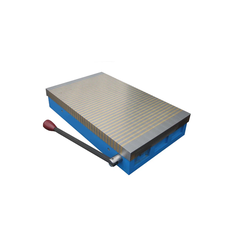


Magnets create a magnetic field force that you can't see but can feel through how it attracts or repels objects like iron, nickel, and cobalt. People have been fascinated by magnets for hundreds of years. The first magnets, called magnetite, were discovered in ancient Greece, and since then, they've played a big role in science and everyday life.
But how do they work? It all comes down to physics. An invisible force is created between two objects thanks to something called electrons. Now that you know a bit about magnets, let's dive in and explore how these incredible objects impact your life!
The Basics of Magnetism

Magnetism is a fascinating and essential force of nature integral to our daily lives. This natural phenomenon is mysterious and practical, from the invisible magnetic field surrounding the Earth to the simple magnets on your refrigerator. Throughout history, it has shaped technological advancements, scientific understanding, and even navigation systems. To truly appreciate the wonder of magnetism, we must first understand what it is, how it works, and where it occurs.
What Is Magnetism?
Magnetism is one of nature's forces, and it happens through the movement and interaction of particles, like electrons. You might already know that magnets work because small magnetic regions inside them align, creating magnetic fields around the magnet.
A magnetic field is the area around a magnet where you can feel its pull or push – its direct or repulsive force. Imagine them like tubes of light radiating out from one side of the magnet, the north, bending around in curves to return to the south. How strong or established this field is depends on the material and type of magnet, so every magnet you encounter will be slightly different.
Every magnet you see has two poles: a north pole and a south pole. These are the parts where the magnet is strongest. When you bring two magnets close to each other, their poles react. You'll see that opposite poles pull together (like "north" and "south"), but the same poles push away from each other (like "north" and "north" or "south" and "south").
Types of Magnets
Magnetism is a force we encounter daily, but not all magnets are the same. The three main types-permanent, electromagnets, and temporary magnets have unique properties and uses in technology, industry, and daily life. Let's explore how they work and where they're used.
1. Permanent Magnets
You've probably seen permanent magnets before the ones on your refrigerator. These magnets retain their magnetism over time. Materials like iron, nickel, and cobalt can be permanently magnetized because their atomic structure allows their magnetic domains to align.
2. Electromagnets
Do you know how electromagnets work? It's simple! You take a wire, wrap it around something magnetic, and then run electricity through the wire. This makes a magnetic field. The best part? You can turn the magnet on and off whenever you want.
3. Temporary Magnets
Temporary magnets are materials that only become magnetic when they are near a magnet. For example, if you put a piece of iron close to a magnet, it will turn magnetic for a short time because its magnetic parts line up.
Magnetic Materials
Have you ever noticed that not everything around you is magnetic? Only some materials can become magnetic, and it depends on how their atoms and electrons are arranged.
1. Magnetic Materials
Materials like iron, nickel, and cobalt can be magnetized. These are called ferromagnetic materials. Inside them, tiny groups of atoms, called magnetic domains, line up to create a strong magnetic field.
2. Non-Magnetic Materials
Things like wood, plastic, and glass can't be magnetized. Their atoms aren't arranged in the right way to make magnetic domains line up, so they don't react to magnets.
How Magnets Work: The Science Behind It
The science of magnets is fascinating and a bit complex, but understanding the basics can help you grasp how they work. Here's a breakdown of the key concepts:
1. Atomic Structure and Magnetism
Magnetism starts with tiny particles called electrons. Electrons move around the center of an atom and have something called "spin," which creates small magnetic fields. When these little magnetic fields all point in the same direction, they combine to make a bigger magnetic field.
In most materials, these fields cancel each other out, so you don't notice them. But in materials like iron, the fields line up in the same direction, creating a strong magnetic field that you can see or feel.
2. Electromagnetism
You might not realize it, but electricity and magnetism are closely connected. When electricity flows through a wire, it generates a magnetic field around it. This connection, explained by physicist James Clerk Maxwell, is the principle behind electromagnets, electric motors, and generators. Think about the next time you see a motor running-magnetism is at work!
3. Quantum Physics and Magnetism
If you want to dive deep, you can look at magnetism through the lens of quantum physics. Electrons have a property called quantum spin, and when these spins align, you get magnetic effects. Renowned physicist Richard Feynman explained that to truly understand magnetism, you need to explore quantum mechanics and how electrons move in atomic orbitals.
Even more advanced is quantum electrodynamics (QED), which explains how charged particles interact with magnetic fields. While you don't need to master QED to use magnets, it's pretty amazing to think about how much science is wrapped up in something as simple as a magnet!

Applications of Magnetism
Magnets are an integral part of daily life and a driving force behind many scientific and technological advancements. From simple household uses to sophisticated industrial processes and cutting-edge innovations, magnetism has shaped the way we interact with the world and continues to inspire new developments in engineering, medicine, and transportation.
1. Everyday Uses
Magnets are a part of our daily lives more than you might realize. Refrigerator magnets are a simple yet effective way to keep notes, pictures, or shopping lists in place, adding both function and a personal touch to your kitchen. Compasses, a tool that's been used for centuries, rely on the Earth's magnetic field to help you find your way by always pointing north. Even magnetic toys, like building blocks or puzzles, use simple magnetic properties to provide hours of entertainment and creative play for kids.
2. Industrial Applications
Magnets play a critical role in many industries and technologies. Electric motors, which power countless devices from household appliances to electric cars, depend on magnets to convert electricity into mechanical energy. Similarly, generators use magnets to transform mechanical energy into electricity, providing power for homes, businesses, and industries. In medicine, magnets are indispensable in MRI (Magnetic Resonance Imaging) machines, where incredibly strong magnetic fields help create detailed, lifesaving images of the human body to assist in diagnosing medical conditions.
3. Advanced Applications
Magnets also enable some of the most advanced technologies in the world. In particle accelerators, magnets are used to guide and control the path of charged particles traveling at nearly the speed of light, aiding in groundbreaking scientific research. Maglev trains, a marvel of modern engineering, use powerful magnets to lift the train above the tracks, eliminating friction and allowing for incredibly fast, smooth, and energy-efficient travel. These innovative uses of magnets continue to push the boundaries of what's possible in science and technology.
The Mysteries of Magnetism
It's natural to wonder why magnets attract or repel each other. While physicists have developed a deep understanding of magnetism, some aspects remain a mystery. For instance, scientists are still exploring how quantum-mechanical properties influence the larger, visible behavior of magnets.
Unanswered Questions
1. Why do materials like magnetite naturally exhibit magnetism?
2. How does magnetism interact with other fundamental forces of nature?
3. Can we create materials with even stronger magnetic properties?
These are the kinds of questions that keep driving research and innovation.
Conclusion
Magnets are a fascinating mix of the everyday and the extraordinary. They work on principles that range from classical physics to the quantum world of electrons and spins. Whether you're using a magnet to hold up your child's art on the fridge or benefiting from technology that relies on magnetism, this invisible force is part of your life in countless ways.
While not every aspect of magnetism is fully understood, our knowledge lets you harness this incredible phenomenon for all kinds of applications. So next time you feel a magnet stick to a metallic surface, take a moment to appreciate the amazing science behind it.
FAQs
1. What is a magnetic field and how is it created?
A magnetic field is the area around a magnet where magnetic forces can act on objects. You might find it helpful to think of it as an invisible force field. Magnetic fields are created when electrons move, especially when there's an electric current or charged particles in motion. It's all tied to principles of electromagnetism and physics.
2. Why do magnets stick to certain objects?
Magnets stick to objects that have magnetic materials like iron. When you bring a magnet close to these materials, its magnetic field lines align with the magnetic domains in the object, pulling them together. This alignment strengthens the magnetic attraction, making it "stick." It's why some objects attract magnets, while others don't.
3. How do the two poles of a magnet behave?
Every magnet you use will have two poles: a north pole and a south pole. Here's how they behave: like poles (north-north or south-south) repel each other, while opposite poles (north-south) attract. If you've ever noticed the pull or push between two magnets, you're experiencing this interaction. The poles are where the magnetic field is strongest.
4. How does a compass work with Earth's magnetic field?
When you use a compass, the needle aligns with Earth's magnetic field. The Earth itself acts like a giant magnet thanks to its molten iron core. The needle, which is a tiny magnet, reacts to this field and points toward the magnetic north pole. It's a simple but ingenious way to help you find your direction.
5. Can magnetic fields interact with electrically charged particles?
Yes, if you've ever wondered, magnetic fields can affect electrically charged particles. This interaction creates electromagnetic fields and plays a key role in how electrons move and how magnetic forces work on a tiny scale. These principles also help explain many everyday phenomena you encounter involving electricity and magnetism.