



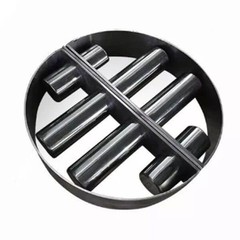
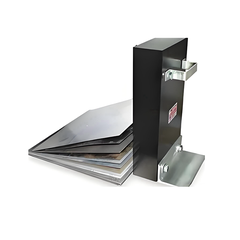


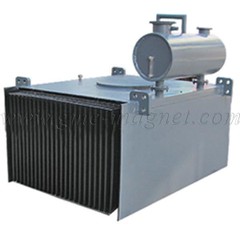
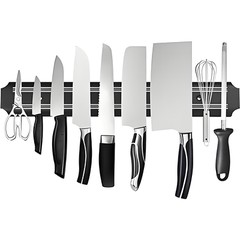



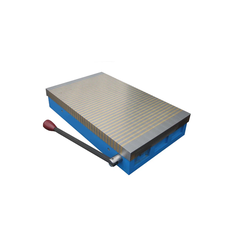


If you need to purchase magnets at Great Magntech Co., Ltd, in order for us to work more effectively with your work, we need you to provide the following at the time of inquiry:
1. What material, performance?
2. Dimensions and tolerances?
3. Do you want to magnetize? If you want to magnetize, what is the way, axial? Radial?
4. What is the maximum temperature of the working environment of the magnet?
5. What is the order quantity?
6. Surface treatment? Galvanized, nickel plated?
7. For special handling, please let us know.
At present, there are five kinds of magnetic materials available on the market. According to the magnetic force from weak to strong, they are rubber magnets, ferrite magnets, alnico magnets, samarium cobalt magnets and neodymium iron boron magnets.
The table below briefly describes the characteristics of each material to help you choose the right magnet.
Material main characteristics main shape main application
Rubber Magnets Magnets are very rubber-like, foldable, curled, and can be cut with scissors. The material is dark brown in color. The surface can also be coated with PVC tape or glued. The magnet can be made with two sides with glue for easy use. Crafts, sign boards, display boards, magnetic calendars, business cards, phone books, etc.
Ferrite is the most widely used magnet, which is cheap, but has a stronger magnetic force than a rubber magnet. The material itself is hard, brittle and has a dark gray surface. Disc-shaped, circular, square, and tile-shaped. Available in a variety of sizes Ferrites are mainly used in automotive motors (wipers, starters, heaters, fuel pumps, and seat motors), exercise bike magnetrons and massage chairs, crafts, absorbing parts, toys, and speakers.
AlNiCo is the first magnetic material used in the technical field. Can be used at very high temperatures - nearly 500 degrees Celsius. After processing, the surface is brightly colored like stainless steel. Disc shape, cylindrical shape, square shape, horseshoe shape, etc. Cast AlNiCo products are mainly used in various sensors, instruments, electronics, electromechanical, medical, teaching, automotive, aerospace, military technology and other fields; sintered aluminum nickel cobalt products are widely used in various instruments, various types of magnetic sensors, controllers , automotive igniters, odometers and other applications.
Samarium Cobalt Rare earth magnets are very brittle, but they are resistant to high temperatures and can be used at 300 degrees Celsius. Disc-shaped, circular, square, and tile-shaped. Available in a variety of sizes Widely used in aerospace, defense military, microwave devices, communications, medical equipment, instruments, meters, various magnetic transmissions, sensors, magnetic processors, motors and other high-tech fields and high temperature environments.
NdFeB High-performance rare-earth magnets are not as brittle as samarium-cobalt, but they are not as high as samarium-cobalt magnets. It is also highly oxidizable at room temperature, so the surface must be plated. Disc-shaped, circular, square, and tile-shaped. Available in a variety of sizes Main applications include: VCM, permanent magnet motors, generators, magnetic resonance imaging, magnetic separators, audio speakers, magnetic drives, magnetic lifting, instrumentation, liquid magnetization, magnetic therapy equipment, etc. Etc., has become an indispensable functional material for automobile manufacturing, general machinery, electronic information industry and cutting-edge technology.
What are the applications of 2 bismuth iron boron magnets?
NdFeB permanent magnets are rapidly developing and widely used for their excellent performance, abundant raw materials and reasonable prices. Its main applications in micro-motors, permanent magnet instruments, electronics industry, automotive industry, petrochemical, nuclear magnetic resonance devices, sensors, audio equipment, magnetic suspension systems, magnetic transmission mechanisms and magnetic therapy equipment.
3NdFeB consists of those materials?
The main raw materials of NdFeB permanent magnets are rare earth metal lanthanum (Nd) 32%, metallic element iron (Fe) 64% and non-metallic element boron (B) 1% (a small amount of yttrium (Dy), lanthanum (Tb), cobalt (Co), niobium (Nb), gallium (Ga), aluminum (Al), copper (Cu) and other elements). The NdFeB ternary permanent magnet material is based on Nd2Fe14B compound, and its composition should be similar to that of the compound Nd2Fe14B. However, when the Nd2Fe14B is completely distributed, the magnetic properties of the magnet are very low, even non-magnetic. It is only in the actual magnet that the content of bismuth and boron is higher than that of the Nd2Fe14B compound to obtain better permanent magnet properties.
How long can the magnetic properties of 4 NdFeB last?
Neodymium iron boron magnets have a relatively high coercive force, and there is no demagnetization and magnetic change under natural environment and general magnetic field conditions. Assuming that the environment is appropriate, the magnetic properties of the magnet will not be lost even after prolonged use. Therefore, in practical applications, we often ignore the influence of time factors on magnetic performance.
5 on the orientation direction
Orientation direction: The direction in which an anisotropic magnet can obtain the best magnetic properties is called the orientation direction of the magnet. The magnet is divided into 1 isotropic magnets: magnets with the same magnetic properties in any direction. 2 Anisotropic magnets: The magnetic properties in different directions will be different; and there is one direction, that is, the orientation direction, and the magnetic properties obtained in the direction are the highest. magnet. The sintered NdFeB permanent magnet is an anisotropic magnet, so it is necessary to determine the orientation direction (magnetization direction) before production.
6 Factors affecting the magnetic force of NdFeB magnets?
Ambient temperature, because sintered NdFeB is extremely sensitive to operating temperatures, the instantaneous maximum temperature and continuous maximum temperature of the environment may cause different degrees of demagnetization of the magnet, including reversible and irreversible, recoverable and unrecoverable.
What is the operating temperature range of the 7-inch iron-boron magnet?
The temperature limit of NdFeB magnets has led to the development of a range of magnets to suit different operating temperature requirements. Please refer to our Performance Catalog to compare the operating temperature range of each class of magnets. The maximum operating temperature needs to be confirmed before selecting the neodymium iron boron magnet.
8 How to shield the magnetic field?
Generally we use ordinary iron plates to shield the magnetic field. Magnetic shielding requires high permeability materials. The material that meets this requirement is iron-nickel alloy, which has a high magnetic permeability. When the magnetic field to be shielded is very strong, only a single layer of shielding material is used, and the shielding requirement is not achieved, or saturation occurs. At this time, one method is to increase the thickness of the material. However, a more efficient method is to use a combined shield to place one shield in the other, with an air gap between them. The air gap can be filled with any non-magnetic material for support, such as aluminum. The shielding effectiveness of the combined shield is much higher than for a single shield, so the combined shield can attenuate the magnetic field to a very low level.
9 What are the precautions for the storage and transportation of magnets?
The magnet should be kept ventilated and dry during storage, otherwise the wet environment will easily cause the magnet to rust. The ambient temperature should not exceed the maximum working temperature of the magnet; the unplated product should be properly oiled and rustproof when stored; the magnetized product should be stored away from magnetic fields, magnetic cards, magnetic tapes, computer monitors, watches and other objects sensitive to magnetic fields. The magnet material is brittle, transported, plated (coated), and the magnet should be protected from severe impact during installation. If the method is improper, it may cause magnetic damage and cracking; the magnet should be shielded during transportation in the magnetized state, especially aviation. Transportation must be completely shielded.
What are the precautions for the operation of 10 magnets?
During the use of the magnet, the working place should be clean. Otherwise, it is easy to adsorb magnetic particles such as iron filings. The characteristics of the NdFeB material are hard and brittle, and the suction force can reach 600 times or more of its own weight, which is easy to pick up. Touch damage. The operation process should pay attention to avoid bumping and breakage for small specifications. For large specifications, it is more important to pay attention to personal safety and protection.
11 What is the reason for the peeling of the coating and the cause of the rust spots?
For qualified electroplating products, under normal conditions, the plating plating should not show rust spots. When it is too humid, the air circulation is not good, and the temperature difference changes greatly, even if the salt spray test qualified product is stored in a harsh environment for a long time, rust spots may occur. When the electroplating product is stored in a harsh environment, the base layer further reacts with the condensed water, which causes the adhesion between the base layer and the plating layer to be lowered, and in the severe case, the base layer is partially pulverized, thereby naturally peeling. Electroplating products should not be placed in high humidity for long periods of time and should be placed in a cool, dry place.
12 How to measure the level of magnetic performance?
There are three main parameters: Residual Induction, unit Gauss, after removing the magnetic field from saturation, the remaining magnetic flux density represents the magnetic field strength of the magnet; Coercive Force, unit Oersteds puts the magnet in a reverse applied magnetic field. When the applied magnetic field increases to a certain intensity, the magnet's magnetism disappears. The ability to resist the applied magnetic field is called coercivity, which represents the measurement of anti-demagnetization ability; magnetic energy. The product BHmax, unit Gauss-Oersteds, is the magnetic field energy produced by a unit volume of material, which is a physical quantity of energy that the magnet can store.
13 commonly used magnetic measuring instruments
Commonly used magnetic measuring instruments are: magnetic flux meter, Tesla meter (also known as Gauss meter), magnetic measuring instrument. A fluxmeter is used to measure magnetic flux, a Tesla meter is used to measure surface magnetic field strength or air gap magnetic field strength, and a magnetic meter is used to measure integrated magnetic properties. All instruments should be read carefully before use, preheated according to the requirements of the manual, and after the preheating, follow the instructions.
How is 14 ferroniobium made?
The sintered NdFeB permanent magnet is an iron-based permanent magnet material manufactured by a powder metallurgy process. The main processes are: formulation, smelting, milling, molding orientation, sintering, machining, electroplating, etc. The control of oxygen content is an important indicator to measure the level of the process. Our company's production equipment uses high-vacuum smelting, sintering furnace and advanced automatic control airflow mill to ensure the basic oxygen-free operation of the production process, so that the performance and temperature of the products have a breakthrough.
15 factors affecting the processing cost of magnets?
The processing cost of magnets is mainly affected by the following factors: performance requirements, batch size, gauge shape, tolerance dimensions. The higher the performance requirements, the higher the cost. For example, the price of N45 magnet is much higher than the price of N35; the smaller the batch, the higher the processing cost; the more complicated the shape, the higher the processing cost; the stricter the tolerance, the higher the processing cost.
If you have any questions about magnets, please don't hesitate to contact me.
www.greatmagtech.com
greatmagtech.en.made-in-china.com
www.gme-magnet.com
Skype: greatmagtechelectric@outlook.com