





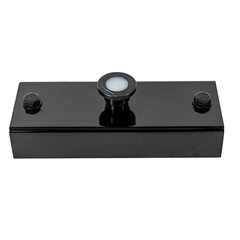





As the third-generation rare earth permanent magnet material, NdFeB magnets have high performance and are widely used in energy, transportation, machinery, medical, IT, home appliances, and other industries, especially with the development of the knowledge economy represented by information technology, which brings new uses to functional materials such as rare earth permanent magnet NdFeB industry, which brings broader market prospects to NdFeB industry. NdFeB magnets are widely used in electronic products, such as hard drives, mobile phones, headphones, and battery-powered tools.
NdFeB magnets are the magnets with the highest commercial performance found so far. They have the characteristics of small size, lightweight, and strong magnetic properties. They are the magnets with the best performance-price ratio so far. With extremely high magnetic properties, its maximum magnetic energy product is more than 10 times higher than that of ferrite. Its own machining performance is also quite good. Operating temperature up to 200 degrees Celsius. Moreover, its texture is hard, its performance is stable, and it has a good price/performance ratio, so it is widely used. However, because of its strong chemical activity, it must be treated with a surface coating.
NdFeB has a very high magnetic energy product and coercive force, and at the same time, the advantages of high energy density make NdFeB permanent magnet materials widely used in modern industry and electronic technology, thus making instruments, electroacoustic motors, and magnetic separation magnetization It is possible to reduce the size, weight, and thickness of other equipment. The advantages of NdFeB are high-cost performance and good mechanical properties; the disadvantage is that the Curie temperature point is low, the temperature characteristics are poor, and it is easy to be pulverized and corroded. It must be improved by adjusting its chemical composition and adopting surface treatment methods. , in order to meet a requirement of practical application.
NdFeB magnets are relatively corrosion-resistant. Generally, the coating is black epoxy and gray epoxy. The magnetization method is more flexible than sintered NdFeB magnets. It can be multi-pole magnetized on the outer diameter and inner diameter of the ring, radiation magnetization, and many ends faces. Pole magnetization, spiral magnetization, etc.
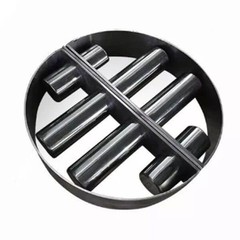
Material grades are N35-N52; various shapes can be processed according to specific requirements: round, square, perforated, magnetic tile, magnetic rod, convex, trapezoid, etc.
