











Can a cup magnet attract all metals? This is a question that often pops up when people start to explore the world of magnets. As a cup magnet supplier, I've encountered this query numerous times from customers, hobbyists, and even students. In this blog, we'll delve into the science behind magnetism and answer this question once and for all.
Understanding Magnetism
Before we can determine whether a cup magnet can attract all metals, we need to understand the basics of magnetism. Magnetism is a fundamental force of nature that arises from the movement of electric charges. In magnets, these charges are arranged in such a way that they create a magnetic field, which can attract or repel certain materials.
There are three main types of magnetic materials: ferromagnetic, paramagnetic, and diamagnetic. Ferromagnetic materials are the most well - known and are strongly attracted to magnets. Examples of ferromagnetic materials include iron, nickel, and cobalt. These materials have unpaired electrons in their atoms, which align in the presence of a magnetic field, creating a strong magnetic force.
Paramagnetic materials are weakly attracted to magnets. They also have unpaired electrons, but the alignment of these electrons is less organized than in ferromagnetic materials. Examples of paramagnetic materials include aluminum, platinum, and oxygen.
Diamagnetic materials, on the other hand, are repelled by magnets. These materials have all their electrons paired, and when placed in a magnetic field, they create a weak magnetic field in the opposite direction, resulting in a repulsive force. Examples of diamagnetic materials include copper, silver, and gold.
Can a Cup Magnet Attract All Metals?
The short answer is no. A cup magnet, like any other magnet, cannot attract all metals. Cup magnets are typically made of ferromagnetic materials, such as neodymium or ferrite, which have a strong magnetic field. They are most effective at attracting ferromagnetic metals.
When it comes to paramagnetic metals, a cup magnet may have a very weak attraction, but this attraction is often so slight that it's barely noticeable. For instance, if you try to use a cup magnet to pick up a piece of aluminum foil, you'll find that there's hardly any interaction. The weak magnetic force generated by the alignment of the unpaired electrons in aluminum is not enough to overcome the force of gravity.
As for diamagnetic metals, a cup magnet will actually repel them. For example, if you place a small piece of copper near a cup magnet, you'll observe a very slight repulsive force. This repulsion is due to the induced magnetic field in the copper that opposes the external magnetic field of the cup magnet.
Applications of Cup Magnets
Despite their inability to attract all metals, cup magnets have a wide range of applications. They are commonly used in industrial settings for holding, lifting, and separating ferromagnetic materials. For example, in manufacturing plants, cup magnets can be used to hold metal parts in place during assembly processes.
In the home, cup magnets are used in various ways. They can be found in magnetic hooks, which are great for hanging keys, towels, or other small items. Our High Quality Cup Magnet Pot Magnet Super Strong Magnetic Hook is a popular choice for homeowners looking for a reliable and strong magnetic solution.
Cup magnets are also used in the production of magnetic name tags. These name tags are convenient as they can be easily attached and removed without damaging clothing. If you're in the market for magnetic name tags, check out our Magnetic Name Tags Round Magnet Badge Factory Wholesale options.
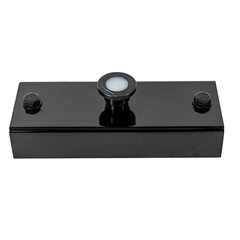
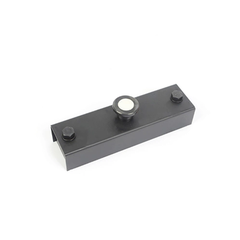
In the construction industry, cup magnets are used for precast concrete formwork. Our 1800Kg Pull Force Precast Concrete Magnet is designed to provide a strong and reliable hold, ensuring that the concrete forms stay in place during the pouring and curing process.
Factors Affecting a Cup Magnet's Attraction
Several factors can affect a cup magnet's ability to attract metals. The strength of the magnet is a crucial factor. Stronger magnets, such as neodymium cup magnets, will have a greater magnetic field and can attract ferromagnetic metals from a greater distance.
The distance between the magnet and the metal also plays a role. As the distance increases, the magnetic force decreases according to the inverse - square law. So, if you want to maximize the attraction between a cup magnet and a metal object, you need to keep them as close as possible.
The size and shape of the metal object can also impact the attraction. Larger objects with a greater surface area in contact with the magnet will experience a stronger force than smaller objects. Additionally, the orientation of the metal object relative to the magnet can affect the magnetic force.
Conclusion
In conclusion, a cup magnet cannot attract all metals. It can strongly attract ferromagnetic metals, have a weak interaction with paramagnetic metals, and repel diamagnetic metals. Understanding the properties of different metals and the principles of magnetism is essential for making the most of cup magnets in various applications.
If you're interested in purchasing cup magnets for your specific needs, whether it's for industrial use, home improvement, or any other application, we're here to help. We offer a wide range of high - quality cup magnets and related products. Contact us to start a procurement discussion, and our team will be happy to assist you in finding the right magnetic solutions for your requirements.


References
- "Introduction to Magnetism", Physics Textbook, 2020 Edition
- "Magnetic Materials: Properties and Applications", Journal of Applied Magnetism, Vol. 15, 2019
- "The Science of Magnets", Smithsonian Magazine, June 2021