










Hey there! I'm a supplier of NdFeB magnets, and today I wanna chat about the relationship between the coercivity and remanence of NdFeB magnets. It's a topic that might seem a bit technical at first, but it's super important when it comes to understanding these powerful little magnets.
First off, let's break down what coercivity and remanence are. Coercivity is basically a measure of how hard it is to demagnetize a magnet. Think of it like a magnet's resistance to losing its magnetic field. The higher the coercivity, the more stubborn the magnet is in holding onto its magnetism. For example, if you have a magnet with high coercivity, it'll take a lot of external magnetic fields or physical stress to make it lose its magnetism.
On the other hand, remanence is the magnetic field that remains in a magnet after it's been magnetized and then removed from the external magnetic field. It's like the magnet's "leftover" magnetic strength. A magnet with high remanence will have a strong magnetic field even without an external magnetic force acting on it.
So, what's the relationship between these two? Well, generally speaking, there's a bit of a trade - off. In NdFeB magnets, as you try to increase the coercivity, the remanence might decrease a bit, and vice versa. This is because the factors that contribute to high coercivity and high remanence are somewhat in conflict with each other at the atomic level.
The structure of NdFeB magnets is a key factor here. These magnets are made up of a complex arrangement of neodymium (Nd), iron (Fe), and boron (B) atoms. The way these atoms are arranged and interact with each other affects both coercivity and remanence. For instance, adding certain elements like dysprosium (Dy) can increase the coercivity. Dysprosium helps to pin the magnetic domains in the magnet, making it harder for them to be re - oriented by an external magnetic field. But adding too much dysprosium can reduce the remanence because it disrupts the magnetic alignment that contributes to the overall magnetic field strength.
Now, why does this relationship matter? Well, it all depends on the application. If you're using NdFeB magnets in a high - temperature environment, like in a motor for an electric vehicle, you'll probably want a magnet with high coercivity. Motors generate heat, and high - temperature can cause magnets to lose their magnetism more easily. A magnet with high coercivity can withstand these temperature - induced demagnetization effects better. For example, our Countersunk Magnet Ø 14.0 X 4.5 X 4.5 Mm N35 Nickel can be a great choice in some applications where a balance of coercivity and remanence is needed.


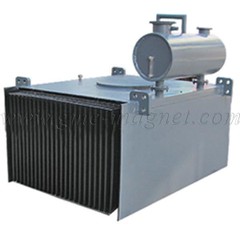
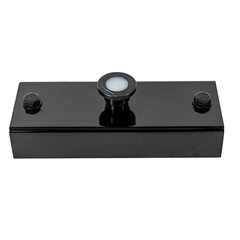
On the other hand, if you're using the magnets in a situation where you need a strong magnetic field without a lot of external interference, like in a magnetic separator for mining, you might prioritize remanence. A magnet with high remanence can attract magnetic particles more strongly. Our Neodymium Magnet Block Magnet With Ledge Stepped Magnet could be a good option here, as it can be designed to have relatively high remanence for efficient separation.
At our company, we understand that different customers have different needs. That's why we offer N35 - N52 Neodymium/NdFeb Customized Magnets with Different Shapes. We can work with you to find the right balance between coercivity and remanence based on your specific application. Whether you need a magnet for aerospace, electronics, or any other industry, we've got the expertise to customize the magnets to meet your requirements.
When we're making these customized magnets, we use advanced manufacturing techniques. We start with high - quality raw materials and carefully control the production process. This allows us to fine - tune the coercivity and remanence of the magnets. For example, during the sintering process, we adjust the temperature and time to optimize the grain structure of the magnet. A well - controlled grain structure can enhance both coercivity and remanence to some extent.
Another important aspect is the surface treatment of the magnets. NdFeB magnets are prone to corrosion, especially in humid or corrosive environments. So, we apply different surface coatings like nickel plating, zinc plating, or epoxy coating. These coatings not only protect the magnet from corrosion but can also have a small impact on the magnetic properties. For instance, a proper nickel coating can provide a smooth surface that doesn't interfere too much with the magnetic field, while still protecting the magnet.
If you're in the market for NdFeB magnets, it's crucial to understand your application requirements. Do you need a magnet that can withstand high temperatures and strong external magnetic fields? Or do you need a magnet with a really strong magnetic pull? Once you've figured that out, you can work with us to select the right magnet grade and customize it according to your needs.
We're always here to help you with any questions you might have. Whether it's about the technical details of coercivity and remanence, or the best magnet for your specific project, just reach out. Our team of experts is ready to assist you in making the right choice. We believe in building long - term relationships with our customers, and we're committed to providing high - quality NdFeB magnets that meet your expectations.
So, if you're interested in purchasing NdFeB magnets, don't hesitate to get in touch. We can have a detailed discussion about your requirements and come up with the perfect solution for you. Let's work together to find the best NdFeB magnets for your applications!
References:
- "Permanent Magnet Materials and Their Applications" by E. C. Stoner and E. P. Wohlfarth
- "Handbook of Magnetic Materials" edited by K. H. J. Buschow