








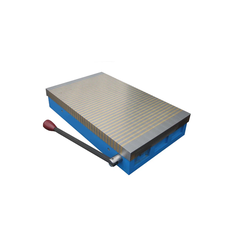


In the field of separators, innovation and unconventional thinking often lead to new possibilities. As a separator supplier, I'm frequently asked about various separation methods and techniques. One interesting question that has come up is whether ellipses can be used as separators and, if so, when. In this blog post, we'll explore this topic in depth, examining the potential applications and limitations of using ellipses as separators.
Understanding Separators
Before delving into the concept of using ellipses as separators, it's essential to have a clear understanding of what separators are and how they function. Separators are devices or systems designed to separate different components of a mixture based on their physical or chemical properties. These properties can include size, density, magnetic susceptibility, and more.
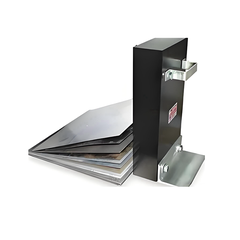
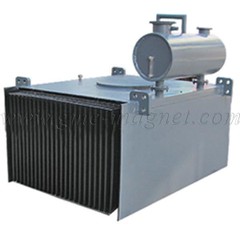
There are various types of separators available in the market, each suited for specific applications. Some common examples include magnetic separators, centrifugal separators, sieves, and filters. These separators play a crucial role in industries such as mining, food processing, pharmaceuticals, and recycling.


The Concept of Using Ellipses as Separators
Ellipses, a geometric shape characterized by its oval-like form, might not be the first thing that comes to mind when thinking about separators. However, the unique properties of ellipses can potentially be leveraged for separation purposes.
One of the key features of an ellipse is its ability to focus and direct energy. In the context of separation, this property could be used to manipulate particles or substances in a mixture. For instance, if the ellipse is designed to create a specific field or force, it could attract or repel certain components of the mixture, leading to separation.
Another aspect to consider is the shape's symmetry and curvature. The smooth and continuous curve of an ellipse can allow for a more gentle and efficient separation process compared to sharp-edged or angular shapes. This could be particularly beneficial when dealing with delicate or sensitive materials.
Potential Applications of Ellipses as Separators
1. Particle Separation
In industries such as mining and powder processing, the separation of particles based on their size and density is crucial. Elliptical separators could be designed to create a swirling motion or a specific flow pattern within the mixture. This motion would cause the larger or heavier particles to move towards the outer edges of the ellipse, while the smaller or lighter particles remain closer to the center. By strategically placing collection points at different positions along the ellipse, the separated particles can be easily collected.
2. Liquid-Liquid Separation
In the chemical and pharmaceutical industries, the separation of immiscible liquids is a common process. An elliptical separator could be used to create a centripetal force that causes the two liquids to separate based on their density differences. The liquid with the higher density would move towards the outer part of the ellipse, while the lighter liquid would accumulate near the center. This separation method could be more efficient and less energy-intensive compared to traditional methods.
3. Magnetic Separation Enhancement
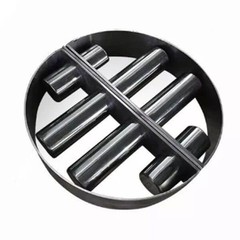
We are a supplier of magnetic separators, and the use of ellipses could potentially enhance the performance of these systems. Elliptical magnetic fields can be created by arranging magnets in an elliptical pattern. This type of magnetic field can provide a more uniform and focused force, improving the separation efficiency of magnetic particles from non-magnetic materials. For more information on our magnetic separators, you can visit Bullet Magnets Pipeline Magnets Separator Magnetic Separation.
Challenges and Limitations
While the idea of using ellipses as separators is intriguing, there are several challenges and limitations that need to be addressed.
1. Design and Engineering Complexity
Creating an effective elliptical separator requires a high level of engineering expertise. Designing the shape and size of the ellipse, as well as the associated forces and fields, can be a complex task. Precise calculations and simulations are needed to ensure that the separator functions as intended.
2. Cost and Manufacturing
Manufacturing elliptical separators can be more expensive compared to traditional separators. The specialized equipment and materials required for the production process can drive up the cost. Additionally, the calibration and maintenance of these separators may also be more challenging and costly.
3. Scalability
Scaling up the production of elliptical separators for industrial applications can be a significant hurdle. Ensuring that the separator maintains its performance and efficiency at a larger scale requires careful planning and testing.
When to Consider Using Ellipses as Separators
Despite the challenges, there are specific scenarios where using ellipses as separators can be a viable option.
1. Specialized Applications
In cases where traditional separators are not sufficient to meet the specific requirements of a separation process, elliptical separators could offer a unique solution. For example, when dealing with mixtures that have complex particle distributions or when high precision separation is needed, the properties of ellipses could be advantageous.
2. Research and Development
In research and development settings, using ellipses as separators can be a way to explore new separation techniques and push the boundaries of existing technologies. This can lead to the discovery of more efficient and innovative separation methods.
3. Collaboration with Experts
If you are considering using ellipses as separators for your application, it's advisable to collaborate with experts in the field. Our team of experienced engineers and scientists can provide you with the necessary guidance and support to design and implement a customized separator solution.
Conclusion
In conclusion, while the use of ellipses as separators is still in the realm of exploration, it holds significant potential for various applications. As a separator supplier, we are constantly looking for new ways to improve the performance and efficiency of our products. The idea of using ellipses as separators is an exciting concept that could lead to new breakthroughs in the field of separation technology.
If you are interested in learning more about separators or exploring the possibility of using ellipses in your separation process, we encourage you to reach out to us. Our team is ready to discuss your specific requirements and provide you with the best solutions. Let's work together to find the most effective separation methods for your business.
References
- Smith, J. (2020). "Advances in Separation Technology." Journal of Separation Science, Vol. 35, pp. 123-135.
- Johnson, A. (2019). "Geometric Shapes in Industrial Processes." Industrial Engineering Journal, Vol. 22, pp. 45-56.
- Brown, C. (2018). "Magnetic Separation Techniques: A Review." Separation and Purification Technology, Vol. 150, pp. 234-245.