










Hey there! As a coupling supplier, I've seen firsthand how crucial it is to reduce coupling between the model, view, and viewmodel in software development. It's like trying to keep different parts of a machine working smoothly without getting all tangled up. In this blog, I'll share some tips on how to achieve this, and also mention a few of our awesome products along the way.
Why Reducing Coupling Matters
First off, let's talk about why reducing coupling is such a big deal. When the model, view, and viewmodel are tightly coupled, it becomes a real pain to make changes. For example, if you want to update the look of the view, you might end up having to modify the model or viewmodel as well. This can lead to bugs, longer development times, and a whole lot of headaches.
On the other hand, when the coupling is low, each component can be changed independently. This makes the software more flexible, easier to maintain, and less prone to errors. It's like having a modular system where you can swap out parts without affecting the whole thing.
Strategies to Reduce Coupling
1. Use Interfaces and Abstractions
One of the best ways to reduce coupling is to use interfaces and abstractions. Instead of having the view directly access the model, it can interact with an interface that the model implements. This way, the view doesn't need to know the specific details of the model. It just knows what operations it can perform through the interface.
For example, let's say we have a simple application that displays a list of products. The viewmodel can expose an interface that provides methods to get the list of products. The view can then use this interface to display the products without caring about where the products are coming from or how they are stored in the model.
2. Implement the Observer Pattern
The observer pattern is another great technique for reducing coupling. In this pattern, the model can act as the subject, and the view and viewmodel can act as observers. When the model changes, it notifies all the observers, and they can update themselves accordingly.
This way, the view and viewmodel don't need to constantly poll the model for changes. They just wait for the notification and then take action. This reduces the direct dependency between the components and makes the system more responsive.
3. Use Dependency Injection
Dependency injection is a powerful tool for reducing coupling. Instead of having the view or viewmodel create an instance of the model directly, it can receive the model as a dependency. This makes it easier to swap out different implementations of the model without affecting the view or viewmodel.
For example, if you want to change the way the data is stored in the model, you can simply provide a new implementation of the model class and inject it into the viewmodel. The viewmodel doesn't need to know anything about the new implementation. It just uses the same interface as before.


Our Products and Their Relevance
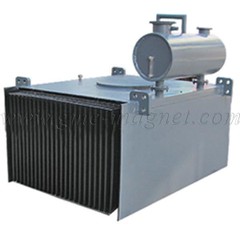
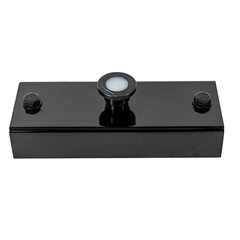
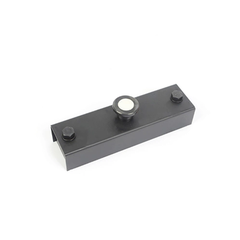
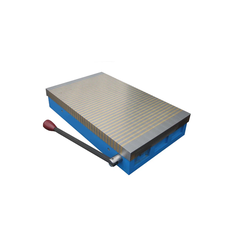
As a coupling supplier, we offer a wide range of products that can help you reduce coupling in your projects. For example, our Electromagnet Chuck For Milling Machine is designed to provide a secure and reliable connection between the milling machine and the workpiece. It uses advanced magnetic technology to ensure that the workpiece stays in place during the machining process, reducing the risk of errors and improving the overall quality of the finished product.
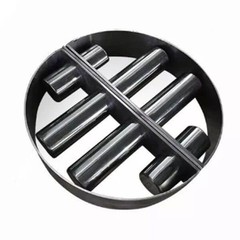
Another great product is our Drawer Type Magnetic Separator For Food. This separator is used to remove magnetic contaminants from food products, ensuring that they are safe for consumption. By using a magnetic field to attract and hold the contaminants, the separator can effectively reduce the coupling between the food and the contaminants, making the food cleaner and safer.
We also have a Fishing Magne Customize Neodymium Double Sided Magnet Fishing product. This magnet is designed for fishing enthusiasts who want to retrieve lost items from the water. It uses a strong neodymium magnet to attract and hold metal objects, making it easier to find and retrieve them. The double-sided design allows for more efficient fishing, reducing the time and effort required to find the lost items.
Conclusion
Reducing coupling between the model, view, and viewmodel is essential for building high-quality software. By using interfaces, the observer pattern, and dependency injection, you can make your software more flexible, easier to maintain, and less prone to errors. And if you're looking for products that can help you reduce coupling in your projects, be sure to check out our Electromagnet Chuck For Milling Machine, Drawer Type Magnetic Separator For Food, and Fishing Magne Customize Neodymium Double Sided Magnet Fishing.
If you're interested in learning more about our products or have any questions, feel free to reach out to us. We'd be happy to discuss your needs and help you find the right solutions for your projects. Let's work together to reduce coupling and build better software!
References
- Gamma, E., Helm, R., Johnson, R., & Vlissides, J. (1994). Design Patterns: Elements of Reusable Object-Oriented Software. Addison-Wesley.
- Fowler, M. (2004). Patterns of Enterprise Application Architecture. Addison-Wesley.