








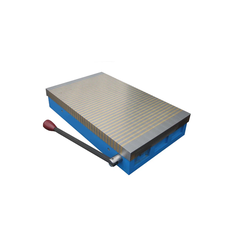


Magnet performance directly affects how reliable and efficient your product will be in real use. If you only focus on size or initial pull force, you may face problems like weak holding power, early demagnetization, or unstable operation over time. By understanding key performance parameters, you can choose a magnet that matches your working temperature, environment, and lifespan requirements, ensuring consistent performance, lower failure risk, and better overall cost control for your application.
Key Magnet Performance Parameters Explained
Three important performance parameters are available to determine the performance of the magnet:
Remanence Br: When the permanent magnet is magnetized to the technical saturation and the external magnetic field is removed, the retained Br is called the residual magnetic induction.
Coercive force Hc: The B of the permanent magnet magnetized to the technical saturation is reduced to the magnetic field coercive force, which is called the coercive force.
The magnetic energy product BH: represents the magnetic energy density established by the magnet in the air gap space, that is, the magnetostatic energy per unit volume of the air gap.

Since this energy is equal to the product of the magnet's Bm and Hm, it is called the magnetic energy product. Magnetic field: The magnetic field that acts on the magnetic pole is the magnetic field. Appearance magnetic field: The magnetic induction intensity of a permanent magnet body at a specified position.
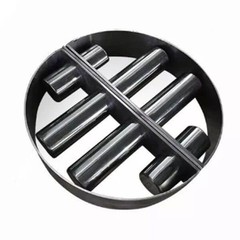
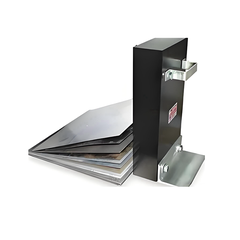
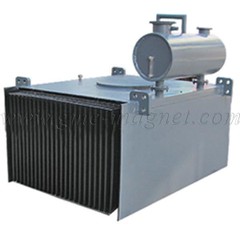
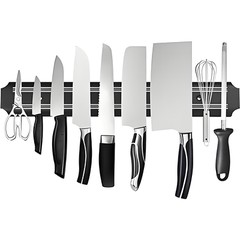
Magnet products are used in toys, jewelry, craft gifts, handmade gift boxes, leather handbags, invisible magnetic buttons, plastic hardware products, audio equipment, and other industries.
How Magnet Grades Relate to Performance
Magnet grades turn complex performance data into a simple code that helps you quickly judge strength and suitability.
Understand the number
The number roughly reflects the magnet's BHmax. A higher number means higher magnetic energy and stronger performance in the same size.
Understand the letter suffix
Letters like M, H, or SH indicate temperature resistance. If your application runs hot, these grades protect you from performance loss.
Match grade to application
You choose the grade based on space, temperature, and long-term stability, not just maximum strength.
Magnet Material Comparison
Choosing the right magnet material is just as important as selecting the right performance grade. Each material has its own strengths and limitations, and the best choice depends on your application conditions.
NdFeB
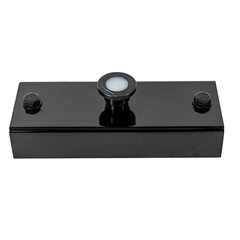
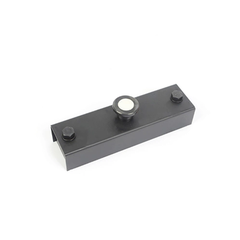
If you need the strongest magnetic performance in a compact size, NdFeB is usually your first choice. It offers very high BHmax, making it ideal for motors, magnetic separators, and precast shuttering magnets. However, it requires surface coating and proper grade selection for high-temperature environments.

SmCo
SmCo is your solution when temperature stability and corrosion resistance are most critical. It performs reliably at high temperatures and in harsh environments, albeit at a higher cost and with slightly lower magnetic strength compared to NdFeB.
Ferrite
Ferrite magnets are cost-effective and corrosion-resistant. You typically choose them for large-scale applications where high magnetic strength is not critical.
AlNiCo
AlNiCo magnets offer excellent temperature stability but low resistance to demagnetization, making them suitable for sensors and instruments rather than high-load applications.

| Material | Magnetic Strength | Temperature Resistance | Corrosion Resistance | Cost Level | Typical Applications |
|---|---|---|---|---|---|
| NdFeB | Very High | Medium–High (by grade) | Needs coating | Medium | Motors, separators, and shuttering magnets |
| SmCo | High | Very High | Excellent | High | High-temperature motors, aerospace |
| Ferrite | Low | High | Excellent | Low | Speakers, basic separators |
| AlNiCo | Medium | Very High | Good | Medium | Sensors, measuring instruments |
How to Choose the Right Magnet Performance
Choosing the right magnet performance means matching magnetic properties to your real working conditions, not simply selecting the strongest option.
Define Your Application & Environment
You start by understanding where and how the magnet will work. Consider operating temperature, exposure to vibration, moisture, impact, or external magnetic fields. These factors directly affect long-term stability and determine whether you need higher coercivity or special grades.
Determine Required Magnetic Strength
Next, clarify what "strength" means for your application holding force, surface gauss, or magnetic field depth. Avoid overestimating, as excessive strength may increase cost without adding value.
Balance Performance, Size, and Cost
Higher performance allows smaller designs, but it also raises material cost. You should aim for sufficient performance, not excessive, to achieve the best cost-performance balance.
Verify Performance with Test Data
Finally, always confirm Br, Hc/Hcj, BHmax, and tolerances through test reports to ensure consistent, reliable performance.
How GME Ensures Stable and Reliable Magnet Performance
At GME, you are supported by a performance-driven approach rather than a one-size-fits-all supply. We work backward from your application to define the required Br, Hc/Hcj, and BHmax, then match them with suitable materials and grades. Each batch is verified through magnetic performance testing and dimensional checks to ensure consistency. This helps you reduce performance risk, avoid over-specification, and achieve stable, repeatable magnetic results in long-term use.
FAQ
01. Is a higher magnet grade always better?
02. What is the difference between Hc and Hcj?
03. How does temperature affect magnet performance over time?
04. How can I check if a supplier's magnet data is reliable?
Conclusion
Understanding magnet performance goes far beyond comparing sizes or choosing the highest grade. When you clearly understand Br, Hc/Hcj, BHmax, temperature limits, and material behavior, you can select magnets that truly match your application. This approach helps you avoid premature demagnetization, unstable performance, and unnecessary cost. By focusing on real working conditions and verified test data, you gain better reliability and long-term value. If you share your application details, working environment, and performance expectations, you can work with experienced engineers to define the right magnet solution-one that delivers stable performance, consistent quality, and predictable results over time.