







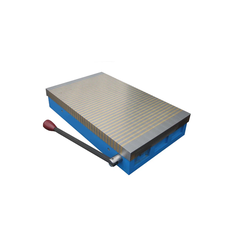


Neodymium magnets, also known as NdFeB or rare earth magnets, are the strongest type of permanent magnet commercially available today. Made from an alloy of neodymium, iron, and boron (Nd₂Fe₁₄B), they deliver a magnetic energy density up to ten times greater than conventional ferrite magnets, making them indispensable in everything from electric vehicle motors to precision medical devices.
But how are neodymium magnets made? The process is far more sophisticated than most buyers realise, a tightly controlled sequence of metallurgical, mechanical, and electromagnetic steps that together determine every dimension of a magnet's performance. Understanding this process helps engineers specify the right grade, procurement managers evaluate supplier capabilities, and product designers avoid costly mistakes.
What Are Neodymium Magnets Made From?
Neodymium magnets, also known as NdFeB magnets, are primarily composed of neodymium (Nd), iron (Fe), boron (B), and small amounts of other elements such as dysprosium (Dy), terbium (Tb), cobalt (Co), copper (Cu), or aluminium (Al). Each element contributes to the magnet's performance:
|
Component |
Purpose |
|
Neodymium / Praseodymium |
Provides strong magnetic properties |
|
Iron |
Forms the main magnetic structure |
|
Boron |
Stabilises the crystal structure |
|
Dysprosium / Terbium |
Enhances high-temperature performance and coercivity |
|
Cobalt / Copper / Aluminum |
Improves temperature stability and overall magnetic performance |
The Supply Chain Context
One factor every buyer of neodymium magnets should understand in 2025: China controls more than 85% of global NdFeB production, based largely on its dominance of rare earth mining and refining. Since April 2025, China has required special export licenses for dysprosium, terbium, and other key rare earth materials, with reported export volumes dropping sharply in subsequent months. This makes supplier transparency, inventory strategy, and long-term partnerships with established manufacturers more important than ever.
The Step-by-Step Neodymium Magnet Manufacturing Process
Making a neodymium magnet isn't a single act; it's a carefully ordered chain of eight steps, where a mistake at any stage cannot be corrected later.
- Step 1 - Melting & Alloying Neodymium, iron, and boron are loaded into a vacuum induction furnace and melted together at over 1,300°C. The vacuum environment is non-negotiable; even trace oxygen at this stage forms oxides that permanently degrade magnetic performance. The molten alloy is then rapidly cooled into thin flakes, ready for the next stage.
- Step 2 - Milling into Powder The flakes are ground down first by hydrogen decrepitation, then by jet milling into an ultra-fine powder with particles averaging just 3 micrometres in size, smaller than a red blood cell. Every step happens inside a sealed, oxygen-free environment because NdFeB powder ignites spontaneously in open air.
- Step 3 - Pressing & Orientation The powder is pressed into a mould while a powerful magnetic field (1.5–2.5 Tesla) aligns every particle in the same direction. This alignment is what makes sintered NdFeB magnets dramatically anisotropic and dramatically stronger along one axis than any other.
- Step 4 - Sintering The pressed compact is heated to around 1,080°C in a vacuum furnace. The grain boundary phase melts and flows between particles, fusing everything into a dense, solid block. A rapid quench and ageing treatment follows, locking in the final microstructure and maximising coercivity.
- Step 5 - Precision Machining Sintered NdFeB is extremely hard, but brittle standard steel tools won't cut it. Diamond grinding wheels and wire EDM machines shape the magnet to final dimensions, often holding tolerances of ±0.05 mm for motor and sensor applications.
- Step 6 - Surface Coating Unprotected NdFeB corrodes quickly. Before magnetisation, every magnet receives a protective coating, most commonly nickel-copper-nickel for general use, epoxy for outdoor or marine environments, or gold for medical-grade applications.
- Step 7 - Magnetisation A high-voltage capacitor bank discharges through a coil surrounding the magnet, generating a field three to five times the magnet's own coercivity in a fraction of a second. The result: full magnetic saturation. If the magnet isn't secured in the fixture, the force of that pulse will fling it clear across the room.
- Step 8 - Quality Control Every batch is tested for magnetic performance (Br, Hcj, BHmax), dimensional accuracy, coating thickness by XRF, and corrosion resistance by salt spray. At GME, this happens under a TS16949-certified quality system with full traceability from raw material to finished shipment.

Sintered vs. Bonded vs. Hot-Pressed: Which Manufacturing Method Is Right for You?
Not all neodymium magnets are made the same way. The manufacturing method you choose directly affects magnetic strength, shape flexibility, and cost, so it's worth understanding the differences before you specify.
Sintered NdFeB is the industry standard for high-performance applications. It delivers the highest magnetic energy product (up to N52), but shapes are limited; all final geometries require precision machining. If you're designing an EV motor, wind turbine generator, or industrial servo, sintered is almost certainly your answer.
Bonded NdFeB trades magnetic strength for design freedom. NdFeB powder is mixed with a polymer binder and injection-moulded or compression-formed into complex shapes in a single step, with no machining needed. Energy product is significantly lower (typically 5–12 MGOe), but if your application needs a thin ring with a multi-pole pattern or an intricate integrated shape, bonded magnets make it possible where sintered cannot.
Hot-pressed NdFeB sits between the two. Near-net-shape components are formed at elevated temperature and pressure, achieving density and anisotropy approaching sintered quality without the full sintering cycle. It's a specialist route, most commonly used for compact automotive sensor rings and precision motor components where near-net-shape manufacturing eliminates costly machining waste.
| Manufacturing Process |
Sintered |
Bonded |
Hot-Pressed |
|
Max energy product |
Up to N52 |
5–12 MGOe |
Near sintered |
|
Shape flexibility |
Low |
High |
Medium |
|
Typical application |
Motors, generators |
Electronics, sensors |
Automotive, precision motors |
|
Relative cost |
Medium |
Low–Medium |
High |
Understanding Neodymium Magnet Grades: From N35 to N52 and Beyond
The grade of a neodymium magnet encodes two critical pieces of information: its maximum energy product and its high-temperature performance class.

Reading the Grade Code
The number in the grade (e.g., N42) represents the nominal maximum energy product in megagauss-oersteds (MGOe). Higher numbers indicate stronger magnets. N52 is currently the highest commercially available grade, with a maximum energy product of approximately 50–53 MGOe.
The letter suffix (if present) indicates the magnet's coercivity class and maximum operating temperature:
|
Suffix |
Class |
Max Operating Temp |
Coercivity (Hcj, kOe) |
|
(none) |
Standard |
80°C |
≥12 |
|
M |
Medium |
100°C |
≥14 |
|
H |
High |
120°C |
≥17 |
|
SH |
Super High |
150°C |
≥20 |
|
EH |
Extra High |
180°C |
≥25 |
|
AH |
Advanced High |
200°C+ |
≥30 |
A magnet rated N42SH, for example, has an energy product around 40–43 MGOe and is designed for continuous use up to 150°C.
Choosing the Right Grade for Your Application
The highest available energy product is not always the right choice. Grade selection should balance magnetic performance requirements against operating temperature, cost, and physical constraints:
Electric Motors And Generators
N42H or N42SH are common choices, providing high flux density with adequate temperature stability. EV traction motors in high-power applications may specify N48H or N48SH for maximum power density.
Wind Turbine Generators
N35SH to N42SH, where cost per kilogram of flux production matters as much as peak performance, and operating temperatures can reach 120°C in enclosed nacelles.
Consumer Electronics
N35 to N42 (standard suffix), where temperatures are low, and cost optimisation drives grade selection downward.
Automotive Sensors and ABS Systems
N38H to N42H, balancing performance with thermal and vibration resistance.
High-temperature Industrial Applications
N35EH or N33AH, where operating temperatures exceed 150°C and coercivity trumps maximum energy product.
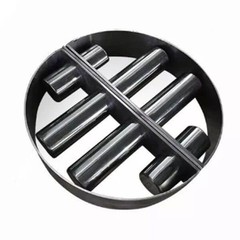
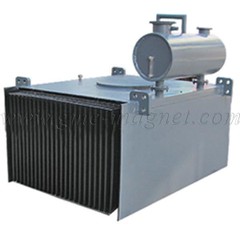
Magnetic Separators And Holding Assemblies
N42 to N52 standard grade, where ambient temperature is controlled, and maximum holding force per unit volume is the priority.
GME produces and stocks magnets across the full grade range from N35 to N52, with all temperature suffix variants, and can advise on grade optimisation for your specific operating conditions.
Key Applications of Neodymium Magnets Across Various Industries
The scope of applications for neodymium magnets is far broader than most people imagine. The following are several major industries where they play their most critical roles.
Electric Vehicles and Renewable Energy
A single electric vehicle (EV) traction motor alone contains between 2 and 3 kilograms of neodymium magnets, while offshore wind turbines can require quantities weighing up to several tons. This demand is set to grow significantly as the global process of electrification accelerates.

Industrial Automation and Robotics
Servo motors, robotic joints, and magnetic couplers all rely heavily on high-density NdFeB magnets to generate precise torque within compact dimensions. Magnetic couplers are particularly valuable in pumping equipment within the chemical and pharmaceutical sectors; by transmitting torque across sealed barriers without any mechanical contact, they completely eliminate the risk of leakage.
Consumer Electronics
Your smartphone, laptop, and headphones all contain neodymium magnets. Common examples of their application include the head actuators in hard disk drives, speaker driver units, and the tiny vibration motors responsible for generating haptic feedback in mobile phones. As electronic devices continue to trend toward miniaturisation, the ability to deliver powerful magnetic force within limited spatial constraints has become increasingly critical.
Medical Devices
From the joints of surgical robots to the couplers in cochlear implants and the drive mechanisms in capsule endoscopes, NdFeB magnets endow these devices with exceptional motion precision and miniaturisation capabilities, a level of performance at a given scale that no other type of magnet can match.

Factors That Affect Neodymium Magnet Performance and Longevity
Even the highest-grade neodymium magnet will underperform or fail if used outside its design limits. Here are the four factors you need to understand before specifying.
Temperature
Heat is the most common cause of permanent magnetic loss. Every NdFeB grade has a maximum operating temperature of 80°C for standard grade, up to 200°C+ for AH grade. Exceed it, even briefly, and the strength reduction is irreversible. If your application runs hot, always specify the appropriate temperature suffix, not just the energy product number.
Corrosion
Uncoated NdFeB corrodes rapidly in humid conditions, degrading from the grain boundaries inward. The right coating matters: nickel-copper-nickel handles most indoor industrial environments, while epoxy or dual-layer systems are necessary for outdoor, marine, or chemically aggressive settings. Never assume standard plating is sufficient without checking the operating environment first.
Mechanical Shock
Sintered NdFeB is hard but brittle. A magnet that snaps against another or against a steel surface can chip, crack, or shatter, and a cracked magnet loses holding force immediately. Design your housing to absorb shock rather than transfer it directly to the magnet body.
Reverse Magnetic Fields
If your application exposes the magnet to opposing magnetic fields, as can happen in certain motor fault conditions or multi-magnet assemblies, and those fields exceed the magnet's coercivity, demagnetisation is permanent. Selecting a higher coercivity grade (higher letter suffix) provides the necessary safety margin.
Why Partner with GME for Custom Neodymium Magnets?
Understanding how neodymium magnets are made is one thing; finding a manufacturer who controls every step of that process to a certified standard is another.
GME (Great Magtech, Xiamen) is a vertically integrated NdFeB manufacturer with over 11 years of experience supplying precision magnets and magnetic assemblies to customers across North America, Europe, and Asia. We cover the complete production chain in-house: from alloy preparation and sintering through precision machining, coating, magnetisation, and final inspection, all under a TS16949-certified quality management system.
What that means for you
Full grade range N35 through N52, all temperature variants, sintered and bonded.
Custom shapes any geometry from your drawing or sample, with tolerances to ±0.05 mm.
Certified quality in-house BH testing, XRF coating analysis, salt spray, and full RoHS/REACH documentation.
FAQ
Q: Can neodymium magnets lose their magnetism over time?
A: Under normal conditions, a properly manufactured NdFeB magnet loses less than 1% of its flux over decades. The main culprits are heat above the rated maximum, strong opposing magnetic fields, physical damage, and corrosion, all of which are preventable with correct grade selection and handling.
Q: What is the difference between N35 and N52?
A: N52 delivers roughly 50% more magnetic energy than N35 in the same volume, but it costs more and is slightly more susceptible to demagnetisation at elevated temperatures. For most applications, N42 or N45 hits the best balance of strength, stability, and cost.
Q: Are neodymium magnets safe to handle?
A: Yes, with care. Small magnets pinch; larger ones (25 mm+) can snap together hard enough to chip the magnet or injure fingers. Keep ferrous tools clear, and maintain at least 30 cm distance if you use a pacemaker.
Q: Can GME produce custom-shaped magnets?
A: Yes, discs, rings, blocks, arcs, and complex profiles worked from your drawing, CAD file, or physical sample. Contact our engineering team for a free consultation.
Conclusion
Understanding how neodymium magnets are made helps you choose the right grade, coating, and magnetisation for your application. At GME, we provide high-quality custom magnets, flexible OEM solutions, and expert guidance to ensure your project's success.
Need custom neodymium magnets for your project? Send us your drawing, size, grade, coating, magnetisation direction, and quantity. GME will help you select the optimal magnet solution for your application and budget.