











How much force does it take to pull your magnet away from steel? I recommend testing rather than relying on a strength rating alone. A magnet that holds firmly against thick, bare steel may perform differently on a thin, painted panel. To measure magnetic force, you need a suitable force gauge, a secure fixture, and clearly defined test conditions. In this guide, I'll explain how to set up a pull test, record the separation force, and compare results without confusing magnetic holding force with the magnetic field measured in gauss.
Magnetic Force vs Magnetic Field: What Are You Measuring?
Before choosing a measuring tool, I recommend identifying whether you need to measure a magnet's holding force or the magnetic field at a specific point.
|
Magnetic Force |
Magnetic Field |
|
|
What it measures |
The force required to separate a magnet from a defined target |
The magnetic flux density at a specified location |
|
Main question |
How much force does it take to pull this magnet away? |
What is the magnetic field reading at this point? |
|
Measuring tool |
Force gauge or load cell with a suitable fixture |
Gaussmeter with a Hall probe |
|
Common units |
Newtons (N), kilogram-force (kgf), pounds-force (lbf) |
Gauss (G), millitesla (mT), tesla (T) |
|
Key test conditions |
Target material, steel thickness, air gap, contact condition, and pull direction |
Probe position, sensing direction, distance, temperature, and surrounding materials |
|
Typical application |
Checking magnetic holding, mounting, and clamping performance |
Checking field distribution and the field available at a sensor |
|
Important limitation |
A pull-off result does not directly establish a safe working load |
A high gauss reading does not necessarily mean a higher holding force |
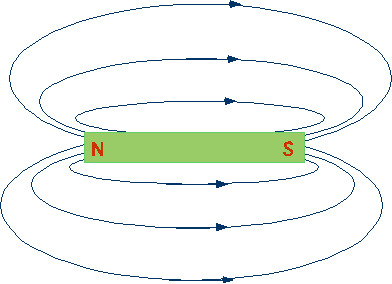
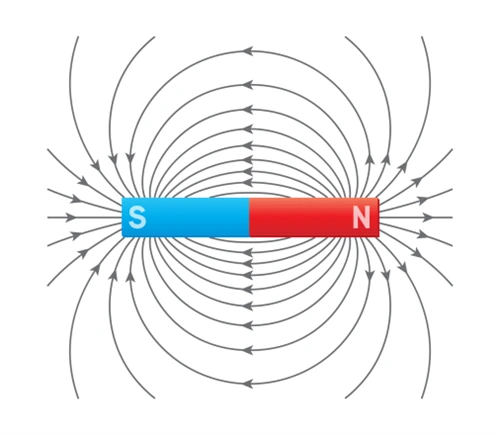
What Should You Prepare Before Measuring Magnetic Force?
Before you measure magnetic force, define your magnet, its counterpart, and the conditions it will experience in use.
Identify the Magnet or Magnetic Assembly
Record your magnet's material, grade, dimensions, coating, and magnetization direction. Confirm which face will interact with the target. If you are testing a pot magnet, rubber-coated magnet, or custom assembly, keep the housing, coating, and backing components in place. Testing the bare magnet alone may not represent the finished product's performance.
Define the Target Material or Matching Magnet
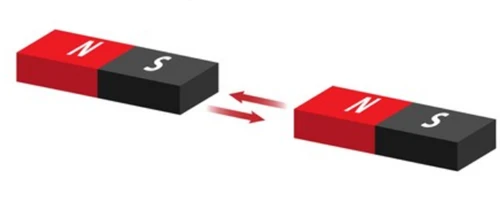
For attraction to steel, record the target's material, thickness, size, and surface condition. Use your actual application part when checking suitability. For magnet-to-magnet testing, document both magnets and confirm their facing poles: opposite poles attract, while like poles repel. Keep the same counterpart throughout comparisons.
Confirm the Working Gap and Force Direction
Measure the separation between the working surfaces, including paint, plastic, rubber, or other layers. Specify whether you need attraction, repulsion, or resistance to sliding. For example, a magnet tested directly against bare steel may behave differently behind a plastic cover. Record these conditions before testing.
How to Measure Magnetic Attraction Force
You can measure magnetic attraction by recording the force needed to separate a magnet from steel or another magnet under defined conditions.
Testing a Magnet Against Steel
Secure your magnet to a suitable force gauge and fix the steel target in place. Keep the working face flat against the steel, then pull perpendicular to the surface at a controlled speed. Record the peak separation force. Note the steel thickness, surface condition, and any gap so you can reproduce the test.
Testing Attraction Between Two Magnets
Position opposite poles facing each other and secure both magnets in aligned fixtures. Measure attraction at your specified working gap, or record the contact separation force. Repeat under identical conditions to check consistency.
How to Measure Magnetic Repulsion Force
Use a compression force gauge to measure how strongly two magnets repel at a specified gap. Secure the magnets with like poles facing each other in fixtures that prevent sideways movement or flipping. Zero the gauge before applying the magnetic load, then reduce the gap slowly without letting the magnets touch. Record the force in newtons and the distance between their facing surfaces. For example, if your assembly operates at a 5 mm gap, measure there. Repeat under the same conditions to check whether your readings are consistent across tests.
How Does Distance Affect Magnetic Force Measurements?
Your magnetic force reading generally decreases as the gap increases, so always measure at the distance your application requires. A magnet touching bare steel can produce a different result from the same magnet behind a plastic cover. Include paint, rubber, adhesive, and other layers when recording the separation between working surfaces. To compare results, keep alignment, target material, and temperature unchanged while testing several measured gaps. Record each force alongside its distance. Avoid applying a universal distance formula: magnet shape, pole arrangement, and surrounding steel affect how quickly force decreases.
How to Evaluate Different GME Magnet Products
To evaluate a GME magnet, measure the performance your application needs under clearly defined conditions. The same test will not suit every product.
|
Magnet Product |
What You Should Evaluate |
How to Make the Test Relevant |
|
|
Attraction to steel or attraction and repulsion between paired magnets |
Specify the working faces, counterpart, alignment, and gap. Record force at the distance your design requires. |
|
Pot Magnets |
Holding force of the complete assembly |
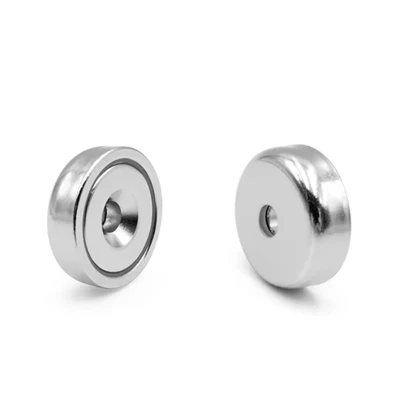
Keep the steel housing in place and test against a defined steel target. Record its thickness and surface condition. |
|
Rubber-Coated Magnets |
Pull-off force and resistance to sliding |
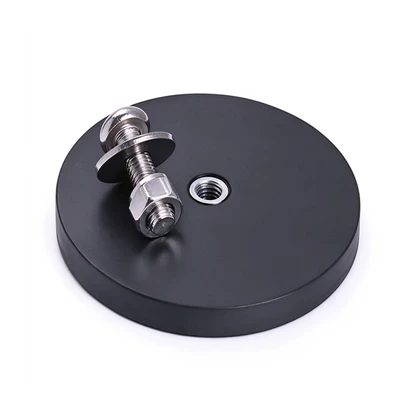
Retain the rubber coating and use your intended mounting surface. Measure separation and sliding separately. |
Why Do Magnetic Force Results Differ?
Your results can differ when the magnet, target material, gap, or loading direction changes. For example, testing against thin painted steel may give a lower attraction reading than testing against thick bare steel. Misalignment, fixture movement, temperature differences, and inconsistent loading speed can also affect measurements. Before questioning the magnet's quality, check whether your setup matches the supplier's test conditions. Compare the same magnet configuration, record each working gap, and repeat measurements consistently. A lower reading alone does not prove demagnetization, an incorrect grade, or a defective product without further investigation.
How to Read and Compare Magnetic Force Data
Before comparing magnetic force readings, check their units, measurement conditions, and relevance to your application.
Understand the Units
|
Unit |
Meaning |
Conversion |
|
N |
Newton, the SI force unit |
1 N |
|
kgf |
Kilogram-force |
1 kgf = 9.80665 N |
|
lbf |
Pound-force |
1 lbf ≈ 4.44822 N |
|
G or T |
Magnetic flux density, not force |
No direct conversion to N |
If your supplier lists "kg," confirm whether it means kgf.
Compare Results Under Matching Conditions
Match the target material, thickness, gap, alignment, temperature, and loading direction. A contact pull-off value cannot represent attraction through a plastic cover. Compare repeated readings from the same configuration, and distinguish average results from minimum guaranteed values.
Separate Test Results from Application Limits
Your measured force applies to the stated setup. It does not establish safe working load. Verify performance in your installation, including sliding, vibration, and temperature where relevant.
Conclusion
To measure magnetic force reliably, define whether you need attraction, repulsion, or holding performance, then test at your actual working gap and direction. Use suitable force-measuring equipment, repeat measurements, and record the conditions alongside each result. When comparing supplier data, check that the setups match before judging product quality. Remember that gauss readings cannot replace force measurements, and pull-off values do not establish safe working loads. For help specifying a GME magnet or magnetic assembly, share your drawing, target material, working gap, operating conditions, and required force for your application.
FAQ
Q: Can a Gauss Meter Measure Magnetic Force?
A: No. A gauss meter measures magnetic flux density, not force. To measure attraction or repulsion in newtons, you need a suitable force gauge or load cell.
Q: How Do You Measure Force Between Two Magnets?
A: Secure both magnets in aligned fixtures and measure the force at a specified gap. Use opposite poles for attraction and like poles for repulsion.
Q: Can You Measure Magnetic Force Without Contact?
A: Yes. The magnets can remain separated while a force sensor connected to one fixture measures their interaction. Record the gap with every reading.
Q: Why Is a Magnet Weaker in My Application?
A: Air gaps, thin steel, surface coatings, misalignment, or elevated temperatures may reduce performance. Check whether your application matches the supplier's test conditions.
Q: Does N52 Always Produce More Force Than N35?
A: No. With matching dimensions, magnetization, and test conditions, N52 generally produces more force. Different sizes, gaps, temperatures, and assembly structures can change the comparison.
