











Automotive magnets play an important role in the performance of modern vehicles, from electric motors to sensors and braking systems. When you source magnets for automotive components, you need to consider more than magnetic strength. Operating temperature, corrosion resistance, dimensional tolerances, and production consistency all affect how well a magnet performs in its intended application. This guide helps you understand where magnets are used in automotive systems, compare common magnet materials, and identify the specifications you need when selecting a custom solution for your components.

Types of Magnets Used in Automotive Applications
When selecting magnets for automotive components, you should compare their magnetic strength, temperature resistance, corrosion resistance, and cost to find the right material for your design.
Neodymium Magnets
Neodymium magnets are the strongest permanent magnets, so they dominate traction motors, sensors, and any motor that must stay small. They corrode without a coating, and each grade's temperature suffix caps its working limit.
Ferrite Magnets
Unlike neodymium, ferrite magnets trade raw strength for economy and toughness. They shrug off heat and corrosion without coating, but need volume to deliver force, which suits speakers and cost-driven motors.
Samarium Cobalt Magnets
Samarium cobalt magnets give up some strength but hold their field across wide temperature swings, which suits sensors that must stay accurate in hot zones.
Alnico Magnets
Alnico magnets, iron alloys with aluminum, nickel, and cobalt, tolerate high temperatures and can be cast into shape. Low coercivity, meaning reverse fields can partially demagnetize them, keeps them in instruments.
|
Property |
Neodymium |
Ferrite |
Samarium Cobalt |
Alnico |
|
|
|
|
|
|
|
Relative strength |
Highest |
Low |
High |
Moderate |
|
Heat tolerance |
Grade dependent |
High |
Highest |
High |
|
Corrosion resistance |
Needs coating |
Excellent |
Good |
Good |
|
Relative cost |
Higher |
Lowest |
Highest |
Moderate |
|
Typical automotive uses |
EV motors, sensors, small motors |
Speakers, starter and wiper motors |
High temperature sensors |
Instruments |


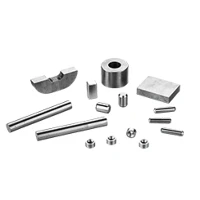
Where Are Magnets Used in Automotive Systems?
Magnets help automotive components perform essential functions, including power generation, motion detection, and sound production. Understanding these applications helps you identify the right magnet for your component's performance requirements.
Magnets in Electric Vehicle Motors
Permanent magnets help generate torque in many electric vehicle motors. Neodymium magnets are widely used in compact, high-performance designs. When selecting magnets for your motor, consider magnetic strength, operating temperature, and rotor space.

Magnets in Automotive Sensors
Magnets work with Hall-effect and magnetoresistive sensors to detect position, angle, and rotational speed. Applications include wheel-speed sensors and encoders, where consistent magnetic performance helps ensure reliable measurements.
Magnets in Electric Power Steering
Electric power steering systems use magnetic sensors to measure steering position or torque. If you manufacture steering components, consider the magnet's dimensions, magnetic field requirements, and stability under operating conditions.
Magnets in Automotive Pumps
Fuel pumps, coolant pumps, and other auxiliary systems may use permanent-magnet motors. Your magnet selection should account for heat, vibration, moisture, and continuous operation.
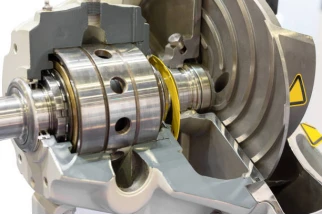
Magnets in Automotive Speakers
Permanent magnets help convert electrical signals into sound. Ferrite and neodymium magnets are common options, with the choice depending on speaker size, output requirements, and cost targets.
How Do You Choose the Right Automotive Magnet?
To select the right automotive magnet, you need to match its magnetic properties and physical specifications to your component's operating conditions, performance targets, and production budget.
Operating Temperature Requirements
Check the maximum operating temperature your component will experience. If you choose neodymium magnets, select a suitable grade to reduce the risk of irreversible demagnetization under heat.
Magnetic Strength Requirements
Define the magnetic field or holding force your application requires. A stronger magnet is not always better, so consider the sensor's operating range, motor design, and available space.
Magnet Shape, Size, and Magnetization Direction
Specify the required shape, dimensions, and magnetization direction. Custom arc-shaped magnets, rings, and blocks may suit different motor and sensor designs. Confirm these details against your component drawings.
Coating Requirements for Corrosion Protection
If your magnet faces moisture, humidity, or corrosive conditions, evaluate suitable coatings. Nickel, epoxy, and other finishes offer different levels of protection and should match your operating environment.
Dimensional Tolerances for Precision Components
Tight tolerances can be essential for rotor assemblies and sensors. Provide clear drawings and tolerance requirements to help your supplier assess manufacturing feasibility and consistency.
Cost Considerations for Mass Production
Compare material costs, machining needs, coating options, and expected order volume. Choosing a magnet that meets your technical requirements without unnecessary performance margins can help control production costs.
Conclusion
Choosing the right automotive magnet starts with understanding your application, performance requirements, and operating environment. Whether you need magnets for EV motors, sensors, pumps, or other automotive components, the right material and specifications can help improve reliability and control production costs. If you are developing a new component or sourcing magnets for mass production, GME can help you explore suitable magnet materials and custom specifications. Share your drawings, required dimensions, operating conditions, and order quantity to discuss a magnet solution that fits your project.
FAQ
Q: What Types of Magnets Are Used in Cars?
A: Common automotive magnets include neodymium, ferrite, samarium cobalt, and Alnico. Your choice depends on the component's magnetic strength, operating temperature, corrosion resistance, and cost requirements.
Q: Are Neodymium Magnets Used in Electric Vehicles?
A: Yes. Neodymium magnets are widely used in permanent-magnet motors in electric vehicles because they provide high magnetic strength in a compact size. The appropriate grade depends on the motor's temperature and performance requirements.
Q: Can Automotive Magnets Withstand High Temperatures?
A: Yes, but temperature resistance varies by material and grade. Neodymium magnets require careful grade selection at elevated temperatures, while samarium cobalt magnets are often suitable for demanding high-temperature environments.
Q: Which type of magnet is most used in vehicles?
A: By count, ferrite, because it is the cheapest option and fills speakers, small motors, and other high volume parts. By performance criticality, neodymium, because traction motors and sensors depend on its strength. Most vehicles carry both families side by side.
Q: Can an EV motor work without permanent magnets?
A: Yes. Induction motors and externally excited synchronous motors both run without magnet material and appear in production electric cars. Permanent magnet motors remain the mainstream choice because they deliver higher efficiency and torque density in a compact package.
Q: Do magnets in a car weaken over time?
A: No, not measurably in normal service, and lifetime losses are negligible. The real risks are sustained heat beyond the grade limit and strong reverse fields, both of which can demagnetize a magnet permanently.
Q: Are bonded magnets strong enough for automotive use?
A: Yes, in the roles they are designed for. Their energy product is lower than sintered neodymium, but one molding step produces precise multipole patterns, which is exactly what encoder rings and sensor rotors require.
