











Neodymium-Iron-Boron (NdFeB) magnets are renowned for their powerful magnetic strength, compact size, and wide range of applications. They are extensively used in industrial equipment, magnetic assemblies, electric motors, sensors, packaging, tools, fixtures, medical devices, electronics, and numerous OEM designs.
When purchasing NdFeB magnets, buyers often focus first on the magnet grade (e.g., N35, N42, N48, or N52). While the grade is crucial, it is not the only factor determining performance; in many practical applications, the magnet's shape is just as important as its grade.
An unsuitable shape can lead to installation difficulties, unstable holding force, misalignment with the required magnetization direction, or high costs that hinder mass production. Conversely, the right shape can improve assembly efficiency, reduce costs, enhance magnetic performance, and boost product reliability. This guide will help you select the most practical NdFeB magnet shape for your project.
Why the Shape of Neodymium Magnets Is Crucial
The shape of a magnet is not merely a matter of aesthetics; it directly influences actual performance within a product.
Different shapes entail variations in contact area, magnetic field distribution, mounting methods, and mechanical stability. For instance, block magnets typically offer superior holding stability on flat metal surfaces; ring magnets are suitable for applications requiring a shaft or screw to pass through the center; arc magnets are commonly used in motors to match curved rotor structures; and countersunk magnets facilitate secure fastening with screws.
The shape of a neodymium magnet affects the following aspects:
- Holding force
- Contact area with the target surface
- Fit within the mounting space
- Magnetization direction
- Assembly method
- Cost and manufacturing complexity
- Mechanical strength
- Long-term reliability
- Safety during assembly
A high-grade neodymium magnet in the wrong shape may still fail. A correctly selected shape with a suitable grade may perform better, cost less, and be easier to install.
Choose Neodymium Magnet Shape by Application
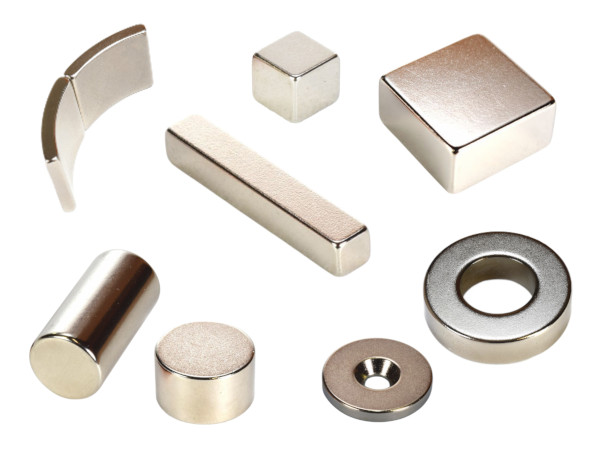
Before choosing a magnet shape, you should first understand the function of the magnet. Different applications require different shapes.
Here is a simple selection guide:
|
Application |
Recommended Magnet Shape |
Why It Works |
|
Packaging and closures |
Disc magnet / thin block magnet |
Compact, easy to hide, suitable for light holding |
|
Industrial holding |
Block magnet/pot magnet |
Larger contact area and stronger holding stability |
|
Motors and generators |
Arc magnet/ring magnet |
Fits rotating and circular structures |
|
Sensors |
Disc magnet/cylinder magnet/ring magnet |
Depends on sensing direction and installation space |
|
Shaft assembly |
Ring magnet |
Center hole allows shaft or screw clearance |
|
Magnetic coupling |
Ring magnet/arc magnet |
Suitable for rotational magnetic transmission |
|
Plastic embedded parts |
Disc magnet/block magnet/cylinder magnet |
Easy to insert, glue, or press into plastic structures |
Disc Neodymium Magnets: Best for Compact and Flat Applications
Disc neodymium magnets are round and flat. They are one of the most common neodymium magnet shapes because they are simple, compact, and easy to install.
Disc magnets are suitable when the installation area is round or compact. They are often used in magnetic closures, packaging boxes, sensors, electronic products, display items, name badges, small tools, and consumer products.
For example, if you are designing a magnetic closure for a box, a small disc magnet can be hidden inside the product. If you are making a sensor device, a disc magnet may be installed in a small round cavity.
Disc magnets are usually a good choice when:
- The installation space is round.
- The magnet needs to be hidden in a compact area.
- The holding force requirement is not extremely high.
- The product needs a simple and cost-effective magnetic solution.
- The magnet works against a flat surface.
Block Neodymium Magnets: Best for Industrial Holding and Flat Contact Surfaces
Block neodymium magnets are rectangular or square magnets. They are widely used in industrial products because they provide a larger flat contact area and are easy to install into slots, housings, fixtures, and magnetic assemblies.
Compared with disc magnets, block magnets are often more stable when used on flat metal surfaces. Their rectangular shape also makes them easier to align in mechanical structures.
Block magnets are commonly used in:
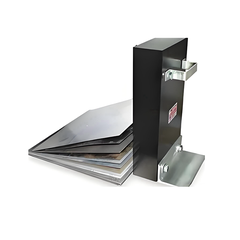
- Magnetic holders
- Magnetic fixtures
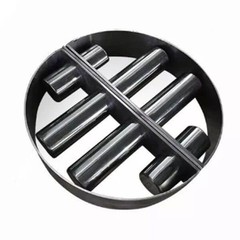
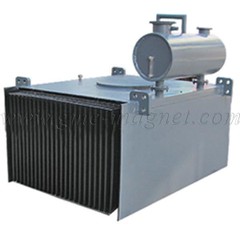
- Magnetic separators
- Machine components
- Industrial assemblies
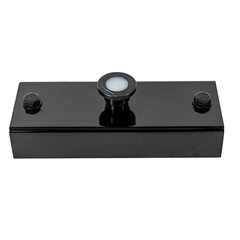
- Magnetic bases
- Automation equipment
- OEM products
Cylinder Neodymium Magnets: Best for Holes, Tubes, and Narrow Spaces
Cylinder neodymium magnets are longer than disc magnets. They are often used when the magnet needs to fit into a drilled hole, tube, narrow slot, or deep installation space.
Cylinder magnets are commonly used in:
- Sensors
- Magnetic pins
- Magnetic probes
- Positioning systems
- Locking devices
- Small mechanical assemblies
If your product has a round hole and the magnet needs to be inserted vertically, a cylinder magnet may be better than a disc magnet. Cylinder magnets are also useful when the available space is narrow but has enough depth.
For sensor applications, cylinder magnets can be useful when the magnetic field needs to be detected from a specific direction. However, you should confirm the magnetization direction carefully. Some cylinder magnets are axially magnetized, while others may require diametrical magnetization.
Ring Neodymium Magnets: Best for Shafts, Screws, and Circular Assemblies
Ring neodymium magnets have a center hole. This shape is useful when the magnet needs to be installed around a shaft, screw, rod, or rotating part.
Ring magnets are commonly used in:
- Motors
- Speakers
- Rotary sensors
- Magnetic couplings
- Shaft assemblies
- Bearings
- Screw positioning systems
The center hole makes ring magnets different from disc magnets. In some applications, the hole is used for mechanical installation. In other applications, it is part of the magnetic field design.
For example, in a shaft assembly, the shaft may pass through the center of the ring magnet. In a speaker or motor, the ring magnet may help form a circular magnetic field. In a sensor system, a ring magnet may be used to detect rotation or position.
Arc Neodymium Magnets: Best for Motors and Rotating Systems
Arc neodymium magnets, also called segment magnets, are curved magnets. They are commonly used in motors, generators, rotors, electric tools, magnetic couplings, electric vehicles, and industrial automation systems.
The biggest advantage of arc magnets is that they fit curved structures. In motor applications, arc magnets are usually installed around the rotor or stator to create the required magnetic field.
Compared with standard disc or block magnets, arc magnets require more technical confirmation. Buyers usually need to provide detailed drawings before production.
Important information for arc magnets includes:
- Outer radius
- Inner radius
- Arc angle
- Length
- Width
- Thickness
- Tolerance
- Coating
- Magnetization direction
- Working temperature
- Assembly structure
For motor applications, magnetization direction is extremely important. If the magnetization direction is wrong, the motor may not work correctly, even if the magnet size and shape are correct.


How Installation Method Affects Magnet Shape Selection
The installation method is one of the most important factors in selecting the magnet shape.
Different installation methods require different shapes.
|
Installation Method |
Suitable Magnet Shape |
Notes |
|
Glue bonding |
Disc, block, cylinder |
Suitable for simple structures |
|
Press fitting |
Cylinder, block |
Requires accurate tolerance |
|
Screw mounting |
Countersunk magnet |
Better mechanical fixing |
|
Embedded installation |
Disc, block, ring |
Common in plastic or metal parts |
|
Steel shell assembly |
Disc, block |
Can improve the magnetic holding force |
|
Motor assembly |
Arc, ring |
Requires accurate drawings and magnetization |
|
Shaft assembly |
Ring |
Inner diameter tolerance is important |
How Magnetization Direction Affects Shape Selection
Magnetization direction is closely related to magnet shape.
A magnet may have the correct material, correct size, and correct coating, but if the magnetization direction is wrong, the product may still fail.
Common magnetization directions include:
Axial magnetization
Diametrical magnetization
Radial magnetization
Multi-pole magnetization

Disc and ring magnets are often axially magnetized. Cylinder magnets may be axially or diametrically magnetized depending on the application. Arc magnets used in motors often require special magnetization directions. For simple holding applications, axial magnetization is common. For sensors, motors, rotary systems, and magnetic couplings, the magnetization direction must be checked carefully.
Common Mistakes When Choosing Neodymium Magnet Shapes
Choosing the wrong neodymium magnet shape often comes from focusing on magnet grade or size alone, while ignoring how the magnet will actually be installed, loaded, magnetized, and used in the final application.
Mistake 1: Only Choosing by Magnet Grade
Some buyers think N52 is always the best choice. But this is not always true.
Magnet grade affects magnetic strength, but shape, size, thickness, magnetization direction, working temperature, and magnetic circuit also matter.
A properly designed N42 magnet may work better than an incorrectly selected N52 magnet. Choosing the highest grade without checking the structure may increase cost without solving the real problem.
Mistake 2: Ignoring Contact Area
The contact area is very important for holding applications.
If the contact area is too small, the magnet may not provide a stable holding force. Even a strong magnet can perform poorly if it touches only a small or uneven surface.
For flat holding applications, block magnets or larger disc magnets may provide better stability.
Mistake 3: Forgetting Air Gaps
Air gaps can greatly reduce magnetic performance.
In real applications, there may be paint, plastic, coating, rubber, adhesive, or an uneven surface between the magnet and the target metal. These gaps reduce holding force.
If your application has a gap, tell your supplier. Do not rely only on ideal pull force data.
Mistake 4: Ignoring Magnetization Direction
This mistake is common in sensors, motors, and rotating assemblies.
The shape may look correct, but the magnet may not work if the magnetization direction is wrong. Always confirm magnetization direction before sample production and mass production.
Mistake 5: Choosing Custom Shapes Too Early
Custom magnets are useful, but they are not always necessary.
If a standard magnet can solve the problem, it is usually faster and more economical. Custom shapes should be used when standard shapes cannot meet the installation, performance, or design requirements.
Mistake 6: Ignoring Mechanical Strength
Neodymium magnets are strong but brittle.
Thin magnets, long cylinder magnets, arc magnets, and magnets with holes may crack if they are exposed to impact, pressure, or improper assembly. When selecting the shape, consider how workers will install the magnet and how the magnet will be used in the final product.
Mistake 7: Not Providing Enough Information to the Supplier
Some buyers only send a size and ask for a price. This can lead to wrong recommendations.
For accurate selection, the supplier needs to know the application, working environment, magnetization direction, coating, tolerance, quantity, and assembly method.
The more complete the information, the more accurate the magnet solution will be.
Why Choose GME for Neodymium Magnet Solutions?
GME provides neodymium magnets in different shapes, including disc magnets, block magnets, cylinder magnets, ring magnets, arc magnets, and countersunk magnets.
Our team can help you evaluate magnet shape, grade, coating, magnetization direction, tolerance, and assembly method based on your actual application. Whether you need magnets for holding, sensing, mounting, rotating, separating, or custom magnetic assemblies, we can help you find a practical and cost-effective solution.
The goal is not only to provide strong magnets, but to help you select the right magnet solution for your product.
FAQ
Q: Which shape of neodymium magnet is the strongest?
A: There is no single strongest shape. Magnetic force depends on magnet grade, size, thickness, contact area, magnetization direction, air gap, steel plate thickness, and magnetic circuit design. A larger or better-designed magnet may perform better than a higher-grade magnet in the wrong shape.
Q: Should I choose disc or block neodymium magnets?
A: Choose disc magnets when the installation space is round, compact, or simple. Choose block magnets when you need a larger flat contact area, stronger holding stability, or easier positioning in a rectangular structure.
Q: When should I use ring neodymium magnets?
A: Ring magnets are suitable when your design requires a center hole. They are often used around shafts, screws, rotating parts, speakers, motors, magnetic couplings, and sensor systems.
Q: Why are arc neodymium magnets used in motors?
A: Arc magnets fit curved motor structures such as rotors and stators. Their shape helps create the required magnetic field in rotating systems. For motor applications, drawings and magnetization direction must be carefully confirmed.
Q: Can neodymium magnets be made into custom shapes?
A: Yes. Neodymium magnets can be made into custom shapes according to drawings or samples. Custom shapes are often used in OEM products, motors, sensors, medical devices, automation equipment, and special magnetic assemblies. However, they may require longer lead time and higher production cost than standard magnets.
Conclusion
Selecting the right shape for neodymium magnets is not only about choosing between disc, block, ring, cylinder, arc, or custom shapes. It is about matching the magnet to your real application.
A good magnet shape should fit the installation space, provide the required magnetic force direction, match the correct magnetization direction, support a reliable assembly method, and work safely in the actual environment.
For simple applications, standard neodymium magnet shapes are often enough. They are cost-effective, easy to source, and suitable for many common uses. For OEM products, motors, sensors, automation systems, and special magnetic assemblies, custom-shaped neodymium magnets may be a better choice.
If you are not sure which shape is right for your project, send GME your application details, drawing, or sample requirements. Our team can help you select a suitable neodymium magnet shape, grade, coating, and magnetization direction for your application.
