





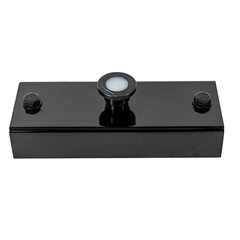
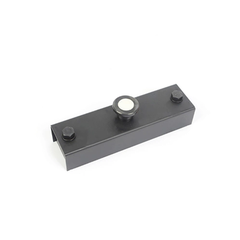





When choosing pot magnets for holding, mounting, fixing, or positioning applications, many buyers first compare diameter, pull force, and price. However, one important design detail is often overlooked: should you choose a shallow pot magnet or a deep pot magnet?
Although shallow and deep pot magnets may look similar, they are designed for different installation spaces, holding requirements, and working conditions. Choosing the wrong type may lead to weak holding force, unstable mounting, difficult installation, or unnecessary cost.
This guide explains the key differences between shallow and deep pot magnets and helps you choose the right magnetic solution for your application.
What Is a Shallow Pot Magnet?
A shallow pot magnet is a low-profile pot magnet with a relatively short steel housing. It is designed for applications where the installation space is limited, and the magnet needs to sit close to the mounting surface.
The biggest advantage of a shallow pot magnet is its compact structure. It can provide a reliable holding force while keeping the overall product height low.
Shallow pot magnets are commonly used when the application requires:
- Limited installation depth
- A clean and compact appearance
- Easy integration into thin panels or assemblies
- Light to medium holding force
- Simple mounting and easy removal
- Hidden or semi-hidden installation
What is a Deep Pot Magnet?
A deep pot magnet has a deeper steel housing and usually a taller magnetic structure. Compared with a shallow pot magnet, it is generally designed for stronger holding, better mechanical stability, and more demanding industrial use.
The deeper structure can provide better protection for the magnet core and allow a more robust mounting design. In many applications, deep pot magnets are preferred when the magnet needs to hold heavier objects or operate in more challenging environments.

Deep pot magnets are commonly used when the application requires:
- Stronger holding force
- Better mechanical stability
- More secure installation
- Industrial-duty performance
- Higher resistance to impact or vibration
- More robust threaded or press-fit assembly
Typical applications include tooling, fixtures, machine building, automation equipment, industrial holding devices, and engineering components.
It is important to note that a deep pot magnet is not automatically stronger than a shallow pot magnet. Pull force still depends on magnet material, magnet size, steel housing design, contact surface, air gap, and test conditions. But when comparing similar materials and diameters, deep pot magnets are often selected for stronger or more stable holding applications.
Shallow vs. Deep Pot Magnets: Quick Comparison

To help you quickly understand their main differences, the table below compares shallow and deep pot magnets across key features, applications, and performance.
Key Difference 1: Overall Height and Installation Space
The most obvious difference between shallow and deep pot magnets is the overall height.
Shallow pot magnets are better for applications where space is limited. They are easier to integrate into thin products, panels, doors, covers, and display systems. If the magnet cannot be too high or must be hidden inside a component, shallow pot magnets are usually more suitable.
Deep pot magnets need more installation depth. They are not always suitable for thin assemblies, but they are better when the design allows more space and requires stronger or more stable holding.
Before choosing a magnet, you should first check the available installation height. A stronger magnet is not useful if it cannot fit into the product structure.
Key Difference 2: Holding Force and Magnetic Structure
Many buyers assume that deep pot magnets are always stronger. This is not completely accurate.
In many cases, a deep pot magnet can provide higher mechanical stability and may support a stronger holding force. However, actual pull force depends on several factors:
- Magnet material
- Magnet grade
- Magnet diameter
- Magnet thickness
- Steel housing design
- Contact area
- Surface condition
- Air gap
- Steel plate thickness
- Load direction
Key Difference 3: Mechanical Stability
Mechanical stability is another important difference.
Shallow pot magnets are suitable for general holding, fixing, and mounting applications. They work well when the load is not too heavy and the working environment is stable.
Deep pot magnets are more suitable for demanding applications. Their deeper steel housing can provide better support and protection. This makes them more reliable in industrial environments where the magnet may face vibration, repeated use, impact, or a stronger pulling force.
If the magnet is used in machinery, fixtures, tooling, or production equipment, mechanical stability should be considered carefully. In these cases, deep pot magnets are often safer than shallow pot magnets.
Key Difference 4: Application Scenarios
Shallow and deep pot magnets are often used in different applications because their structures serve different needs.
Shallow pot magnets are more suitable for compact and light to medium applications, such as:
- Signs and nameplates
- Display systems
- Cabinet doors
- Access panels
- Removable covers
- Lighting fixtures
- Thin product assemblies
- Retail and exhibition structures
Deep pot magnets are more suitable for stronger and more industrial applications, such as:
- Jigs and fixtures
- Machine building
- Tool holding
- Industrial positioning
- Automation equipment
- Engineering structures
- Heavy-duty mounting
- Production line accessories
The right choice depends on both the holding requirement and the product structure.
|
Comparison Item |
Shallow Pot Magnet |
Deep Pot Magnet |
|
Overall height |
Lower and more compact |
Taller and deeper |
|
Installation space |
Suitable for a limited space |
Requires more depth |
|
Holding force |
Light to medium duty |
Medium to heavy duty |
|
Mechanical stability |
Good for general applications |
Better for industrial applications |
|
Appearance |
Easier to hide or integrate |
More visible because of greater height |
|
Magnet protection |
Basic protection |
Stronger mechanical protection |
|
Typical use |
Signs, panels, covers, cabinets, displays |
Fixtures, tooling, machines, and industrial holding |
|
Cost |
Usually more economical |
Usually higher due to a larger structure |
|
Best for |
Compact design |
Stronger and more durable fixing |
When Should You Choose Shallow Pot Magnets?
You should choose shallow pot magnets when your main concern is compact design and easy installation.
Shallow pot magnets are a good choice if:
- The installation space is limited
- The magnet needs to be low-profile
- The application requires a clean appearance
- The load is light to medium
- The magnet needs to be hidden inside a product
- The part needs to be removed by hand
- The application is for signs, panels, displays, or covers
When Should You Choose Deep Pot Magnets?
You should choose deep pot magnets when your main concern is stronger holding, better durability, and mechanical stability.
Deep pot magnets are a good choice if:
- The load is heavier
- The magnet will be used in industrial equipment
- The working environment has vibration or impact
- The assembly requires a stronger threaded fixing
- The magnet needs better mechanical protection
- The application requires a higher safety margin
- The magnet is used for fixtures, tooling, or machine parts

Common Mistakes When Choosing Pot Magnets
Before selecting a pot magnet, it is important to understand the common mistakes that can lead to weak holding force, poor installation, or unnecessary purchasing costs.
Mistake 1: Only Comparing Pull Force
Pull force is important, but it is not the only factor. Buyers should also consider installation space, mounting method, surface condition, load direction, temperature, and working environment.
Mistake 2: Assuming Deep Pot Magnets Are Always Better
Deep pot magnets can be stronger and more stable, but they are not always the best choice. If the application requires a compact design, shallow pot magnets may be more suitable.
Mistake 3: Using Shallow Pot Magnets for Heavy Loads
Shallow pot magnets are useful for compact applications, but they may not be enough for heavy-duty holding. If the load is heavy, choose a deep pot magnet or a larger specification.
Mistake 4: Ignoring Air Gap
Paint, coating, plastic, rubber, dust, and uneven surfaces can all reduce magnetic holding force. This is one of the most common reasons why the magnet performs weaker than expected.
Mistake 5: Ignoring Shear Force
A magnet that performs well in direct pull may still slide under sideways force. If the application has shear load, friction, and mechanical support must be considered.
Mistake 6: Ignoring Corrosion Resistance
For outdoor or humid environments, standard coating may not be enough. Buyers should consider zinc coating, nickel coating, rubber coating, stainless steel housing, or other protective designs, depending on the environment.
FAQ
Q: Are deep pot magnets always stronger than shallow pot magnets?
A: Not always. Deep pot magnets are often designed for stronger or more stable holding, but actual pull force depends on magnet material, size, grade, pot design, air gap, contact surface, and test conditions.
Q: Can shallow pot magnets be used for heavy-duty holding?
A: Shallow pot magnets can be used for some medium-duty applications, but they are usually not the best choice for heavy-duty holding. For heavier loads, vibration, or industrial use, deep pot magnets are generally safer.
Q: Do pot magnets work on stainless steel?
A: It depends on the type of stainless steel. Some stainless steels are magnetic, while others are weakly magnetic or non-magnetic. Before selecting a pot magnet, the actual stainless steel material should be tested.
Q: Which pot magnet is better for outdoor use?
A: For outdoor use, corrosion resistance is very important. Rubber-coated pot magnets, stainless steel housing, or special surface treatments may be needed depending on the environment.
Conclusion
Shallow and deep pot magnets have different advantages. Shallow pot magnets are compact, low-profile, and suitable for space-limited applications such as signs, panels, displays, and covers. Deep pot magnets are stronger, more robust, and better suited for industrial holding, fixtures, tooling, and machine-building applications.
The right choice depends on more than magnet size or catalog pull force. Buyers should also consider installation space, load direction, air gap, contact surface, mounting method, corrosion resistance, and safety margin.
For B2B buyers, choosing the correct pot magnet can reduce installation problems, improve product reliability, and make the final application safer and more efficient. If you need help selecting or customizing pot magnets, GME can provide practical recommendations based on your real application conditions.
