










If you are sourcing tungsten for machining, shielding, counterweights, or high-temperature components, one common question is: Is tungsten magnetic? The short answer is: pure tungsten is not magnetic like iron, but it is weakly paramagnetic. That means it can respond very slightly to a strong magnetic field, but it does not stay magnetized after the field is removed. This matters because buyers often confuse pure tungsten, tungsten carbide, and tungsten alloys, even though their magnetic behavior can be very different.
What Is Tungsten?
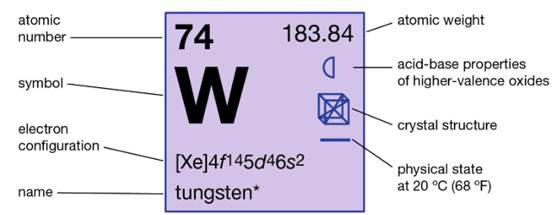
Tungsten is a dense refractory metal with atomic number 74. It is well known for its very high melting point, high density, and strong performance in demanding industrial environments. At room temperature, tungsten has a density of about 19.3 g/cm³, and its melting point is about 3410–3414°C, which is why it is widely used in heat-resistant parts, electrical applications, aerospace components, radiation shielding, and wear-resistant tools.
Is Tungsten Magnetic?
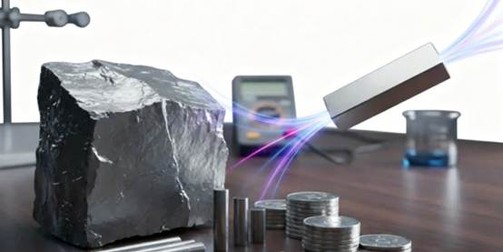
Tungsten is not ferromagnetic, so it does not behave like strongly magnetic metals such as iron, steel, or nickel. In practical applications, most buyers and engineers consider tungsten a non-magnetic material because it will not strongly attract a magnet or remain magnetized after contact with a magnetic field. Scientifically, however, tungsten is classified as paramagnetic. This means it can show a very slight attraction when exposed to a strong magnetic field, but the effect is extremely weak and disappears once the field is removed. Because of this, tungsten is rarely selected for applications where magnetic performance is important. Instead, it is more often chosen for its high density, excellent heat resistance, high melting point, and good mechanical stability in demanding industrial environments.
Pure Tungsten vs Tungsten Carbide vs Tungsten Alloy
If you are choosing pure tungsten, you should know it is made from high-purity tungsten metal, often produced from tungsten powder and then processed into dense parts. In practical use, you can treat pure tungsten as non-magnetic, although scientifically it is weakly paramagnetic and only shows a very slight response to a magnetic field.
If you are buying tungsten carbide, the raw material is not pure tungsten metal. It is usually made from tungsten carbide with a cobalt or nickel binder. Because of that binder phase, many cemented carbides show ferromagnetic properties at room temperature, though the magnetic response varies by grade.
If you need a tungsten alloy, it is usually a tungsten-heavy alloy made with about 90%–97% tungsten in a nickel-iron or nickel-copper matrix. Its magnetism depends on the alloy system: some grades are low magnetic, while others are designed to be non-magnetic
|
Material |
Main Raw Material, Composition |
Magnetic? |
|
Pure Tungsten |
High-purity tungsten metal, tungsten powder |
Practically non-magnetic; weakly paramagnetic |
|
Tungsten Carbide |
WC with cobalt or nickel binder |
Often magnetic at room temperature |
|
Tungsten Alloy |
90%–97% tungsten with Ni-Fe or Ni-Cu matrix |
Can be low magnetic or non-magnetic |
Why Is Tungsten Only Weakly Magnetic?
Tungsten's weak magnetic response comes from its electron structure. As a paramagnetic material, it has electrons that can align slightly when an external magnetic field is present. But once the magnetic field is removed, that effect disappears. In other words, tungsten does not retain magnetism, which is why it is very different from strongly magnetic metals such as iron.
Key Applications of Tungsten by Industry
Tungsten is used in many industries because it offers a rare combination of high density, heat resistance, strength, and wear performance.
Aerospace
If you work in aerospace, you value tungsten for its high melting point and stability in extreme heat. That is why it has been used in rocket-engine nozzle parts and other high-temperature components.

Tooling and Machining
If your focus is machining, tungsten is widely used in tungsten carbide tools, dies, gauges, and bits because it offers excellent hardness and wear resistance.
Electrical and Electronics
If you need materials for electrical applications, tungsten is used in electrical contacts, electrodes, heating elements, and filaments thanks to its heat resistance and reliable performance.
Steel and Wear Parts
If you need stronger wear-resistant materials, tungsten is also added to tool steels, high-speed steels, and wear-resistant coatings to improve durability in demanding industrial environments.
Can a Magnet Test Tell If Tungsten Is Real?
Not reliably. A simple hand magnet test may help you rule out some materials, but it is not a dependable way to verify tungsten.

Pure tungsten is only weakly paramagnetic, so a magnet usually will not give a strong response. At the same time, a tungsten-based part may show magnetic behavior because of alloying elements, binder content, impurities, plating, or attached steel components. If you need to confirm the material, better methods include density checks, material certificates, grade verification, or lab composition testing.
How to Choose the Right Tungsten Material
If your priority is high density and high-temperature resistance, pure tungsten or a tungsten heavy alloy may be the better option. If your application needs extreme hardness and wear resistance, tungsten carbide is often the better choice. If your project is sensitive to magnetic behavior, do not rely on a general website statement. Instead, ask your supplier for:
●exact material grade.
●binder composition.
●density data.
●inspection report or material certificate.
●machining recommendation based on your drawing or part function.
FAQ
Q: Is pure tungsten magnetic?
A: Pure tungsten is not magnetic like iron. It is only weakly paramagnetic, which means it may respond very slightly to a strong magnetic field but does not stay magnetized.
Q: Will a magnet stick to tungsten?
A: In most everyday situations, a magnet will not strongly stick to pure tungsten. If a tungsten-based part shows noticeable magnetic attraction, the response may be caused by alloy composition, binder metals, or other attached materials.
Q: Is tungsten carbide magnetic?
A: Some tungsten carbide grades can show magnetic behavior because of the cobalt or nickel binder phase. The exact response depends on the material grade.
Q: Can I use a magnet test to identify real tungsten?
A: A magnet test alone is not enough. It may offer a quick clue, but it cannot confirm material authenticity. Density, certificates, and composition testing are more reliable.
Q: Why do buyers ask this question so often?
A: Because many people confuse pure tungsten, tungsten carbide, and tungsten alloys. The term "tungsten" is often used loosely in the market, but the real answer depends on the specific material family and grade.
Conclusion
So, is tungsten magnetic? The best practical answer is no, not in the way most people expect. Pure tungsten is not ferromagnetic like iron or steel, so in normal industrial use, you can generally treat it as non-magnetic. Scientifically, it is weakly paramagnetic, which means it may show a very slight attraction to a strong magnetic field, but the effect is minimal and does not remain after the field is removed. You should also remember that tungsten carbide and tungsten alloys may behave differently, especially when cobalt or other binder metals are involved. So if you are selecting tungsten for a real application, it is always better to confirm the exact grade, composition, and material report rather than relying only on a simple magnet test.