











Choosing between multipole ring magnets and arc magnet assemblies can directly affect your motor's performance, assembly process, and production costs. Both designs are widely used in electric motors, but they differ in structure, magnetization, and installation requirements. A multipole ring provides multiple magnetic poles in a single component, while arc magnet assemblies use individual segments arranged around a rotor. Understanding these differences helps you select the right solution for your application. This guide compares their magnetic performance, assembly complexity, durability, and cost to help you make an informed decision.
What Are Multipole Ring Magnets?
Multipole ring magnets are single-piece magnetic rings with multiple north and south poles, commonly used in motor rotors where you need a compact design and consistent magnetic performance.
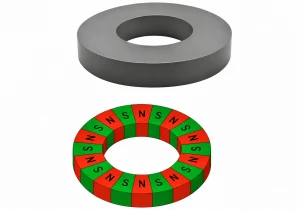
Structure and Magnetization
Unlike assemblies made from separate arc magnets, a multipole ring has a continuous circular structure. Its magnetic poles are arranged around the ring according to your motor's requirements. Depending on the material and manufacturing process, different magnetization patterns can be produced. You can specify the pole count, dimensions, and magnetic field requirements to match your rotor design.
Advantages and Limitations
|
Advantages |
Limitations |
|
Fewer individual assembly steps |
Requires suitable magnetization tooling |
|
No joints between magnet segments |
Limited by manufacturing capabilities |
|
Consistent geometry |
Custom designs may involve higher tooling costs |
|
Compact rotor construction |
Damage may require replacing the entire ring |
What Are Arc Magnet Assemblies?
Arc magnet assemblies use individual curved magnets arranged around a rotor to create the magnetic pole configuration required for your motor.
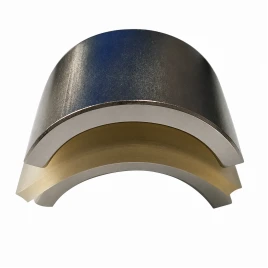
Structure and Assembly
Each arc magnet is manufactured to fit a specific rotor diameter and pole arrangement. During assembly, you position the segments around the rotor and secure them using adhesives, mechanical sleeves, or other suitable retention methods. You can customize the magnet grade, arc angle, dimensions, and magnetization direction to meet your motor's design requirements. Accurate positioning helps maintain consistent air gaps and magnetic performance.
Advantages and Limitations
|
Advantages |
Limitations |
|
Flexible magnet sizing and pole arrangements |
Requires precise segment positioning |
|
Suitable for various rotor designs |
More assembly steps |
|
Individual segments can be inspected before installation |
Bonding and retention need verification |
|
Supports custom magnet grades and shapes |
Assembly errors may affect rotor balance |
Multipole Ring Magnets vs Arc Magnet Assemblies: Key Differences
When choosing magnets for your motor, understanding the differences in structure, magnetic performance, assembly, and cost helps you select a design that meets your production requirements.
Structure and Magnetization
Multipole ring magnets have a continuous structure with multiple magnetic poles.
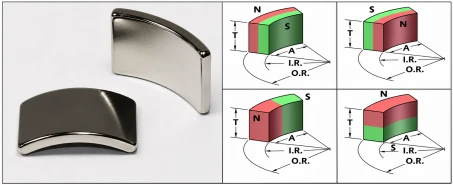
Arc magnet assemblies use separate curved segments arranged around a rotor, offering greater flexibility in magnet positioning and pole configuration.
Magnetic Performance
Both designs can deliver strong magnetic fields. Actual performance depends on magnet material, pole arrangement, and air-gap design. Neither option guarantees higher motor efficiency without proper evaluation.
Assembly
Multipole rings require fewer positioning steps, simplifying assembly. Arc magnets need individual alignment, bonding, and secure retention to maintain consistent performance.
Cost and Reliability
Multipole rings may reduce assembly labor but require specialized tooling. Arc assemblies offer flexible manufacturing options, although additional assembly steps can increase costs. Long-term reliability depends on temperature, mechanical stress, and installation quality.
|
Comparison Factor |
Multipole Ring Magnets |
Arc Magnet Assemblies |
|
Structure and Magnetization |
Feature a continuous ring with multiple magnetic poles. Pole patterns depend on the material and magnetization process. |
Use individual curved segments arranged around a rotor, allowing flexible magnet positioning and pole configurations. |
|
Magnetic Performance |
Provide magnetic fields based on ring geometry, material, and magnetization accuracy. |
Deliver magnetic performance based on segment geometry, positioning, and pole arrangement. |
|
Assembly |
Require fewer individual positioning steps, potentially simplifying rotor assembly. |
Require precise segment alignment, bonding, and secure retention during installation. |
|
Cost and Reliability |
May reduce assembly labor but can require specialized tooling. Reliability depends on operating conditions and installation quality. |
Offer flexible manufacturing options, but additional assembly steps may increase costs. Reliability depends on secure mounting and consistent alignment. |
How to Choose the Right Magnet Design
Choosing between multipole ring magnets and arc magnet assemblies depends on your motor's rotor structure, magnetic requirements, assembly process, and production volume.
When to Choose Multipole Ring Magnets
Multipole ring magnets are a practical option when you need:
- Compact Rotor Construction: A single ring fits your available installation space.
- Simplified Assembly: You want fewer individual magnets to position and secure.
- Consistent Pole Positioning: Your design requires a specific multipole pattern.
- High-volume Production: Your order quantity justifies specialized manufacturing and magnetization tooling.
When to Choose Arc Magnet Assemblies
Arc magnet assemblies may suit your project when you need:
- Flexible Rotor Designs: Individual segments can match different rotor diameters and pole layouts.
- Custom Magnet Specifications: You require specific grades, dimensions, or magnetization directions.
- Adaptable Assembly Methods: Your production process supports precise segment positioning and secure retention.
- Design Flexibility: You need to adjust individual magnet segments during development.
Key Specifications to Confirm Before Ordering
|
Specification |
What You Should Confirm |
|
Magnet Material |
NdFeB, ferrite, or other suitable material |
|
Magnet Grade |
Required magnetic performance |
|
Dimensions |
Diameter, thickness, and arc angle |
|
Pole Count |
Required number of magnetic poles |
|
Magnetization |
Direction and pole pattern |
|
Operating Temperature |
Maximum working temperature |
|
Tolerances |
Dimensional and magnetic requirements |
|
Quantity |
Prototype or bulk production |
Conclusion
Choosing between multipole ring magnets and arc magnet assemblies comes down to your motor design, performance requirements, and production needs. Multipole rings can simplify assembly by reducing the number of individual components, while arc magnet assemblies offer greater flexibility in rotor geometry and pole arrangements. Neither design is universally better. You should consider magnetic field requirements, operating temperature, installation methods, and overall manufacturing costs before making a decision. If you need custom magnets for your motor project, GME Magnet can help you evaluate suitable materials, dimensions, and magnetization options based on your drawings and application requirements.
FAQ
Q: Are Multipole Ring Magnets Better Than Arc Magnets?
A: Not necessarily. Multipole ring magnets simplify assembly, while arc magnets offer more design flexibility. The better option depends on your motor's structure, magnetic requirements, and production needs.
Q: Which Magnet Design Is Better for BLDC Motors?
A: Both work well in BLDC motors. Multipole rings suit designs requiring fewer assembly steps, while arc magnets offer flexibility in rotor geometry and pole arrangements.
Q: Do Multipole Ring Magnets Reduce Assembly Time?
A: Yes, they can. A single ring eliminates the need to position multiple arc magnets individually, potentially reducing assembly time and labor costs.
Q: Can Arc Magnets Be Replaced With a Multipole Ring?
A: Yes, if the ring meets your rotor dimensions, pole count, and magnetic performance requirements. You may need to modify the mounting design.
Q: What Specifications Are Needed for Custom Magnets?
A: You should provide your magnet material, grade, dimensions, tolerances, pole count, magnetization direction, and operating temperature. For motor applications, include your rotor drawings, assembly requirements, and order quantity to help the supplier recommend a suitable magnet design.
