










In the realm of machining and manufacturing, achieving precision and efficiency is paramount. Magnetic chucks, as alternatives to traditional workholding machinery, have emerged as key players in this pursuit.
This article aims to provide an in-depth exploration of the applications of magnetic chucks, shedding light on their functionality, common uses, and the advantages they bring to diverse industries.
What Are Magnetic Chucks?

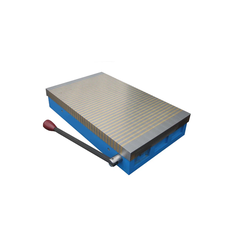
Magnetic chucks are devices used in machining and manufacturing to secure ferrous workpieces during operations like grinding, cutting, and milling. They employ the force of permanent magnets to generate a magnetic field, providing an instant and reliable holding force.
Activated manually, these chucks ensure precision by securely locking the workpiece onto the top plate. Their versatility spans various industries, including metalworking, electronics manufacturing, automotive production, and aerospace, contributing to enhanced safety, reduced operational times, and cost efficiency.
Magnetic chucks are vital tools, offering a reliable alternative to traditional workholding machinery.
Why Are Magnetic Chucks Used?
Magnetic chucks are utilized for their ability to hold ferrous metals during machining processes. They offer several advantages, including consistent clamping pressure and ensuring uniform workpiece holding for enhanced safety and precision.
Magnetic chucks reduce operation times by enabling quick on-off switching between workpieces, eliminating the need for manual clamping. Their operation without electricity minimizes downtime between workpiece setups, reducing operational costs and providing resilience during power failures.
With a parallel pitch top plate design, magnetic chucks allow for multiple workpieces, ensuring high accuracy, safety, and versatility. These features make magnetic chucks essential tools in various industries, enhancing efficiency and productivity.
How Does a Magnetic Chuck Work?
A magnetic chuck operates by utilizing the magnetic force generated by permanent magnets to hold ferrous workpieces during machining operations. The mechanism involves a manual key-turn activation.
When turned on, the magnets within the chuck align with the top plate, allowing the magnetic flux to travel above it. When a ferrous workpiece is placed on the top plate, the magnetic flux locks onto it, providing a stable and secure hold.
In the turned-off state, the magnetic flux remains confined within the chuck. This design ensures an effective and instant holding force, contributing to precision and safety in grinding, cutting, milling, and various other industrial processes.
Types of Magnetic Chuck
Magnetic chucks come in three main types:
Permanent Magnet Chuck
Crafted from highly magnetized materials, permanent magnetic chucks maintain a constant magnetic field without requiring electrical input. Operating without heat generation, they boast reliability and safety, making them ideal for light-duty machining.
However, as machining demands increase, the mechanical effort needed to overcome magnetic friction becomes impractical. Advantages include independence from electrical power, ease of installation, and robust design. Disadvantages include limited adaptability for larger workpieces and inefficiency for automated work.

Electromagnetic Chuck
Activated by introducing electrical current, electromagnetic chucks create a magnetic field through coils supplied by direct current. These chucks are controlled by units that facilitate quick magnetizing and demagnetizing.
The magnetic force can be regulated, allowing for easy removal of the workpiece. While advantageous for clamping rough workpieces, electromagnetic chucks require a continuous power supply, posing safety concerns during power interruptions. Heat generation can also impact machining accuracy.

Electro-Permanent Magnetic Chuck
A hybrid of electromagnetic and permanent magnetic chucks, electro-permanent chucks leverage strong direct current for rapid magnetization, acting as a permanent magnet without external power.
A control unit allows for automated use, consuming minimal electricity and ensuring a secure hold even in the absence of power.
This type is suitable for heavy milling operations and maintains a consistent temperature, preserving machine accuracy. However, electro-permanent magnets tend to be pricier and are more sensitive to air gaps between the chuck and the component.
Applications of Magnetic Chucks
Magnetic chucks find diverse applications across various industries, owing to their effectiveness in securely holding ferrous workpieces during machining operations. Key applications include:
Metalworking
Grinding: Magnetic chucks are extensively used in surface and cylindrical grinding processes, ensuring stability and precision in metalwork.
Milling and CNC Machining: In milling machines and CNC machining, magnetic chucks provide a reliable means of workholding for precise and efficient operations.
Electronics Manufacturing
PCB Production: Magnetic chucks are crucial in the production of printed circuit boards (PCBs), providing a secure hold for thin metal sheets during delicate machining processes.
Microelectronics: In the manufacturing of small electronic components, magnetic chucks contribute to precision machining operations.
Automotive Industry
Engine Component Manufacturing: Magnetic chucks play a vital role in fabricating engine components, ensuring efficiency and accuracy in machining processes.
Tool and Die Making: Used in die sinking and mold manufacturing, magnetic chucks are essential in tool and die-making processes.
Aerospace Sector
Aircraft Parts Production: Magnetic chucks are employed in machining critical components for aerospace applications, contributing to the production of reliable and precise parts.
Turbine Blade Manufacturing: Specific applications in machining turbine blades showcase the importance of magnetic chucks in aerospace manufacturing.
Medical Device Manufacturing
Implant Production: Magnetic chucks contribute to the production of medical implants, securely holding metallic materials during machining processes.
Precision Machining in Healthcare: Magnetic chucks enhance precision machining in the healthcare industry, supporting the production of intricate medical devices.
Woodworking Industry
Veneer Cutting: In woodworking, magnetic chucks are used for holding ferrous materials during veneer cutting processes, ensuring accuracy and stability.
Speciality Woodworking Applications: The versatility of magnetic chucks in various woodworking applications highlights their adaptability to different materials and tasks.
Oil and Gas Equipment Manufacturing
Machining of Components: Magnetic chucks contribute to the production of components used in oil and gas exploration and extraction equipment, ensuring precision in machining critical parts.
Adaptability to Harsh Environments: Magnetic chucks maintain effectiveness in challenging environments encountered in the oil and gas industry.
The Advantages of Using Magnetic Chucks
Magnetic chucks offer a range of advantages in industrial applications, contributing to enhanced efficiency, safety, and precision in machining processes.
Guaranteed Precision & Safety
Magnetic chucks are engineered to deliver unwavering clamping pressure, ensuring a consistent and secure hold on workpieces. This not only heightens user safety but also establishes a foundation for precision and accuracy in a range of machining processes, including cutting, drilling, milling, turning, and grinding.
Reduction in Operation Times
Permanent magnetic chucks excel in efficiency, surpassing traditional workholding methods by substantially reducing operation times and associated costs. The incorporation of a removable operating handle facilitates swift on-off switching between workpieces, eliminating the need for time-consuming manual clamping and enhancing overall clamping speed.
Reduction in Operation Costs
The absence of electricity requirements in permanent magnetic chucks proves cost-effective by minimizing machine downtime between workpiece setups. Even in the event of a power failure, operations can persist without interruption, leading to tangible savings on electricity bills and a notable boost in operational efficiency.
Versatile & Reliable Operation
Magnetic chucks, designed with a parallel pitch top plate, accommodate multiple workpieces concurrently. The even distribution of magnetic force across the entire top plate ensures not only high accuracy and safety but also prevents distortions in the workpiece during usage.
The inherent versatility of magnetic chucks enables access to all five faces of the workpiece within a single setup, significantly expanding working flexibility in machining applications. This adaptability makes magnetic chucks a reliable choice for diverse industrial needs.
Increased Working Flexibility
With the ability to provide access to all five faces of the workpiece within a single setup, magnetic chucks enhance working flexibility. This feature is especially advantageous in tasks that require machining from multiple angles or sides.
Factors to Consider When Using a Magnetic Chuck
Achieving optimal holding capacity with a magnetic chuck necessitates careful consideration of various factors:
Surface Finish of the Top Plate
A lapped finish on the top plate enhances the holding performance of a magnetic chuck. The absence of an air gap between the chuck's magnetic surface and the workpiece is crucial for maintaining the device's holding capacity.
Workpiece Material
Understanding the magnetic properties of the workpiece material is vital. Magnetic chucks are effective for clamping magnetic metals, such as steel, due to their magnetic forces.
However, non-magnetic materials are incompatible with magnetic chucks, requiring a thorough assessment of the workpiece nature before choosing an appropriate option.
Contact Area Between Workpiece and Chuck
Considering the contact area involves evaluating the surface area of both the workpiece and the chuck. Some chucks incorporate fine pole magnets for optimal spacing, ensuring a uniform magnetic force. Proper centering and flush placement of the workpiece on the chuck are essential for effective clamping.
Thickness of the Workpiece
The thickness of the workpiece significantly influences the clamping ability of a magnetic chuck. Thin workpieces may experience a weak holding force due to the semicircle pattern of magnetic flux lines. Adjusting the pole pitch helps accommodate thin workpieces by optimizing the magnetic flux pattern.
Chuck Design and Configuration
The arrangement and design of the magnetic blocks in the chuck play a significant role in achieving optimal holding capacity. Fine or minor pole magnets provide better coverage and distribution of magnetic force, especially for irregularly shaped or smaller workpieces.
Material Condition
The material's heat treatment impacts its structure and ability to absorb magnetic flux. Hardened materials retain specific magnetic flux even in the off state, while annealed materials absorb maximum magnetic flux without residual magnetism.
Maintenance and Safety Considerations
Before using a magnetic chuck in daily machining, you should follow proper maintenance and safety practices to keep the holding force stable, reduce unexpected risks, and extend the service life of the chuck.
Routine Cleaning
Maintenance for magnetic chucks involves regular cleaning to prevent the accumulation of chips or debris, which can impair the magnetic grip. Even tiny particles should be promptly removed to ensure optimal performance.
Handling Electromagnetic Chucks
When dealing with electromagnetic chucks, particular care is necessary. Sudden power failures can lead to an abrupt loss of magnetism, posing a safety risk. Users should adhere to proper handling procedures to avoid accidents resulting from unexpected demagnetization.
Power Supply Considerations
Ensure a stable power supply to electromagnetic chucks to maintain a continuous, reliable magnetic force. Implementing backup power sources or surge protection measures can mitigate the risks associated with power interruptions.
Regular Calibration
Regularly calibrate the magnetic chuck to maintain its magnetic strength and consistency. Calibration checks help identify and address any deviations in performance, ensuring the device meets the required standards for holding force.
Manufacturer Guidelines
Adhere to the manufacturer's guidelines for maintenance intervals and procedures. Manufacturers often provide specific recommendations for cleaning agents, lubrication, and other aspects of upkeep to maximize the longevity and effectiveness of the magnetic chuck.
Storage Considerations
When not in use, store magnetic chucks in a clean and dry environment. This prevents the accumulation of dust or moisture, which can adversely impact magnetic performance. Proper storage contributes to the longevity and reliability of the device.
Innovations in Magnetic Chuck Technology
As machining becomes more automated, precise, and flexible, magnetic chuck technology is also evolving from simple workholding devices into smarter, more adaptable solutions for modern manufacturing.
Smart Magnetic Chucks
Integrating innovative technology into magnetic chucks has ushered in a new era of real-time monitoring and control. These intelligent chucks come equipped with sensors and connectivity features, allowing operators to monitor magnetic force, temperature, and other crucial parameters. Real-time data enables proactive adjustments, ensuring optimal performance and preventing issues before they arise. This innovation significantly contributes to increased productivity and reduced downtime.
Magnetic Chuck with Adjustable Poles
Traditional magnetic chucks often have fixed pole configurations, limiting their adaptability to different workpieces. The introduction of magnetic chucks with adjustable poles revolutionizes work-holding flexibility.
Operators can now customize the magnetic field according to the shape, size, and material of the workpiece. This adaptability enhances the chuck's effectiveness across a broader spectrum of applications, providing a versatile solution for diverse machining needs.
Electromagnetic Pulse Technology
Innovations in electromagnetic pulse technology have brought about more efficient and precise magnetic chucks. This technology allows for rapid changes in magnetic polarity, enabling quicker setup and release of workpieces.
The pulse technology also contributes to energy efficiency, making electromagnetic chucks a sustainable choice for environmentally conscious manufacturers. This innovation strikes a balance between speed, precision, and resource conservation.
Magnetic Chucks for 3D Machining
As industries embrace 3D machining for intricate and complex components, magnetic chucks tailored for this application have emerged. These chucks feature specialized designs that provide a multi-axis magnetic holding, ensuring stability during the intricate movements required in 3D machining. This innovation expands the capabilities of magnetic chucks, making them an essential tool for the growing field of three-dimensional precision machining.
Conclusion

In conclusion, magnetic chucks have emerged as versatile and reliable tools, contributing significantly to precision and efficiency across a spectrum of industries. Their ability to securely hold ferrous workpieces during various machining operations makes them invaluable in metalworking, electronics manufacturing, automotive production, aerospace, healthcare, woodworking, and more. As technology continues to advance, magnetic chucks are likely to play an even more pivotal role in shaping the future of industrial manufacturing, providing innovative solutions to the ever-evolving needs of diverse sectors.