








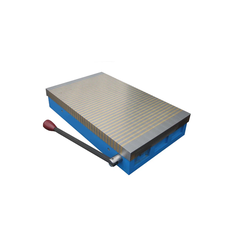


What Is Magnet Coating?
The coating on the surface of the magnet is mainly used to prevent corrosion and other environmental factors that may damage the performance of the magnet. The coating principle of strong magnets is similar to ordinary paint, but fine iron powder particles are added to it. Common rare earth magnet coating materials include nickel, copper, chromium, gold, black zinc, and epoxy resin. Because these coatings are extremely thin, they do not affect the original magnetic properties of the magnet.

Why Do Magnets Need Coating?
Magnets are evaluated in various industries, from electronics to automotive, but you may wonder why most magnets are coated with a protective coating. How does it work to maintain their magnet performance and lifespan? Let's explore the key reasons behind this critical protection measure.
Corrosion Protection
NdFeB and other magnet materials contain metal elements such as iron, and are easily rusted by reacting with oxygen, water vapor, etc., in a humid environment, which not only affects the appearance but also damages the internal structure. The coating can form a protective film to isolate the magnet from contact with corrosive substances. Common anti-corrosion coating materials include epoxy resin coating, which has good chemical stability, can effectively resist acid, alkali, and salt corrosion, and extend the service life of the magnet.
Enhanced Mechanical Strength
Reduce surface micro-cracks: The coating fills the tiny defects on the magnet surface and prevents cracks from expanding.
Improve wear resistance: Electroplating nickel (Ni) can reduce friction loss.
Increased toughness: Certain polymer coatings, such as epoxies, can absorb shock and prevent the magnet from shattering.
Edge protection: A thick coating on the corners of the magnet to reduce damage caused by stress concentration.
Insulation Properties
In some electronic devices, such as small motors, magnets are often adjacent to conductive components such as circuits. If the insulation performance of the magnets is poor, it is easy to cause leakage, short circuit, and other faults. Adding coatings to magnets can play an insulating role. For example, polytetrafluoroethylene coatings have a high resistivity and can effectively prevent current from leaking from the surface of the magnets, ensuring the safe operation of the equipment. In addition, the coating can also enhance the stability of magnetic properties. When the working environment temperature changes greatly, it can buffer the effect of temperature on the internal structure of the magnet. Some special coating materials can reduce the internal stress of the magnet through their characteristics when the temperature rises, thereby maintaining the stability of the magnet's parameters, such as magnetic field strength and magnetic induction strength, at different temperatures.
Aesthetics and Surface Treatment
For magnets with high requirements for decoration or appearance, coating can improve their appearance, make the color more uniform, glossier, and match the overall design style of the product (such as silver, black, blue, etc.). In addition, coating can also be used for printing logos to mark the model, specifications, manufacturer, and other information of industrial magnets, which is convenient for product traceability and quality control.
What Are the Coating Types of Magnets?
Magnets come in all shapes and sizes, but one of the key factors in ensuring their lifespan and performance is their protective coating. Magnets come in all shapes and sizes, but one of the key factors in ensuring their lifespan and performance is their protective coating. Explore the key coating materials used on magnets.
Nickel Plating

The surface of the stainless steel plate is beautiful in color and high in finish. It has good anti-oxidation performance in the air and can pass the electroplating process of a 12-72-hour salt spray test. However, its coating has limitations and may cause the coating to fall off when bonded with some strong glue.
Galvanizing

The material has a silvery-white appearance, 12-48 hours of corrosion resistance, and is suitable for adhesive bonding scenarios.
Epoxy Resin

Applying a layer of resin paint on the outside of the electroplated nickel layer is a new process in recent years. The industry has developed rapidly and is now widely used in various electroplated products. Its biggest feature is that it can be customized in any color.
Gold Plating

The light gold jewelry commonly sold on the market is mostly made of copper or electroplated with gold. Electroplating gold treatment can make the surface of the product present a gorgeous appearance similar to gold. This technology is widely used in the field of jewelry manufacturing. Our products also support electroplating gold, which is particularly suitable for the production of magnetic jewelry.
Silver

Silver plating is a process of forming a layer of silver on the surface of a metal (such as copper, nickel) or non-metal (such as plastic, ceramic) substrate by electrolysis or chemical reduction. The thickness of the coating is usually 0.1-25 microns.
Chrome Plating
Chromium electroplating is rarely used in the industry, mainly because of its high cost, which is unaffordable for most companies. However, it has extremely strong corrosion resistance, excellent chemical stability, and hardly reacts with any substance, so it is usually only used in strong acid and alkali (extreme pH value) environments. This process is rarely used in actual production.
Aluminum Coating

Aluminum coatingalso known as aluminizing, is a high-temperature chemical surface treatment technology that forms a protective layer by diffusing aluminum into the surface of the base metal. This process is mainly suitable for materials such as carbon steel, medium and low alloy steel, stainless steel, and nickel-based high-temperature alloys. After treatment, the surface aluminum layer is oxidized to form a dense passivation film, which gives the base material excellent corrosion resistance.
Plastic and Rubber Coatings

The basic structure of plastic and rubber-coated magnets includes a ferromagnetic steel plate, a neodymium magnet, and a protective rubber shell. Functioning similarly to pot magnets as magnetic retention components, rubber-coated magnets have enhanced surface protection, improved corrosion and impact resistance, and greater friction, all of which are directly derived from their rubber shell.
Everlube Coating

It is a high-performance solid lubricant coating designed to reduce friction, resist wear, and prevent corrosion.
Teflon Coating

It is one of the commonly used protective coatings in the field of metal thermal spraying technology. This coating has excellent non-stickiness, wear resistance, corrosion resistance, and high temperature resistance, and can be widely used in the surface treatment of various metal and non-metallic materials.
Coating Performance Comparison Table
|
Material Type |
Temperature Resistance (°c) |
Corrosion Resistance |
Wear Resistance |
Adhesion |
Cost (yuan/m²) |
Salt Spray Resistance (hours) |
|
Nickel Plating |
-50 ~ 300 |
Moderate to Good |
Medium |
High |
50 ~ 150 |
500 ~ 1000 |
|
Galvanizing |
-50 ~ 200 |
Medium (needs to be passivated) |
Low to Medium |
Medium |
30 ~ 100 |
200 ~ 500 |
|
Epoxy Resin |
-30 ~ 120 |
Excellent |
Medium to High |
Very high |
80 ~ 200 |
1000+ |
|
Gold Plating |
-50 ~ 250 |
Excellent |
Low |
Medium |
500 ~ 2000 |
1000+ |
|
Silver |
-50 ~ 200 |
Good (easy to vulcanize) |
Low |
Medium |
300 ~ 1000 |
500 ~ 1000 |
|
Chrome Plating |
-50 ~ 400 |
Excellent |
Very High |
High |
100 ~ 300 |
1000+ |
|
Aluminum Coating |
-50 ~ 600 |
Good (need to be sealed) |
Medium |
Medium to High |
70 ~ 180 |
500 ~ 1500 |
|
Plastic and Rubber Coatings |
-40 ~ 120 |
good |
Medium |
Medium |
40 ~ 120 |
200 ~ 800 |
|
Everlube Coating |
-70 ~ 230 |
Excellent |
High (self-lubricating) |
Medium |
200 ~ 500 |
1000+ |
|
Teflon Coating |
-200 ~ 260 |
Excellent |
Medium (low friction) |
Low to Medium |
150 ~ 400 |
500 ~ 1000 |
How to Judge the Quality of Magnet Coating
The performance and life of the coating on the magnetic is critical, and poor quality coatings may cause premature corrosion and peeling, thereby compromising the function of the magnetic. So, what is the most effective way to test and determine the quality of magnetic coatings?
Salt Spray Test

It is directly related to the thickness of the coating. The thicker the coating, the longer the salt spray resistance time. If the coating is thinner, the time will be shorter. Usually, there are 24 hours, 48 hours, 72 hours, and even higher requirements of one hour. Different coatings have different salt spray resistance times. In short, the longer the time, the less likely it is to rust.
Dimensions of Viscose
We also call it its adhesiveness. Some magnets need to be glued together with some hardware. If the coating surface is too bright, or the coating is not well coated, or there is oil on the surface, its adhesiveness will be poor. That is, if you glue it, it will easily come off, which is also a problem.
Binding Force
People often get it wrong here. Many people say that your bonding force is not good, and they also say that the glue is not sticky, but we are referring to the bonding between the magnet and the coating. For example, there is a coating on the surface of the magnetic material itself, and the coating is glued to another shell. For example, this is glue. If the coating and the magnetic material are separated, it is a bonding problem; that is, the coating is not well plated, and the coating falls off. However, if the coating and the outer glue, and the iron shell are separated, it is a problem of its affinity for glue. Therefore, it is very easy to confuse the glue and the bonding force. These two are also directly related to the coating.
Wear-Resistant
Many electronic products require the coating surface to be rubbed repeatedly. For example, I can rub it with a paper bag or an eraser, and the coating cannot be damaged, no matter how many times I rub it. There is such a requirement for some exposed parts.
High Pressure Thermal Shock
High-voltage test and its hot and cold shock are how many degrees above zero and how many degrees below zero, and repeatedly shock it to see what changes it has.
So, all these experiments are not done for all coatings. They are matched and tested according to the specific application scenarios of customers, but in general.
The first item: you must ask your magnetic material factory, otherwise the thing they plate for you may be something that is not required. You may not even pass 12 hours in the salt spray test. 12 hours is not a concept. Maybe your magnetic material will peel and rust in three or four months, and it will be broken. You can not ask for other things, but you must ask for the salt spray test, otherwise, your coating will have problems. In the process of using the magnet, the coating has not been broken. You have fallen into these 5 big pits.
What Should Be Considered When Choosing Coatings
When selecting a magnet coating, the right choice can significantly impact its performance, durability, and cost-effectiveness, but what factors should guide this decision? Let's explore key considerations from material compatibility to cost requirements to ensure the selected coating will provide lasting protection and optimal performance.
Substrate Characteristics
The surface state of the substrate has a significant impact on the performance of the coating. Different substrates have different characteristics. Metal substrates are strong and conductive but easy to corrode. They are often galvanized, chrome-plated. Plastic substrates are soft and chemically inert, with poor adhesion. They need to be flame or plasma-treated before being coated with water-based polyurethane coatings. Ceramic substrates have high hardness and good chemical stability, and the coating needs to match their thermal expansion coefficients, such as aluminum nitride coatings for ceramic tools. In addition, a moderate surface roughness of the substrate can enhance the adhesion of the coating, while a too high surface roughness will result in uneven coating. The surface needs to be clean and free of impurities, otherwise, it will affect the performance of the coating. Therefore, metal parts need to be degreased and derusted before coating.
Usage Environment
In different environments, the coating needs to adapt to the corresponding performance; high temperature environment requires the coating to be resistant to high temperature, such as alumina for aerospace engine components; low temperature environment requires the coating to have good toughness and brittleness resistance, such as the coating of refrigeration equipment; in humid environment, the coating must be waterproof and moisture-proof, and the underwater environment has high requirements for the corrosion resistance and anti-biological adhesion of the coating. Epoxy resin coating containing antifouling agent is often used on ship hulls; wear environment requires the coating to be wear-resistant, and mining machinery often uses cemented carbide or composite coating; in mechanical impact environment, the coating needs to be impact-resistant, and the coating of the car body needs to prevent it from falling off during collision.
Coating Performance Requirements
Coating performance covers multiple aspects, including physics, chemistry, and mechanics. In terms of physical properties, high-hardness coatings can prevent surface wear and are suitable for tools, etc.; their thickness affects performance, the thickness of anti-corrosion coatings is tens to hundreds of microns, the thickness of optical coatings needs to be accurate to about a quarter of the wavelength of light, and the coating needs to be firmly attached to the substrate, otherwise it will easily fall off. In terms of chemical properties, the coating must be corrosion-resistant, and chemical equipment often uses high-performance epoxy resins to withstand corrosion from acids, alkalis, salts, etc.; in high temperature or chemical reaction environments, the coating should remain chemically stable, such as the coating on the inner wall of a high-temperature furnace needs to be resistant to high temperatures and not react with the chemicals in the furnace. In terms of mechanical properties, the elastic modulus of the coating needs to match that of the substrate to avoid cracking of the coating when the substrate is elastically deformed; under cyclic loads, the coating needs to have good fatigue resistance, such as the engine piston ring coating needs to withstand high temperature, high pressure and reciprocating fatigue stress.
Process and Cost
In the coating process, construction methods and curing conditions are key technical factors that affect coating performance and construction efficiency. Construction methods such as spraying, dipping, electroplating, etc., need to be comprehensively considered the availability of construction equipment and environmental requirements. For example, electroplating requires special equipment and electrolyte, and has strict requirements on temperature, humidity, ventilation, and other conditions; while spraying is flexible, it is necessary to accurately control the spraying parameters to ensure quality. In terms of curing conditions, parameters such as temperature and time directly affect the performance of the coating. For example, thermal curing coatings require high-temperature curing, while UV curing coatings can be quickly cured at room temperature. In addition, cost factors cannot be ignored. In terms of material cost, precious metal coatings have excellent performance but high cost, and are mostly used in high-precision electronic components, jewelry, and other fields; ordinary organic coatings have lower costs and are suitable for large-area decoration or general protection. Construction costs include equipment investment, labor, energy, etc. The electroplating process is more expensive due to large equipment investment and high environmental protection requirements, while the spraying process is relatively simple and economical.
Summarize
The choice of magnet coating should be determined based on specific application requirements, environmental conditions, and cost budget. Nickel coating and epoxy coating are more common choices and are suitable for most industrial applications; by understanding the characteristics and advantages of various coatings, you can better choose the appropriate magnet coating to meet your specific needs.
FAQ
What to Do If the Magnet Coating Falls Off?
If the peeling is small, you can try to use fine sandpaper to gently sand the peeling area and the surrounding area to remove the residual coating and surface impurities, and then use a paint that matches the original coating for local repair. If the peeling area is large or the coating is severely damaged, it is recommended to send the magnet back to the manufacturer or a professional coating treatment agency for recoating.
Do Neodymium Magnets Have to Be Coated?
Neodymium magnets usually require coating. They contain iron, which is easily rusted and corroded by oxidation reaction with oxygen and moisture in the air. Corrosion not only damages the structural integrity of the magnet but also reduces its magnetic properties. Coating can effectively prevent corrosion and extend the service life of the magnet.
Does the Coating Affect the Magnetic Force?
Coatings have some effect on the magnet's force, but it's usually small. Coatings increase the distance between the magnet's surface and the object being attracted, and according to the inverse square law, the magnetic force decreases with distance. When the distance doubles, the magnetic force drops to one-fourth of its original value. However, metal-based coatings (such as nickel) transmit magnetic fields relatively well, while rubber or plastic coatings have a greater resistance to magnetic fields and may require the magnet to be larger to compensate for the loss of magnetic force.
Is Magnet Coating Toxic?
The magnet coating itself does not usually contain toxic substances, but some chemicals may be used in some coating materials or coating processes. Some electroplating processes may involve heavy metal ions, which may be harmful to the human body and the environment if not handled properly. Under normal use and maintenance, the magnet coating is safe.
How to Maintain Coated Magnets?
To ensure the long-term performance of the magnet and the integrity of the coating, the following points should be noted: When cleaning, use a soft cloth with a mild detergent to gently wipe the surface, and avoid using abrasive materials or highly corrosive detergents; when storing, place it in a dry, cool environment to prevent direct sunlight and extreme temperature fluctuations; during use, try to avoid excessive friction, collision and other external force impacts on the magnet to prevent damage to the coating.
Can the Coating of Magnets Be Re-Coated?
Re-coating is possible. If the original coating on the magnet is worn or damaged, the old coating can be carefully removed, and a new coating can be applied after cleaning and preparing the magnet surface. However, recoating requires ensuring that the process is correct, otherwise it may affect the adhesion and protective effect of the coating.
The material has a silvery white appearance and 12-48 hours of corrosion resistance, suitable for adhesive bonding scenarios