



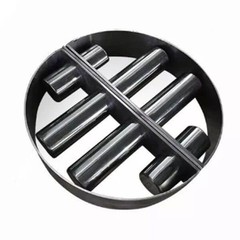
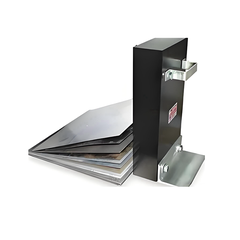


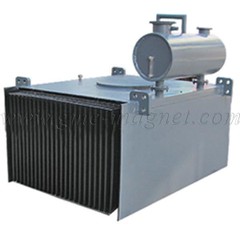

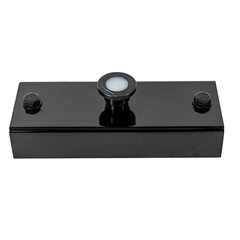





If you need a magnet of a special shape and size, you will need a custom magnet. There are a few important factors to consider if you want your custom magnet to fit your project perfectly
1. Magnet Material:
There are several types of magnetic materials, depending on the value you want to get from your product or how you want to use it to decide which material you need to customize your magnet.
1. NdFeB (NdFeB): NdFeB is divided into sintered NdFeB and bonded NdFeB, the most widely used in the market is sintered NdFeB. Neodymium magnets also have a variety of uses, such as neodymium tile magnets, neodymium ring magnets, and neodymium cylindrical magnets, especially for making motor magnets.
2. Samarium cobalt (SmCo): The value of samarium cobalt magnet is relatively high, high temperature resistance, corrosion resistance, generally do not do coating treatment, the important feature of samarium cobalt magnet is high temperature resistance.
3. AlNiCo (AlNiCo): AlNiCo magnets have low coercivity, are easy to demagnetize if not handled carefully, and are hard and brittle. They are best suited for high temperature applications.
4. Ferrite/Ceramic Materials: Ferrite materials can be used in a variety of electronic devices. This is due to their hard, brittle and polycrystalline nature, which is characterized by their low price and processed. The disadvantage is that the magnetism is weak and the volume is large.
2. Shape:
Magnetic materials come in many shapes, and these shapes determine how the magnet is used. The shape of each magnet determines the strength of its pull and how the magnetic field lines line up on the outside of the magnet. Here are some common choices for magnet shapes:
1. Square magnets: Square magnets are usually straight-sided and six-sided, and all angles are right angles (90°). These types of magnets are mainly used in holding applications, and their installation in the channel helps to increase their holding force. When customizing with square magnets, you need to provide data about the length, width and height of the magnet.
2. Round magnets: Round magnets are thin flat round magnets whose thickness does not exceed their diameter. They are the most versatile and commonly used magnet shapes. Disc magnets are widely used in holding applications. As with block magnets, you must also provide data on the length and diameter of the magnet.
3. Arc magnets: Arc magnets are usually used in special cases such as motors, generators and alternators, especially rotors and stators. Again, you will need to provide specifications for the magnet's outer diameter, inner diameter, length and angle.
4. Ring magnets: Ring magnets have several interesting applications, such as demonstrating magnetic repulsion in scientific experiments and sometimes in medicine. Depending on the purpose of customization, you will need to provide the correct magnet outer diameter, inner diameter and length information.
3. Level:
Different magnet materials have different grades. Ideally, a magnet's rating is a good measure of its strength. Generally, higher grade numbers indicate stronger magnets. This means that if your project requires a strong magnet, you should choose a magnet with a higher number (grade).
*Neodymium Magnets: Grades usually range from N25 to N55.
*Samarium Cobalt Magnets: Common grades from 16 to 32.
*Alnico magnets: Common grades from 1 to 9.
*Ferrite/Ceramic Magnets: Common grades from 8 to 40.
4. Magnetization Direction:
When it comes to the direction of magnetization of magnets, there are mainly two types. You can use radial or axial (radial) magnetized magnets. Radial magnetization is produced in specially manufactured ring magnets. When the magnetization direction of the magnet is on the axis of the magnet, it is called axial magnetization.
The direction of magnetization is very important when making a magnet because it usually attracts the most when one of its poles touches the magnetic surface you want it to stick to. So, for example, axially magnetized magnets are most effective when one of the planes touches the surface.

5. Tolerance:
Tolerances are actually parameters used to manufacture mechanical components and are usually measured according to a standardized tolerance system called the International Tolerance Class. Generally, the tolerance of magnets is measured in +/-0.05mm, as in neodymium magnets. However, accurate tolerance measurement is mainly dependent on the shape, grade and material of the magnet, and the smaller the tolerance, the higher the cost relative to the more difficult machining.
6. Plating:
The choice of magnet coating is determined according to the actual magnet application environment. A number of different coatings can be used such as nickel copper nickel, zinc, epoxy, gold, etc. For neodymium magnets, polytetrafluoroethylene (PTFE) and rubber are good choices for coating materials.
7. Customized Quantity:
Finally, the amount of material required to make a custom magnet is another important factor to consider. To get a quote for custom magnets, you need to provide the desired quantity. Generally speaking, the greater the quantity of magnet material required, the lower the unit price of custom magnets.
The total price, the above 7 knowledge points are to teach you to customize the magnet for your project more accurately.