











Hey there! As a supplier of rod magnets, I often get asked all sorts of questions about these nifty little things. One question that's been popping up a lot lately is, "Can rod magnets be used in magnetic bearings?" Well, let's dive right in and find out!
First off, let's talk a bit about what magnetic bearings are. Magnetic bearings are a type of bearing that uses magnetic fields to support a rotating or moving object. Instead of traditional contact-based bearings that rely on physical contact between surfaces, magnetic bearings use the repulsive or attractive forces of magnets to keep the object in place. This has a bunch of advantages, like reducing friction, eliminating the need for lubrication, and allowing for high-speed operation.
Now, let's get to the main question: Can rod magnets be used in magnetic bearings? The short answer is yes, they can! Rod magnets are a type of permanent magnet that have a long, cylindrical shape. They come in different materials, like neodymium (NdFeB), samarium cobalt (SmCo), and ferrite, each with its own set of properties.
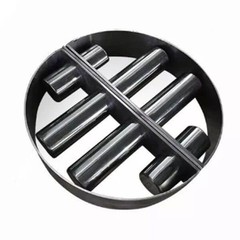
Neodymium rod magnets, for example, are known for their high magnetic strength. They're the most powerful type of permanent magnet available commercially. This makes them a great choice for applications where you need a strong magnetic field, like in some high-performance magnetic bearings. You can check out our Powerful NdFeB Magnetic Rod Filter Permanent Magnetic Bar if you're interested in seeing some of our high-quality neodymium rod magnets.


One of the key things you need in a magnetic bearing is a stable and strong magnetic field. Rod magnets can provide just that. Their shape allows for a relatively uniform magnetic field along their length, which is important for maintaining the stability of the rotating object. You can arrange multiple rod magnets in a specific configuration to create the desired magnetic field pattern.
For instance, you can use a pair of rod magnets with opposite poles facing each other to create a repulsive force. This repulsive force can be used to support the weight of the object and keep it centered within the bearing. This setup is known as a passive magnetic bearing, as it doesn't require any external power source to maintain the magnetic field.
But it's not all sunshine and rainbows. Using rod magnets in magnetic bearings also comes with some challenges. One of the main issues is the risk of demagnetization. If the rod magnets are exposed to high temperatures, strong external magnetic fields, or mechanical shocks, their magnetic properties can degrade over time. This can lead to a loss of performance in the magnetic bearing.
To mitigate this risk, you need to choose the right type of rod magnet for your application. For high-temperature applications, samarium cobalt rod magnets might be a better choice than neodymium magnets, as they have a higher Curie temperature (the temperature at which a magnet loses its magnetic properties). You can also take steps to protect the rod magnets from external factors, like using shielding materials or designing the bearing in a way that minimizes mechanical stress.
Another challenge is the cost. High-quality rod magnets, especially those made from rare-earth materials like neodymium and samarium cobalt, can be quite expensive. This can make the initial investment in a magnetic bearing system using rod magnets higher compared to traditional bearings. However, when you consider the long-term benefits, like reduced maintenance costs and increased efficiency, the cost might be worth it.
Now, let's talk about some of the different types of rod magnets we offer that could be suitable for magnetic bearings. Our Magnetic Bar Rare Earth Tube Magnet Customized Separation is a great option if you need a customized solution. We can tailor the size, shape, and magnetic properties of the rod magnet to meet your specific requirements.
If you're looking for a rod magnet with a specific mounting option, our Magnetic Bar With External Thread might be just what you need. The external thread makes it easy to install the rod magnet in your bearing system.
In conclusion, rod magnets can definitely be used in magnetic bearings. They offer a lot of potential in terms of providing a strong and stable magnetic field. However, you need to be aware of the challenges and choose the right type of rod magnet for your application.
If you're interested in using rod magnets in your magnetic bearing project, or if you have any questions about our products, don't hesitate to reach out. We're here to help you find the best solution for your needs. Whether you're a small startup or a large industrial company, we've got the expertise and the products to support your project. So, let's start a conversation and see how we can work together to make your magnetic bearing system a success!
References
- "Magnetic Bearings: Principles, Design, and Application to Rotating Machinery" by Eric H. Maslen and Robert C. Vance
- "Permanent Magnet Materials and Their Application" by E. C. Stoner and E. P. Wohlfarth