











Neodymium magnets are widely used in modern industrial products because they provide a strong magnetic force in a compact size. For manufacturers, engineers, and purchasing teams, this means you can design smaller, lighter, and more efficient products without sacrificing holding force, torque, or magnetic performance.
From electric motors and automation systems to magnetic separators, lifting tools, sensors, and custom magnetic assemblies, neodymium magnets play an important role in many industrial applications. The key is not only choosing a strong magnet, but also selecting the right grade, coating, shape, magnetization direction, and assembly structure for your working environment.
In this guide, we will explain 8 common industrial uses for neodymium magnets and help you understand where they are used, why they are selected, and what you should consider before buying or customizing them.
1. Electric Motors and Generators
One of the most important industrial uses for neodymium magnets is in electric motors and generators. Because neodymium magnets have high magnetic strength, they help motors produce strong torque while keeping the motor structure compact and efficient.
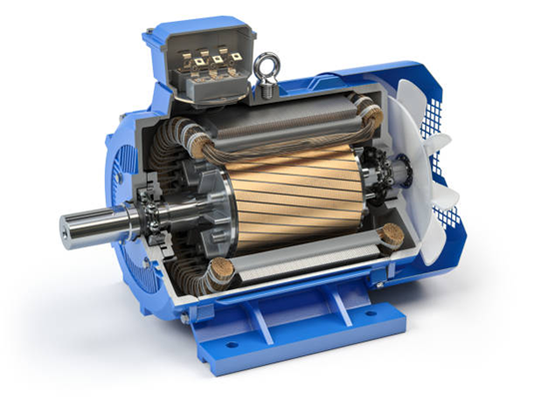
They are commonly used in servo motors, brushless DC motors, stepper motors, permanent magnet motors, wind turbine generators, and other high-efficiency motor systems. In these applications, neodymium magnets help improve power density, reduce energy loss, and support more precise motion control.
For motor manufacturers, magnet performance consistency is extremely important. Even small differences in magnetic strength, dimension, or magnetization direction may affect motor balance, torque output, noise, and efficiency. That is why many customers require custom arc magnets, segment magnets, ring magnets, or block magnets based on their rotor and stator design.
When selecting neodymium magnets for motors, you should consider:
- Magnet grade and magnetic strength
- Working temperature
- Coating protection
- Magnetization direction
- Dimensional tolerance
- Batch consistency
2. Sensors, Encoders, and Position Detection
Neodymium magnets are often used in sensors, encoders, switches, and position detection systems. In automation equipment, robotics, CNC machinery, elevators, medical devices, and smart industrial systems, magnets can work with Hall sensors, reed switches, magnetic encoders, or other sensing components to detect movement, speed, angle, or position.
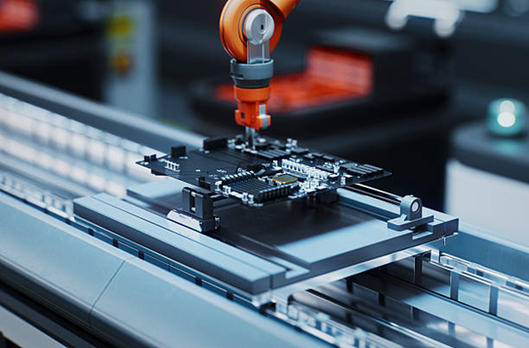
The advantage of using neodymium magnets in sensing applications is that they provide a strong and stable magnetic field in a small size. This allows engineers to design compact and accurate feedback systems.
Typical applications include:
- Rotary position sensing
- Linear position detection
- Speed measurement
- Limit switches
- Door and safety sensors
- Magnetic encoder systems
- Robot joint feedback
For these applications, the magnet does not always need to be extremely large. Instead, customers care more about magnetic consistency, precise dimensions, stable magnetization, and reliable performance over time.
Important selection factors include:
- Magnet size and shape
- Magnetic field direction
- Surface magnetic field strength
- Distance between magnet and sensor
- Temperature stability
- Assembly tolerance
3. Magnetic Assemblies and Holding Systems
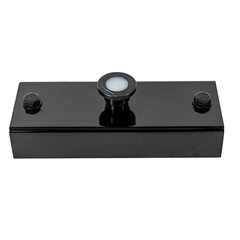
Many industrial products do not use bare neodymium magnets directly. Instead, they use magnetic assemblies. A magnetic assembly combines magnets with steel cups, housings, threaded parts, rubber coatings, handles, or mounting structures to create a stronger and more practical magnetic solution.
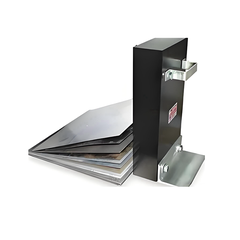
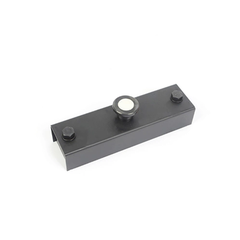
Common examples include pot magnets, channel magnets, magnetic hooks, rubber coated magnets, magnetic bases, mounting magnets, and custom holding assemblies. These products are widely used in machinery, signage, automation equipment, inspection tools, lighting systems, fixtures, and temporary positioning.
Compared with a simple bare magnet, a magnetic assembly can provide better holding force, easier installation, safer handling, and better durability. For example, a steel cup can concentrate the magnetic force on one side, increasing the pull force on a flat steel surface. A rubber coating can protect painted surfaces and increase friction.
When designing or purchasing magnetic assemblies, you should consider:
- Pull force requirement
- Mounting method
- Surface condition
- Shear force vs direct pull force
- Outdoor or indoor use
- Corrosion resistance
- Custom thread, screw hole, or housing design
4. Magnetic Separators
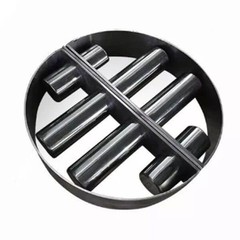
This one covers a wide range of industries, mining, food processing, plastics recycling, pharmaceuticals, and water treatment, but the basic idea is the same: you have a product stream with some ferrous contamination in it, and you need to pull the metal out.
Ferrite magnets used to be the standard for this. The problem is they're not strong enough to catch fine particles or weakly magnetic materials. NdFeB-based separators operate at 7,000–12,000 Gauss, which is two to three times stronger. That means they can pull out particles that older equipment would miss, including fine stainless steel wear particles below 3 mm, which switch from non-magnetic to weakly magnetic at small sizes.
Where this really matters is in food and pharmaceutical production. If metal contamination gets into your product, you have a serious regulatory and liability problem. A high-intensity NdFeB grate, bar, or hopper magnet installed at the right point in your process line is your primary defence.
For food and pharma, the housing material matters just as much as the magnet. You need 316L stainless steel, fully welded, no crevices where product can trap - basically EHEDG-compliant construction. And you need calibration certificates showing the actual pull force of each magnet, because regulators ask for them.
5. Medical Devices

Medical applications don't use the largest volumes of neodymium magnets, but they're some of the most demanding in terms of quality and documentation.
The most familiar example is MRI machines. Open-bore MRI systems use large NdFeB assemblies to create the static magnetic field that makes scanning possible. But there are dozens of other medical uses: cochlear implants (the small magnets that let the external processor communicate with the implant through the skin), hearing aids, insulin pump actuators, surgical robot components, and a growing clinical application called rTMS (repetitive Transcranial Magnetic Stimulation) used to treat depression.
For anything that contacts a patient, especially implantables, the magnet needs to pass biocompatibility testing (ISO 10993), and the coating needs to be chemically inert. Titanium nitride (TiN) or Parylene-C are common choices. You also need full material traceability: heat number, batch ID, and test results. If something goes wrong, you need to be able to trace exactly which magnets went into which devices.
6. Automation Equipment and Robotics
In automation and robotics, neodymium magnets are used for gripping, positioning, locking, sensing, motor driving, and modular assembly. As factories move toward higher automation, compact magnetic solutions are becoming more useful in many machine designs.
Neodymium magnets can be used in robotic end effectors, magnetic grippers, conveyor systems, automatic feeding systems, positioning fixtures, and quick-change tooling. Their strong magnetic force allows machines to hold or move parts quickly without complex mechanical structures.
For example, a magnetic gripper can pick up steel parts in an automated line. A magnetic positioning block can help align components during assembly. A magnet inside a robot joint or motor can support precise motion control.
For automation applications, customers usually need more than standard magnets. They often need a customized size, shape, coating, or assembly structure. Some projects may also require testing samples before full production.
Important factors include:
- Cycle frequency
- Holding force stability
- Working environment
- Installation method
- Vibration resistance
- Surface protection
- Batch consistency
7. Magnetic Lifting and Clamping
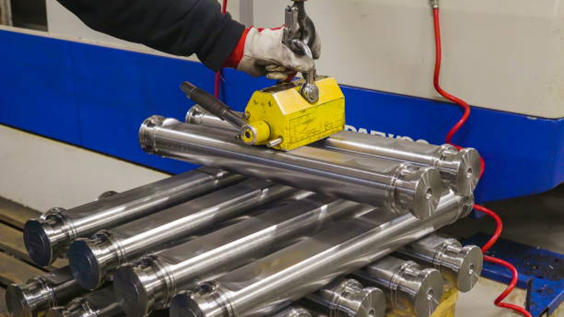
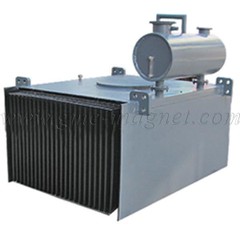
Permanent magnetic lifters are exactly what they sound like: lifting devices that use a permanent magnet to grab steel plates, beams, and other ferrous loads. They don't need electricity to hold the load; you switch the magnet on and off mechanically by rotating an internal magnet assembly. The load holds until you release it, even if the power goes out.
This is a big deal in steel yards, fabrication shops, and shipbuilding, where heavy steel plates are often moved by overhead cranes fitted with magnetic lifting attachments. Using slings or chains to move a heavy steel plate is slow and creates rigging hazards. A magnetic lifter can pick up a plate in seconds, hold it securely, and release it cleanly. Electro-permanent (EPM) lifters, which use an NdFeB core that's switched by a brief electrical pulse, can handle loads up to 30 tonnes and are increasingly standard in heavy plate handling. Electro-permanent (EPM) lifters, which use an NdFeB core that's switched by a brief electrical pulse, can handle loads up to 30 tonnes and are increasingly standard in heavy plate handling.
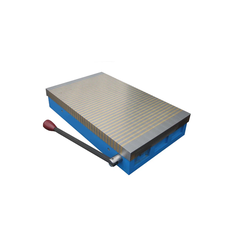
On the precision machining side, magnetic chucks hold workpieces on CNC mills and grinding machines. An NdFeB chuck grips thin sheet metal without distorting it the way mechanical clamps do, which matters when you're milling or grinding to tight tolerances.
8. Magnetic Couplings and Sealed Drive Systems
Neodymium magnets are widely used in magnetic couplings when torque needs to be transmitted without direct mechanical contact between two shafts. Instead of using a conventional shaft connection, magnetic couplings use inner and outer magnetic rotors to transfer rotational force through a containment barrier.
This type of system is commonly used in pumps, mixers, dosing equipment, vacuum systems, and other industrial equipment where leakage control, reduced mechanical wear, or sealed operation is important.
For these applications, magnetic strength alone is not enough. The required torque, operating speed, temperature, air gap, containment shell, working medium, and corrosion conditions can all affect coupling performance.
When selecting neodymium magnets for a magnetic coupling, you should consider:
- Required transmission torque
- Operating speed (RPM)
- Working temperature
- Air gap and containment barrier thickness
- Corrosion resistance
- Magnet grade and coating
- Inner and outer rotor dimensions
For custom magnetic coupling projects, the magnet arrangement and magnetic circuit should be designed around the actual equipment rather than selecting a magnet only by grade.
A Few Things Worth Knowing Before You Source
Neodymium magnets are not all the same. Two suppliers, both quoting "N42," can deliver very different products depending on their manufacturing process, raw material quality, and quality control. Here's what separates a good supplier from a cheap one:
Batch consistency. Magnets that vary in flux density from piece to piece cause problems in motors and sensors. Ask for Helmholtz coil test reports, not just a grade specification on paper.
Coating quality. A poorly applied coating fails in humid or corrosive environments, and once the base material is exposed, the magnet corrodes quickly. Ask how the coating is tested and what the minimum thickness spec is.
Temperature rating accuracy. Some suppliers overstate the usable temperature range of their grades. If your application runs at 130°C, don't accept a magnet rated to "up to 120°C" with no margin. Get it in writing.
Traceability. For regulated industries, such as food, pharma, medical, and aerospace, you need to know where each batch came from. A reputable supplier can give you heat numbers and batch IDs that trace back to raw material.
Conclusion
Neodymium magnets are used in many industrial applications because they provide strong magnetic performance in a compact size. From motors, generators, and automation systems to magnetic separators, sensors, lifting tools, medical devices, and electronic products, they help manufacturers improve efficiency, reduce product size, and create more reliable magnetic solutions.
For industrial buyers, the most important point is not only choosing a strong magnet, but choosing the right magnet for your actual application. Magnet grade, coating, temperature resistance, shape, tolerance, magnetization direction, and assembly structure all affect final performance.
If you need standard or custom neodymium magnets for your industrial project, GME Magnet can support your team with neodymium magnets, magnetic assemblies, magnetic separators, and customized magnetic solutions for different working environments.
