



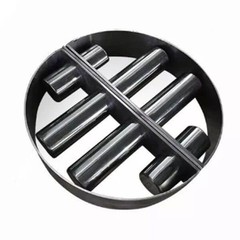
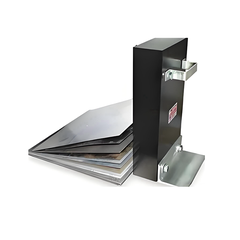


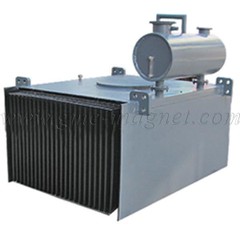
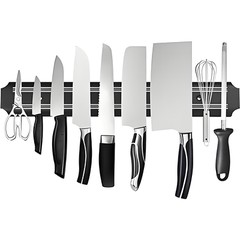



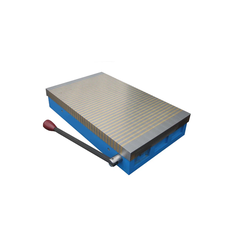


Magnetic attraction is a fascinating phenomenon, but did you know that not all stainless steel is magnetic? You might be surprised to learn that the ability of a permanent magnet to attract stainless steel depends on its composition. Understanding this relationship can be a huge help in manufacturing, construction, and even DIY projects! This article will explore the principles of magnet-stainless steel interaction, which types of stainless steel are magnetic, and analyze the role of permanent magnets in real-world applications.
What are permanent magnets?
A permanent magnet is a material that retains its magnetism permanently, requiring no external current or magnetic field to maintain its magnetism. Unlike an electromagnet, once magnetized, a permanent magnet generates a continuous magnetic field even without an external current. This magnetism arises from the alignment of electron spins and magnetic moments within the material, typically made of magnetic metals such as iron, cobalt, and nickel.

Types of Permanent Magnets
There are many types of permanent magnets, the most common of which include:
NdFeB Magnets: These are among the strongest permanent magnets in the world and are widely used in high-performance devices such as electric motors, hard drives, and headphones. Composed of neodymium, iron, and boron, they possess a very high magnetic energy product.
Samarium Cobalt Magnet: Is mainly composed of samarium and cobalt. It has good high temperature resistance and corrosion resistance, and is suitable for applications in high temperature or harsh environments, such as aerospace.
Alnico Magnets: Are mainly composed of aluminum, nickel, and cobalt. They have excellent high-temperature resistance and stable magnetic properties. They can be used for a long time in high-temperature or strong magnetic field environments. They are often used in industrial applications such as motors, sensors, and precision instruments.
Working Principle of Permanent Magnets
The working principle of permanent magnets is based on the generation of a magnetic field and the interaction of magnetic poles. Every magnet has two poles, a north pole and a south pole, which, like the Earth, form a magnetic field. When two permanent magnets are brought close together, the poles with the same magnetic field repel each other, while the poles with different magnetic fields attract each other. This attraction is the reason why permanent magnets can attract ferrous objects. The strength of the magnetic field depends on the material, size, and degree of magnetization of the magnet. Therefore, choosing the right permanent magnet is very important, especially since the magnetic force requirements vary in different application scenarios.

What is stainless steel?
Stainless steel is a material composed of iron, chromium, and other alloying elements, offering excellent corrosion resistance and strength. Its core component is iron (Fe), but the addition of elements such as chromium (Cr), nickel (Ni), and molybdenum (Mo) allows it to exhibit excellent rust resistance in oxidizing environments. Stainless steel is widely used in a variety of applications, including kitchenware, medical devices, and architectural decoration. However, different types of stainless steel exhibit varying magnetic properties, which directly impact their application scenarios.

Why are some non-magnetic stainless steels
Attracted to magnets, while others are not? This is primarily due to the stainless steel's microstructure and alloy composition. For example, the nickel content in austenitic stainless steel inhibits its magnetic properties, making it virtually unattractive to magnets. Ferritic and martensitic stainless steels, on the other hand, contain higher levels of iron, resulting in stronger magnetism and the ability to be attracted by magnets.
Types of stainless steel
When understanding the interaction between permanent magnets and stainless steel, different types of stainless steel have different magnetic properties. The following are the magnetic characteristics of several common stainless steels:
Austenitic Stainless Steel (304, 316)
This type of stainless steel is generally non-magnetic. Due to its high nickel and chromium content, austenitic stainless steel has a face-centered cubic (FCC) crystal structure, which makes it unresponsive to magnets under normal conditions. So, if you touch a magnet to 304 or 316 stainless steel, it will generally not be attracted.
Ferritic Stainless Steel (430, 439)
Unlike austenitic stainless steels, ferritic stainless steels are magnetic. Their body-centered cubic (BCC) crystal structure gives them strong magnetic properties, allowing them to be attracted by magnets. These materials are often used in applications requiring magnetic properties, such as kitchen utensils or automotive parts.
Martensitic Stainless Steel (410, 420 )
Martensitic stainless steels are generally non-magnetic in the annealed state, but can be made highly magnetic through heat treatment (quenching). This makes them useful in certain industrial applications, particularly in knife and tool making.
| Stainless Steel Type | Common Models | Magnetic Properties |
Illustrate |
| Austenitic Stainless Steel |
304, 316 |
Non-magnetic |
Due to the high nickel and chromium content, the crystal structure is face-centered cubic (FCC) and is generally non-magnetic. |
| Ferritic Stainless Steel |
430, 439 |
Magnetic |
The crystal structure is body-centered cubic (BCC), which gives it strong magnetic properties. It is often used in applications requiring magnetic properties. |
| Martensitic Stainless Steel |
410, 420 |
Magnetic (after heat treatment) |
It is usually non-magnetic in the annealed state, but its magnetic properties can be significantly enhanced by heat treatment (such as quenching). |
Can magnets attract stainless steel?
Many people ask, Can magnets actually attract stainless steel? The answer is actually quite complex. While most stainless steel is inherently nonmagnetic, not all stainless steel is. Some types of stainless steel can be attracted by magnets, while others cannot.
First, austenitic stainless steel (304, 316) is generally not magnetic because its crystal structure does not produce a magnetic response. Ferritic stainless steel (430, 439) and martensitic stainless steel (410, 420) can be attracted by magnets because their structure makes them magnetic.
Stainless steel magnetism test method
Testing the magnetism of stainless steel is actually not complicated. You can follow the steps below to quickly find out whether the material is magnetic:
Prepare a handheld magnet
First, prepare a small handheld magnet. Gently hold the magnet close to the stainless steel surface and observe whether it attracts. This simple test is a good way to quickly determine the magnetic properties of the steel, but please note that the magnet may vary depending on the position.

Test different locations
On the same piece of stainless steel. Due to cold working or internal structure variations, the magnetism of a piece of steel may be uneven. Some locations may be strongly magnetic, while others may show little to no response.
Use industrial instruments for precise testing
If more accurate results are required, use an industrial-grade magnetic permeability meter or fluxmeter. By measuring the magnetic permeability and flux density of stainless steel, you can obtain quantitative data on the steel's magnetic properties, which is particularly useful in engineering or industrial applications.
Record and analyze the results
Record the magnetic performance of each test point and analyze it in combination with the steel series and thickness. This will help you determine whether the material is suitable for your magnetic design or application.
Safety and Correct Operation
During the test, please ensure that the handheld magnet is away from electronic devices and sensitive instruments to avoid accidental adsorption or damage. At the same time, keep your hand steady during operation to avoid pinching your fingers, especially when testing large pieces of steel or strong magnets.
Practical Applications of Permanent Magnets and Stainless Steel
Permanent magnets on stainless steel are widely used in various fields, from industrial manufacturing to daily life.
Industrial Uses: Manufacturing, Lifting, and Fixing Applications.
In the industrial sector, permanent magnets are often used to manufacture, lift, and secure stainless steel objects. For example, powerful permanent magnetic lifters are widely used in factories to lift heavy objects or steel products. Magnets can also help secure workpieces in production lines, improving efficiency and safety.
Common Products: Refrigerators, kitchen utensils, and tools
Magnets also play an important role in our daily lives. Refrigerator door seals often use a combination of ferritic stainless steel and magnets to ensure a tight seal. Kitchen utensils and tools also often use a combination of stainless steel and magnets for more efficient use and storage, such as magnetic knife and tool racks.

DIY Project: How to Use Magnets in Stainless Steel Crafts
For DIY enthusiasts, magnets offer endless creative possibilities. You can use powerful magnets to secure items to stainless steel surfaces or create magnetic photo frames, calendars, and other decorative items. Neodymium-iron-boron magnets, due to their strong holding properties, are particularly well-suited for these home projects.
The impact of magnet strength on industrial applications
In industrial applications, the strength of the magnet directly determines its load-bearing capacity and operating efficiency. Choosing a magnet with the right strength can ensure safety and stability, and avoid accidents or inefficiencies during operation.
Common misunderstandings about the magnetism of stainless steel
In daily use and engineering design, many people have misunderstandings about the magnetism of stainless steel.
Myth: All stainless steel is non-magnetic
In reality, not all stainless steel is non-magnetic. Austenitic stainless steels (304, 316) are generally non-magnetic, but ferritic and martensitic stainless steels (430) are significantly magnetic. Therefore, you cannot simply assume that "stainless steel = non-magnetic."
Myth: If a magnet can't attract 304, it means it's fake stainless steel
304 stainless steel is not attracted to magnets in most cases, but this does not mean it is fake steel. Partial cold working or deformation may cause the austenitic steel to produce weak magnetism in some areas, causing it to be slightly attracted to magnets.
FAQs
Why can't 304 stainless steel be attracted by magnets?
304 stainless steel is austenitic, with a high nickel content and a stable crystal structure, and is generally non-magnetic. Therefore, it is difficult for ordinary magnets to attract it. Localized cold working or welding may produce weak magnetism, but the overall appearance remains non-magnetic.
Can magnets hold stainless steel pots?
Whether it can be attracted depends on the material of the pot. If the pot is made of ferritic or martensitic stainless steel, the magnet can be attracted; if it is 304 or 316 austenitic stainless steel, it generally cannot be attracted.
Is magnetized stainless steel permanently magnetic?
Austenitic stainless steel may become weakly magnetic after magnetization, but it usually does not have strong permanent magnetism. Ferritic or martensitic stainless steel can maintain strong magnetism after magnetization, but demagnetization and environmental factors still need to be considered in design and use.
Summarize
In short, whether a permanent magnet will attract stainless steel depends on the type of stainless steel. Austenitic stainless steel is generally nonmagnetic, while ferritic and martensitic stainless steels are attracted to magnets. When selecting a magnet, it's important to understand the type of stainless steel, its thickness, and the required magnetic strength. By properly selecting and testing the magnet, you can ensure optimal results for a variety of applications.