








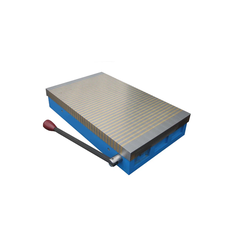


Sooner or later, someone with a magnet that's slightly too big asks the same question: Can I just cut it down? The honest answer is "it depends on the material", and for the strongest magnets, the better answer is often "don't cut it at all." This guide explains what really happens when you cut a magnet, how the method changes with each material, the temperatures that quietly kill magnetic strength, and the point where a custom-cut magnet simply makes more sense.
Can You Cut a Magnet?
Whether a magnet can be cut comes down almost entirely to what it is made of. Flexible magnets, rubber sheet, strip and tape cut as easily as thick cardstock. Hard sintered magnets such as neodymium, ferrite and samarium cobalt are a different story: they are brittle like glass, they shatter under the wrong tool, and cutting can permanently weaken them.
Here is the detail most DIY guides leave out. In a factory, hard magnets are shaped and cut before they are magnetized never after. The blank material is machined to size first, then magnetised as the final step. That sequence exists for a reason: cutting a fully magnetised block fights you the whole way, generates heat that drains the field, and is far harder to control. So when you cut a finished magnet at home, you are doing the one thing the people who make them deliberately avoid.
What Happens When You Cut a Magnet?
Cutting a magnet doesn't destroy its magnetism the way many people expect. Understanding the physics helps you set realistic expectations before the first cut.
Does Cutting a Magnet Create New Poles?
Yes. A magnet always has a north and a south pole; you can never isolate a single one. Cut a bar magnet in half, and you don't get a lone north on one side; you get two complete magnets, each with its own north and south. Keep cutting and every fragment, down to the smallest chip, behaves as a full magnet. Cutting changes the geometry, not the rule.

Does Cutting Make a Magnet Weaker?
Each piece is weaker than the original simply because it is smaller; pull force scales with volume, so a piece roughly half the size has roughly half the holding power. That part is predictable. The unpredictable losses come from the process itself: heat above the material's tolerance and heavy vibration can knock the internal domains out of alignment and cause extra, sometimes permanent, demagnetisation. Neodymium is especially heat-sensitive and begins losing strength when it gets too hot, which is why coolant matters so much. Keep the cut cool and controlled, and the piece keeps most of its expected strength.
How to Cut Each Type of Magnet
There is no single technique for a magnet. Match the method to the material, because the difficulty ranges from child's play to genuinely hazardous.
Flexible, Rubber & Magnetic Sheet, Strip and Tape Easy
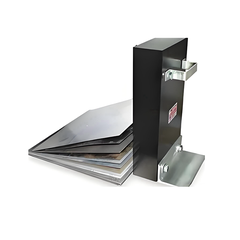
These are the only magnets most people should cut by hand. Mark your line, then run scissors, a sharp craft knife or a guillotine-style paper cutter straight along it. A steel ruler keeps the line true. For magnetic tape, score it and bend at the cut to snap it cleanly. Wear light gloves to avoid edge cuts, and you're done.
Alnico Magnets Depend
Alnico is the exception that proves the rule, but only in one form. Cast alnico can be machined and ground fairly extensively with carbide and abrasive wheels. Sintered alnico, like other sintered magnets, is hard and brittle and does not take kindly to cutting. Confirm which one you have first. Either way, secure the piece, use coolant, and expect to re-check the field afterwards.
Neodymium Magnets High Risk
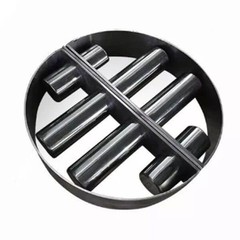
This is the hardest case and the one to think twice about. Neodymium is sintered from powder into a structure that is powerful but glass-like - it cracks and shatters under mechanical stress. Worse, the dust is pyrophoric: it can ignite from the heat of the tool and burns hot, releasing toxic fumes. If you must cut one, it should be done by someone experienced, with a water-cooled diamond tool, full ventilation, and a fire extinguisher within reach. And remember the coating problem covered below, even a perfect cut exposes raw metal that will rust.
Samarium Cobalt Magnets High Risk
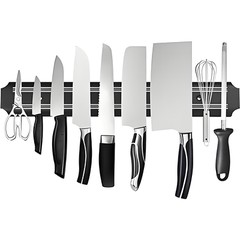
SmCo shares neodymium's brittleness and shatters just as readily, though it is more heat-stable and not as flammable. It still demands diamond tooling and coolant, and the chips are hard and abrasive. As with neodymium, precision shapes are best left to wire EDM rather than a bench tool.

Flexible Rubber Magnetic

Alnico Magnets

Neodymium Magnets

Samarium Cobalt Magnets
Tools & Methods for Cutting Magnets
Roughly, methods split into two camps: what you can attempt in a workshop, and what magnet factories use for precision and volume. The table below maps each method to its correct place.
|
Method |
Best for |
Precision |
Notes |
|
Scissors/Craft knife |
Flexible & sheet magnets |
Low |
Cheapest, safe, hand-held only |
|
Score & Snap |
Thin ferrite, magnetic strip |
Low |
Clean break along a scored line |
|
Hacksaw + Vise |
Softer / thicker blanks |
Low–Medium |
Slow, even strokes; risk of cracking |
|
Diamond Wheel |
Ferrite, small neodymium |
Medium |
Always with water cooling |
|
Diamond / Multi-wire saw |
Slicing blanks to size |
High |
Thin kerf (~0.3 mm); factory method |
|
Wire EDM |
Complex & precise shapes |
Very High |
No contact, smooth finish; slower & pricier |
|
Waterjet |
Larger / thicker parts |
High |
No heat damage; abrasive slurry |
How to Cut a Magnet Safely: Step-by-Step
If you've weighed the risks and still need to cut a hard magnet, this is the disciplined way to do it.
Gear Up. Heavy-duty gloves, sealed safety goggles and a dust mask. Clear flammable material from the area and keep an extinguisher nearby.
Clamp It Down. Lock the magnet in a vice. A steady workpiece cuts cleaner and loses less strength, because excess vibration accelerates demagnetisation.

Mark the Line. Outline your cut precisely so you only pass through once; repeated passes mean more heat and more chipping.
Keep it Cool. Use a diamond tool and flush the cut with water in short, frequent passes. Heat is the enemy of both your fingers and the magnetic field.
Cut Slow And Steady. Let the tool do the work with light, even pressure. Forcing it cracks brittle material and overheats it.
Finish the Edge. Lightly sand to size, then re-seal the bare cut face (epoxy or a suitable coating) to slow corrosion. Re-check the field strength if performance matters.
Why Cutting Hard Magnets After Purchase Is Risky
Hard magnets can still be machined in professional production environments, but they require suitable equipment, controlled cooling, correct handling, and experience.
Risk 1: Cracking and Chipping
Sintered magnets are brittle.
A magnet may look intact after cutting but still contain microcracks. These hidden cracks can later cause breakage during assembly, transport, vibration, or installation.
This is especially important for magnets used in machinery, fixtures, motors, sensors, and magnetic assemblies.
Risk 2: Coating Damage and Corrosion
Many neodymium magnets use coatings such as nickel, zinc, epoxy, or other protective finishes.
Once the coating is cut or damaged, the exposed magnet material may become more vulnerable to moisture and corrosion.
In some applications, a small damaged edge can gradually lead to coating failure and lower magnet service life.
Risk 3: Heat May Affect Magnetic Performance
Heat is one of the main concerns during hard magnet machining.
Neodymium magnet grades have different working temperature limits. A standard grade may not be suitable for the same temperature as an H, SH, UH, or EH grade.
If a magnet gets too hot during cutting or grinding, its magnetic performance may be affected permanently.
Risk 4: The Magnetic Field and Holding Force Can Change
When a magnet is cut into a smaller piece, its geometry changes.
That means the following may change as well:
Contact area
Magnetic field distribution
Surface flux density
Pull force
Working distance performance
Stability in a magnetic assembly
A smaller magnet may still be magnetic, but it may no longer provide the same holding force or field pattern as the original part.
Risk 5: Dust and Safety Concerns
Machining hard magnets, especially neodymium magnets, can generate fine particles and dust.
This is not a normal cut; it's a job on a workbench. Professional manufacturers use controlled processes to manage heat, debris, cooling, and surface protection.
For a finished neodymium magnet, modifying it after delivery is usually more risky and more expensive than ordering the correct dimensions from the beginning.
FAQ
Q: Can I cut a magnet with scissors?
A: You can cut flexible magnetic sheets, thin rubber magnets, and magnetic tape with scissors. Do not use scissors for neodymium, SmCo, or Alnico magnets.
Q: Can I cut a neodymium magnet with a saw?
A: It is not recommended. Neodymium magnets are hard and brittle, and ordinary saws can cause cracking, chipping, overheating, or coating damage.
Q: Can I drill through a neodymium magnet?
A: Hard magnets should be supplied with the required holes before delivery. If you need screw mounting, choose a countersunk magnet, ring magnet, or custom magnet with a pre-designed hole.
Q: Will a magnet still work after cutting?
A: Yes, each cut piece remains a magnet. However, the holding force, field distribution, and application performance may change.
Q: Can magnets be cut before magnetisation?
A: In many industrial projects, hard magnets are machined to final dimensions before final magnetisation. This can make processing and handling easier and help reduce the risks associated with machining fully magnetised parts.
Q: Can GME supply magnets with holes, slots, or special shapes?
A: Yes. GME can supply standard and custom magnets based on your dimensions, drawing, application, coating requirement, operating temperature, and magnetisation direction.
Conclusion
Flexible magnetic sheets and magnetic tape can usually be cut safely with simple tools.
However, hard magnets such as neodymium, samarium cobalt, and Alnico magnets should normally be supplied in their final size and shape rather than modified after delivery.
If you need magnets with specific dimensions, holes, countersinks, slots, coatings, or magnetisation directions, it is more reliable to plan these details before production.
GME supplies standard and custom magnet solutions for industrial applications. Send us your drawing, sample, dimensions, or application details, and we can help you select the right magnet material and design for your project.
