











Introduction
Electromagnetic chucks are a smart investment as they are generally low maintenance and last long. However, like any other equipment, electromagnetic chucks can malfunction and need repairs. Electromagnetic chuck repair is sometimes more cost-effective than buying a new replacement chuck. In other cases, purchasing a replacement electromagnetic chuck would be a better option. With that said you have to be aware of the key components of an electromagnetic chuck and know the root cause of the solution to perform a repair.
Despite electromagnetic chucks' solid holding power, their working mechanism is surprisingly simple. When an electromagnetic chuck stops working correctly, you can often trace the issue to specific core components. Something as simple as an irregular surface can affect the holding power of an electromagnetic chuck.
So, if you want to repair an electromagnetic chuck, you can inspect one component at a time until you find the main issue. We have created this article to make diagnosing and repairing a faulty electromagnetic chuck easier for you. By the end of this article, you should be able to know exactly what to do to perform an electromagnetic chuck repair.

Working Mechanism of an Electromagnetic Chuck
Before we get to the methods of repairing electromagnetic chucks, it is vital to understand how they work. Electromagnetics are one of the largest forms of magnetic chucks, and they require current to turn magnetic and hold workpieces. The current doesn’t pass directly through the body of the electromagnetic chuck; instead, it passes through a coil wrapped around a steel piece. As long as current passes through the coil around the metallic element, the electromagnetic chuck produces a strong magnetic field to hold the workpiece in place.
However, as soon as the current stops flowing through the coil around the steel piece, the chuck loses its magnetism and can’t hold an item in place. So, the most common reasons for a faulty electromagnetic chuck are related to the current not reaching the coil. In addition, the coils inside a magnetic chuck require a certain amount of current to generate a magnetic field. If the amount of current passing through the coils is too low, it won’t be able to turn the metal piece into a magnet.
What are the Critical Components of an Electromagnetic Chuck?

Now that you know how an electromagnetic chuck works, it is time to take a closer look at the components that make the chuck work. We have already mentioned the coils and the steel pieces that produce the electromagnetic field required to hold a workpiece. However, there are additional components of an electromagnetic chuck that you need to know about before you can repair it. It is important to note that there are no moving parts inside an electromagnetic chuck. So you won’t have to deal with complex moving parts when repairing these chucks. Without further ado, here is an introduction to all the components of an electromagnetic chuck:
Controller: The first electromagnetic chuck component that you should know about is the controller attached to the magnetic chuck that allows you to control how much magnetic power you want from it. The controller controls the amount of current passing through the coils around the metal piece. The electromagnetic field’s strength is directly related to the amount of current the controller allows to pass through it.
So, in addition to turning the chuck on and off, the electromagnetic chuck controller also allows you to control the strength of the chuck.
Coils: As mentioned earlier, a magnetic chuck uses coils to pass current through metallic pieces to turn it into a magnet. The number of electromagnetic chuck coils depends on the size and strength rating. Usually, the larger a chuck is, the more coils it will have.
Coils make it possible to control the strength of the magnetic field and ensure that the holding force is uniform throughout the surface of the chuck.
Any damage to the coil can make the magnetic field weak and can even result in a loss of magnetism altogether.
Core material: The coils are wound around a ferrous material usually made of steel, producing a magnetic field when current is passed around it. When core material is placed correctly inside the coil, it results in a solid, uninterrupted holding force from the chuck.
The core material also concentrates the magnetic field in such a way that it maximises the holding power of the chuck’s surface.
Top plate: An electromagnetic chuck's top plate is metallic and completely flat. The top plate is designed to direct the magnetic field through the workpiece and then return it back to the chuck’s body.
Ideally, the top plate shouldn’t have any irregularities because any unevenness can reduce the contact surface for the workpiece and badly affect the holding power of the chuck.
Cooling system:In some electromagnetic chucks that are designed for heavy-duty purposes, you will find a built-in cooling system. The cooling system moves a coolant liquid around the internal components of the chuck to collect heat. The heat is then moved away from vital components such as coils, core material, and the top plates to ensure the chuck doesn’t overheat during operation.
Wiring and connections: Another key component of an electromagnetic chuck is the wires and connections that circulate current through the coil. In addition, some connectors connect parts such as coils and the control unit.
These parts of an electromagnetic chuck are designed to withstand prolonged usage and rugged environments. However, when they aren’t working properly, they start causing problems with the chuck, which we will discuss in the next section.
Common Issues You Might Face with Electromagnetic Chucks
Now that you know all the key components that make an electromagnetic chuck, it will be easier to understand the common issues that might arise. An electromagnetic chuck can malfunction in a wide range of ways. However, there are some issues that electromagnetic chuck owners more commonly experience. Without further ado, here is a list of common issues related to electromagnetic chucks:
Wear and tear: Since electromagnetic chucks are subjected to heavy-duty usage, they are not uncommon to wear off over time. The top plate of the chuck that holds the workpiece in place is often the first component that shows signs of wear.
If you notice any chips, indents or irregularities in the surface of the electromagnetic chuck, then chances are it is not allowing enough magnetic field to pass through the workpiece. Ideally, there should be no gap between the top plate and the workpiece when the electromagnetic chuck is holding it.
So wear and tear to the top plate due to poor maintenance and improper usage is one of the most common issues that may arise with electromagnetic chucks.
Weak hold: An electromagnetic chuck often does not securely hold the workpiece in place. This issue is referred to as a weak hold, and it can be a risk to the operator’s safety. A common symptom of weak hold is the workpiece moving from place when it is being worked on. In severe cases, the workpiece may fall off from the top plate because there is simply not enough magnetic field passing through it.
The weak holding power of an electromagnetic chuck may be caused by a number of reasons, with poor current supply being the most common culprit. As long as enough power input is available and the holding power is still not up to the specifications, a faulty controller or bad wiring may be preventing the power from reaching the coils.
Overheating: An overheating electromagnetic chuck should always be considered dangerous and should be repaired on a priority basis. An overheating electromagnetic chuck indicates a cooling system failure or a malfunction caused by frequently activating and deactivating the chuck.
Chuck not engaging/disengaging: The controller of an electromagnetic chuck is used to engage and disengage the chuck, and it also controls the holding power. If you cannot engage or disengage the chuck, chances are it is because of an issue related to the control unit.
How to Fix an Electromagnetic Chuck
Fixing an electromagnetic chuck can often be as simple as replacing the worn part with a new one. However, severe cases, such as when the wiring or the coils are damaged, may require a complete rewiring of the electromagnetic chuck. Here are some tests you can perform to diagnose and fix the electromagnetic chuck:
Resistance test: The resistance test can be used to test if the internal wiring or coils of the chuck are the source of the issue. To perform this test, you will need an ohmmeter and connect it to the power leads of the electromagnetic chuck.
The resistance reading to the ground for an electromagnetic chuck should be more than 100,000 ohms. If the resistance reading is lower than the 100,000 mark, one or more coils might need replacement, or there is an issue with the wiring itself.
Resurfacing the top plate: If the top plate seems uneven or worn, it must be regrounded to achieve an even surface. Grinding the top plate of the electromagnetic chuck requires a special grinding tool called a surface grinder.
If you don’t have access to a surface grinder, you may need professional help resurfacing your electromagnetic chuck and restoring its holding capacity.
Control unit replacement: If you suspect that the control unit of the chuck is the culprit, you can replace it with a similar unit. Before you install a replacement control unit, ensure it has the same specifications as the one you are replacing.
If you suspect that the electromagnetic chuck's coils or internal wiring are faulty, then it requires complete disassembly. Such complex repairs require the expertise of a professional, and you will have to contact a company that specialises in electromagnetic chuck repair to resolve issues related to coils, wiring, or the cooling system.
When to Buy a New Electromagnetic Chuck?
If an electromagnetic chuck can be revived without disassembling, then you should definitely go for a repair. However, buying a new electromagnetic chuck instead would be a better idea if the repair involves taking the chuck apart and performing a complete rebuild.
That is because once an electromagnetic chuck is disassembled, its insulation and the waterproofing layer get removed. This means the chuck is no longer sealed to the coolant and other external elements. Rebuilding the chuck up to the manufacturer’s standards is not possible for most repair companies, and a brand-new chuck is the only reliable option.
How Long do Electromagnetic Chucks Last?
As long as the electromagnetic chuck is being used for its intended purposes and it is not overheating, it can last for many years. However, issues such as frequent engaging/disengaging, running without coolant, or incorrect voltage can reduce the lifespan of an electromagnetic chuck.
Best Replacement Electromagnetic Chucks to Buy
If your electromagnetic chuck is extremely worn and you are looking for a replacement, then GME Magnet has the perfect options for you. Here are some options you should consider when looking for a replacement electromagnetic chuck:
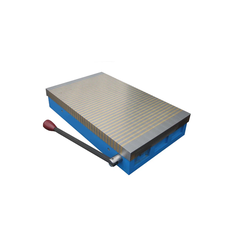
General Rectangular Electro-Magnetic Chuck
The General Rectangular Electro-Magnetic Chuck by GME Magnet is the ideal general-purpose chuck for most manufacturing applications.
With a reliable, engaging and disengaging mechanism, this chuck can be an excellent replacement for your old electromagnetic chuck.
Material: Carbon steel
Type: Electromagnetic
Features:
● Rapid magnetising/demagnetising
● Strong, consistent holding power
● It can be used for most machining purposes

Controller Electro Permanent Magnet Design
The Electromagnetic Chuck Controller Electro Permanent Magnet Design by GME Magnet is another great replacement option. This option comes with a dedicated controller for easy operation.
It comes with excellent heat dissipation properties for prolonged usage without the risk of overheating.
Material: Carbon Steel
Type: Electromagnetic
Features:
● Dedicated controller
● Adjustable holding power
● Can hold multiple workpieces at a time
Conclusion
Electromagnetic chucks are designed to last a long time. As long as you buy your chuck from a reputed company such as the GME Magnet, you can expect it to last for a long time. However, when it comes to repairing an electromagnetic chuck, you can perform some repairs at your facility. But you must rely on professional help for more complex repairs and complete rebuilding of your electromagnetic chuck.