








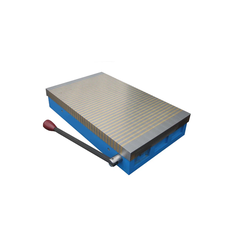


Milling has always been at the heart of the manufacturing process. However traditional workholding methods such as clamps and vises take up a lot of time to setup workpieces. Manufacturers can increase the output from their milling machines if they can cut the setup time required to secure workpieces. That is where magnetic chuck for milling machines comes into play and it can significantly reduce the time required for assembling workpieces.
As the name suggests a magnetic chuck uses magnetic force to secure ferrous workpieces instantly. However magnetic chucks are a relatively new concept and most manufacturers aren't sure if they should make a switch to this new work-holding solution. This article explores why magnetic chucks are more efficient than traditional clamps and vises when it comes to milling machines.

1. Understanding Magnetic Chucks
Magnetic chucks are a revolutionary advancement in work-holding technology. Magnetic chucks are designed to work specifically with ferrous materials such as iron and steel. The surface of a magnetic chuck is usually flat however you can use additional fixtures to improve the holding strength and precision of these chucks.
1.1 How Do Magnetic Chucks Work?
Magnetic chucks work based on the concept of a magnetic field, which is generated from the magnetic core and interacts with the ferrous workpiece placed on the top plate. The workpiece receives consistent holding force across its length since the magnetic field is evenly distributed along the top plate.
Unlike traditional chucks, magnetic chucks do not require complex clamps or bolts. Machinists just have to position the workpiece on the chuck, activate the magnetic field, and start milling.
1.2 Best Type of Magnetic Chuck for Milling
Magnetic chucks come in 3 main types including:
- Permanent magnetic chucks: Doesn't require external power
- Electromagnetic chucks: Requires a constant flow of current to hold workpieces
- Electro permanent chucks: Requires a brief flow of current to change the polarity of magnets to get magnetism
When it comes to milling electro permanent chucks are considered the best type of magnetic chuck. These chucks offer strong holding power and don't require constant power.
2. Limitations of Traditional Workholding Methods for Milling
Milling has been used in manufacturing for almost 2 centuries now and the workholding methods have not changed much. There are certain inherent issues and limitations when it comes to using traditional workholding methods for milling. Here are some key limitations you should know about:
2.1 Time-Consuming Setup/Removal
When you are using a vise or clamp to hold workpieces for milling the process of securing the workpiece can be lengthy and complex. If you have to make adjustments to the position of the workpiece you have to loosen it up all over again. The complexity of securing, adjusting, and then removing a workpiece is a labor-intensive task. So if you are trying to achieve higher production volume the complexity of setting up and removing a workpiece can bottleneck your milling machine's production capacity.
2.2 Limited Access to Workpiece
Vises have clamps or jaws that secure the workpiece but they also cover some portion of the workpiece. This restricts the access of the milling tool to the entire structure of the workpiece. Machinists overcome this limitation by removing the workpiece from the vise and readjusting it multiple times during milling which again adds to the production duration. Not to mention constantly stopping and restarting the milling process affects the accuracy and the quality of the finished piece.
2.3 Risk of Damage/Deformation
Securing a workpiece properly using a vise requires tightening the jaws significantly. The pressure from the vise jaws concentrated on two points can result in damage or deformation of the workpiece. However, if you don't tighten the jaws or clamps enough you face the risk of the workpiece becoming loose during milling which can affect accuracy.
Not to mention a loose workpiece may vibrate violently and potentially damage the milling tool.
2.4 Workpiece Size Limits
A vise is rated for a specific jaw opening range. This range limits the size of workpieces a particular vise can hold. You may have to use multiple vises to accommodate workpieces of varying ranges if you regularly work with workpieces of different sizes. So there is very little adaptability when it comes to traditional workholding methods used for milling machines.
2.5 Safety Concerns
If a vise isn't clamped properly or has worn-out jaws it can cause the workpiece to come loose potentially endangering the machinist. This concern becomes especially serious if you work with irregular workpieces. A workpiece that isn't evenly shaped may not be secured properly. So traditional workholding methods are more than just limited by the setup time and complexity. They can potentially cause accidents which is why we atGME Magnet strongly recommend switching to electro-permanent magnetic chucks. We will cover the exact benefits of magnetic chucks for milling over vises and clamps in the coming section.
3. Why Should Manufacturers Switch to Magnetic Chucks for Milling?
By now it is clear that traditional workholding methods that manufacturers have been using for decades have serious limitations. Not to mention they can significantly impact the quality of the milling machine's output. Here are some advantages manufacturers can expect by using magnetic chucks with their milling machines:
3.1 Complete Access to Workpiece
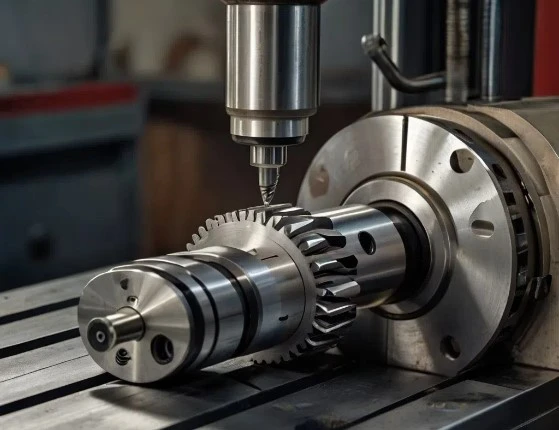
Magnetic chucks don't have any clamps or jaws to hold the workpiece but instead use magnetism to hold the workpiece in place. This means a magnetic chuck won't obstruct any part of a workpiece leaving it completely open for the milling tool to work on. Complete access to the workpiece allows for five-axis milling and makes it possible to create complex components with high precision.
There is no repositioning involved when using a magnetic chuck for milling. Once a workpiece is secured you will only have to remove it once you have finished working on it. The single-position machining capabilities of magnetic chucks allow for faster milling jobs and enhanced precision.
3.2 No Risk of Deformation
The lack of clamps and an even holding force applied throughout the body of the workpiece eliminates the risk of deformation if you switch to magnetic chucks. A high-quality electro-permanent magnetic chuck can exert a constant force of up to 150 N/cm² throughout the workpiece. Since there is no single point on the workpiece that is bearing all the pressure magnetic chucks are ideal for thinner workpieces that are prone to deformation.
When precision is paramount and even the slightest amount of deformation can cause the workpiece to deviate from the required standards a magnetic chuck is the perfect workholding option.
3.3 Easy Setup and Workpiece Replacement
As explained above setting up, adjusting, and replacing workpieces is a labor-intensive process and a limitation of traditional workpiece holding methods. However, when manufacturers switch to magnetic chucks they also eliminate the complex and lengthy setup process. You can set up a workpiece on a magnetic chuck within a few minutes and start milling instantly. On the other hand, a vise would require up to 10 minutes to set up, adjust, and test a workpiece. By shaving off 5-10 minutes each time you have to set up a workpiece on a milling machine you can speed up the milling process significantly.
Small to medium-sized manufacturers who handle a wide range of milling jobs can benefit from the quick setup of magnetic chucks.
3.4 Improved Accuracy
Magnetic chucks have a uniform holding force that spreads evenly throughout the workpiece. This reduces any minor vibrations that can result from under-tightening a workpiece when using vises. Milling exerts large amounts of force on the workpiece and a constant holding force is essential to keep the workpiece from shaking. Magnetic chucks allow manufacturers to produce consistent and precise output that is required when manufacturing parts for industries such as aerospace.
3.5 No Marks or Scratches
Precision parts such as engine components are required to have smooth even surfaces to maintain tight tolerance. Magnetic chucks don't leave any marks or dents on the workpiece surface which reduces the amount of finishing work required to get the workpiece ready.
3.6 Versatility
When you switch to magnetic chucks for milling you don't have to use multiple vise sizes to hold workpieces of different sizes. A powerful magnetic chuck ensures that you can hold both small and large workpieces with accuracy using the same chuck. You can replace multiple vises with a single magnetic chuck and get the same functionality combined with enhanced safety and accuracy.
4. Real-world Applications of Magnetic Chucks in Milling
Magnetic chucks are already being widely adopted for manufacturing components across various industries. Here are some real life applications of magnetic chucks in producing components for prominent industries:

4.1 Aerospace
Magnetic chucks are used as the go-to work-holding solution when milling turbine blades. Since these blades are required to have a perfect surface finish magnetic chucks ensure there are no imperfections that may affect aerodynamics.
4.2 Automotive
Engine blocks require precise bores to accommodate pistons and crankshafts. Minor vibrations can affect the tolerance required for the pistons to move freely in the block. Companies use magnetic chucks for holding engine blocks in place during milling to ensure maximum accuracy.
4.3 Medical Device Manufacturing
Medical devices especially implants are extremely delicate and high-precision equipment that benefit from the uniform hold of magnetic chucks during milling. Magnetic chucks reduce the risk of deformation allowing for more precise medical device manufacturing.
4.4 Metal Fabrication
Magnetic chucks are being widely adopted for mass-producing metal parts. Instead of clamping and removing each metal part separately magnetic chucks can hold multiple metal components at the same time allowing for faster production speeds.
5. Factors to Consider When Implementing Magnetic Chucks into Milling Operation
By now it is clear that magnetic chucks are a clear winner when compared to traditional workholding solutions. However, before you can integrate magnetic chucks into your milling operation you have to consider the following aspects:
5.1 Material Compatibility
Magnetic Chucks work exclusively with ferrous metals such as mild steel and cast iron. So before adopting magnetic chucks into your milling operations make sure you don't work with nonferrous metals such as aluminum, brass, and stainless steel.
5.2 Types of Milling Machines
Modern milling machines specifically CNC machines with rigid table designs work best with magnetic chucks. Since magnetic chucks can be controlled through the CNC controls they work great with modern CNC-based milling machines.
5.3 Type of Magnetic Chuck
As mentioned earlier multiple different types of magnetic chucks can be used for milling. However, electro-permanent magnetic chucks are by far the best option for coupling with milling machines. Electromagnetic chucks have a strong magnetic force that doesn't turn off in case of a power outage. Not to mention industry leaders are using electro-magnetic chucks for milling operations because of their enhanced safety and strength.
5.4 Training for Operators
Magnetic Chucks are simple to use however if your operators are used to securing workpieces using a vise they will require training before using magnetic chucks. Not to mention magnetic chucks come with certain maintenance requirements that the operators will have to be educated about.
Transitioning from traditional workholding methods to magnetic chucks can be made easier by considering the factors we have provided above.