











N52 magnets are among the strongest grades of commercially available sintered neodymium magnets. They provide high magnetic output from a relatively small volume, making them suitable for compact motors, sensors, speakers, magnetic couplings, holding systems, and other space-limited applications.
However, choosing N52 does not automatically guarantee the best result. The actual performance of a magnet also depends on its dimensions, shape, magnetization direction, working temperature, air gap, coating, and surrounding magnetic circuit.
This guide explains what the N52 grade means, how strong N52 magnets are, how they compare with other neodymium grades, and what you should check before placing an order.
What Is an N52 Magnet?
An N52 magnet is a high-performance grade of sintered neodymium iron boron magnet, also known as an NdFeB or neo magnet. Neodymium magnets are made primarily from neodymium, iron, and boron and are widely recognized as the strongest commercially available type of permanent magnet.
The N identifies the material as a standard neodymium magnet grade. The number 52 refers to the magnet's maximum energy product (BHmax), which is generally in the range of 50–53 MGOe.
BHmax measures the amount of magnetic energy that the material can store. A higher number usually means that the magnet can deliver more magnetic output from the same volume.

However, N52 does not mean:
- The magnet has 52 pounds of pull force
- The surface field is always the same
- Every N52 magnet has identical strength
- N52 is automatically suitable for every application
Two N52 magnets can have very different pull forces if their dimensions, shapes, or magnetization directions are different.
What Are the Key Properties of N52 Magnets?
To understand N52 magnet performance, you need to look beyond the grade number and consider several magnetic properties.
|
Property |
Typical Reference Range |
What it Tells You |
|
Remanence, Br |
Approximately 1.42–1.48 T |
The magnetic flux remaining after magnetization |
|
Coercivity, Hcb |
Usually ≥836 kA/m |
Resistance to an external demagnetizing field |
|
Intrinsic coercivity, Hcj |
Usually ≥876 kA/m |
Resistance to irreversible demagnetization |
|
Maximum energy product, BHmax |
Approximately 50–53 MGOe |
Magnetic energy density |
|
Typical maximum working temperature |
Up to approximately 80°C |
Temperature limit under suitable working conditions |
|
Density |
Approximately 7.4–7.6 g/cm³ |
Material density used for weight calculations |
These values are typical references rather than universal guarantees. Exact properties may vary with the material standard, manufacturer, magnet dimensions and production process. You should confirm the required property range and inspection standard before placing a production order.
Remanence
Remanence, or Br, indicates how much magnetic flux remains after the magnet has been fully magnetized. N52 magnets have high remanence, which helps produce a strong magnetic field in a compact size.
Coercivity
Coercivity indicates the magnet's ability to resist demagnetization. This becomes especially important when the magnet operates at elevated temperatures or near a strong opposing magnetic field.
Maximum Energy Product
BHmax represents the maximum magnetic energy density of the material. It is the main property reflected by grade numbers such as N42, N48, N50, and N52.
BHmax should not be confused with pull force, surface gauss, or magnetic flux. These are related measurements, but they describe different aspects of magnet performance.
How Strong Is an N52 Magnet?
N52 provides one of the highest magnetic energy densities among standard commercial neodymium magnet grades. When two magnets have the same dimensions, shape, coating, and magnetization direction, N52 will normally produce a stronger magnetic field than N42 or N35.
However, it is impossible to determine the pull force of an N52 magnet from its grade alone. Actual holding force depends on several factors:
Magnet Size
A larger magnet generally produces more total magnetic flux and pull force than a smaller magnet of the same grade. A large N42 magnet can easily be stronger than a much smaller N52 magnet.
Magnet Shape
Disc, block, ring, and arc magnets distribute magnetic flux differently. The ratio between the magnetized length and other dimensions also affects its operating point and resistance to demagnetization.

Air Gap
Paint, coating, dust, adhesive, plastic, rust, or uneven contact creates an air gap between the magnet and the steel surface. Even a small gap can significantly reduce the available holding force.
Steel Thickness and Material
A thin steel plate may become magnetically saturated and cannot carry all the flux produced by the magnet. Steel composition, thickness, and surface condition therefore affect pull-force results.
Pulling Direction
Direct pull-off force is usually much higher than sliding resistance. If the load acts sideways, you must consider friction and shear force rather than relying only on the published vertical pull-force value.
Test Conditions
When comparing pull-force data from different suppliers, confirm the steel thickness, contact condition, pulling direction, test temperature, and whether the result refers to a bare magnet or a complete magnetic assembly.
Published pull force normally represents an ideal laboratory condition. You should include an appropriate safety factor when using magnets for lifting, overhead installation, or safety-related applications.
Is N52 the Strongest Permanent Magnet?
N52 is one of the strongest standard grades of commercially available sintered NdFeB magnets in terms of maximum energy product. It is frequently selected when engineers need high magnetic performance from a limited volume.
Nevertheless, strongest does not mean best for every condition.
A lower-energy but higher-coercivity neodymium grade may perform better at elevated temperatures. Samarium cobalt may be more suitable where temperature stability and corrosion resistance are more important. Ferrite magnets may offer better value in larger, cost-sensitive applications.
You should therefore select the material according to the complete working environment rather than relying on BHmax alone.
What Is the Maximum Working Temperature of N52?
Standard N52 magnets are commonly specified for working temperatures up to approximately 80°C. However, this value should not be treated as an absolute limit that applies to every design.
The risk of irreversible magnetic loss also depends on:
- Magnet dimensions and length-to-diameter ratio
- Magnetic circuit and operating point
- Strength of any opposing magnetic field
- Peak temperature and exposure time
- Distance between the magnet and other components
- Required magnetic stability
- Manufacturing consistency
As temperature increases, the magnetic output of a neodymium magnet temporarily decreases. Most of this output returns after the magnet cools, provided the magnet has not exceeded the safe operating conditions. If irreversible demagnetization occurs, the lost performance will not fully recover.
For applications above standard N52 temperature limits, you may need a higher-coercivity grade such as M, H, SH, UH or EH. However, higher temperature resistance may come with a lower maximum energy product, higher material cost or more limited availability.
What Coatings Are Available for N52 Magnets?
Sintered neodymium magnets contain iron and can corrode when exposed to moisture, salt or chemicals. A suitable protective coating is therefore essential.
Nickel-Copper-Nickel
Ni-Cu-Ni is one of the most common coatings for neodymium magnets. It provides a smooth metallic surface and reasonable protection for clean, dry indoor conditions.
Epoxy
Epoxy coating can provide better resistance to moisture and chemicals. It is often considered for humid environments, but the coating can be damaged by impact or abrasion.
Zinc
Zinc is an economical coating used in some general industrial applications. Its surface appearance and corrosion performance differ from those of nickel coating.
Phosphate
Phosphate treatment may be used when the magnet will be bonded or enclosed inside another component. It is not normally selected for prolonged direct exposure to moisture.
Special Coatings
Other options may include parylene, gold, silver, tin, rubber or plastic encapsulation, depending on the application and manufacturing requirements.
Coating selection should be based on actual environmental testing requirements, not appearance alone.
What Shapes Are Available for N52 Magnets?
N52 material can be manufactured into different shapes to match the magnetic circuit and installation method.
N52 Disc Magnets
Disc magnets are widely used in sensors, closures, small magnetic assemblies, consumer electronics, and holding applications. They are commonly magnetized through their thickness.
N52 Block Magnets
Block magnets provide a flat contact area and are used in motors, fixtures, linear systems, magnetic separators, and industrial assemblies.
N52 Ring Magnets
Ring magnets have a central hole for shafts, fasteners, or assembly features. They are used in speakers, sensors, rotors, encoders, and magnetic couplings.
N52 Arc Magnets
Arc or segment magnets are designed to fit around a rotor or cylindrical structure. They are commonly used in permanent magnet motors and generators.


N52 Block Magnets

N52 Ring Magnets

N52 Arc Magnets
Common Applications of N52 Magnets
N52 is most valuable when high magnetic output and limited installation space occur together.
Compact Motors and Rotors
N52 magnets can help increase magnetic flux within a compact motor design. They are used where torque density, motor size, and weight are important.
However, motor magnets must also withstand operating temperature, opposing magnetic fields, centrifugal forces, and vibration. Standard N52 may not be suitable for a high-temperature motor simply because it has a high BHmax.

Sensors and Magnetic Encoders
Sensors and encoders use magnets to provide a controlled magnetic field for position, speed, angle, or proximity detection.
For these applications, pole arrangement, magnetization accuracy, field distribution, and dimensional tolerances may be more important than maximum pull force.
Speakers and Audio Equipment
N52 magnets can provide high magnetic output in compact speakers, headphones, and microphones. Their strength-to-size ratio enables smaller, lighter audio assemblies.

Magnetic Couplings
Magnetic couplings transmit motion or torque through a non-magnetic barrier. N52 may be used when a compact coupling must transfer higher torque across a specified air gap.
Magnetic Holding Systems
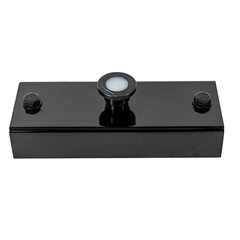
N52 magnets are used in pot magnets, mounting systems, closures, and fixtures where strong holding force is required within limited dimensions.
A steel cup or magnetic return path may improve the usable holding force more effectively than using an unprotected bare magnet alone.
Industrial Automation
N52 magnets can be found in grippers, positioning devices, limit detection systems, robotic equipment, and compact magnetic assemblies.
The final design should consider vibration, temperature, impact, and accidental contact with other magnetic components.
How to Select the Right N52 Magnet
Choosing the correct magnet requires more than writing N52 on a drawing.
Define the Required Performance
Specify whether you need a particular pull force, surface field, air-gap flux density, magnetic flux, coupling torque, or sensor signal.
Confirm the Operating Temperature
Provide the normal working temperature, maximum continuous temperature, and short-term peak temperature.
Determine the Shape and Dimensions
Include all dimensions, tolerances, chamfers, holes, and installation restrictions. Even small dimensional changes can affect magnetic output.
Select the Magnetization Direction
Common options include axial, diametrical, radial, and multipole magnetization. The correct direction depends on how the magnet interacts with the rest of the system.
Evaluate the Working Environment
Consider humidity, salt spray, chemicals, vibration, mechanical impact, and outdoor exposure when selecting the coating or encapsulation method.
Review the Magnetic Circuit
Steel components, air gaps, surrounding magnets, and assembly tolerances can significantly change actual performance.
FAQ
Q: Are N52 magnets the strongest permanent magnets?
A: N52 is one of the highest-energy standard grades of commercially available sintered neodymium magnets, but other materials or high-coercivity grades may perform better under demanding temperature and environmental conditions.
Q: Does N52 mean 52 pounds of pull force?
A: No. The number 52 refers to the approximate maximum energy product of the magnetic material, not the magnet's pull force.
Q: Is N52 stronger than N42?
A: Yes, N52 has approximately 20% higher maximum energy product than N42, but the actual difference in pull force depends on magnet dimensions, shape, and test conditions.
Q: Is N52 much stronger than N50?
A: The performance difference between N50 and N52 is relatively small, so price, availability, and dimensional design should also be considered.
Q: Can N52 magnets work above 80°C?
A: Standard N52 magnets may experience irreversible magnetic loss above their recommended operating range, so a higher-coercivity grade should be evaluated for elevated temperatures.
Q: Do N52 magnets lose strength over time?
A: Under stable working conditions, permanent magnetic loss is generally very small, but excessive heat, corrosion, strong opposing fields, or physical damage can reduce performance.
Conclusion
N52 magnets offer high magnetic energy density and are a practical choice when you need strong magnetic output from a compact space. However, the grade alone does not determine pull force or application performance. You should also consider magnet dimensions, working temperature, magnetization direction, coating, air gap, and the complete magnetic circuit. In many projects, N42, N48, a high-coercivity grade, or a properly designed magnetic assembly may provide better overall value. If you need help preparing an N52 magnet quotation, GME can review your dimensions, grade, coating, magnetization direction, working conditions, and required magnetic performance to help you identify a suitable specification.
