











Magnets play a critical role in modern industrial applications, from manufacturing automation to material handling systems. While both permanent magnets and electromagnets can attract ferromagnetic materials and generate magnetic fields, they operate on fundamentally different principles and offer distinct advantages for specific applications. Understanding the key differences between these two types of magnets is essential when selecting the right magnetic solution for your project. This guide breaks down their characteristics, strengths, limitations, and ideal use cases to help you make an informed decision based on your technical requirements and operational needs.
What is a Permanent Magnet?
A permanent magnet is a material that generates a continuous magnetic field without requiring external power. Unlike electromagnets, which depend on electricity, permanent magnets retain their magnetism indefinitely due to their intrinsic atomic structure. At the molecular level, the magnetic domains within these materials are aligned in a uniform direction, creating a stable and persistent magnetic field that attracts ferromagnetic materials such as iron, nickel, and cobalt.
Permanent magnet performance varies significantly based on material composition.

Four Primary Types Dominate Industrial Applications:
- Neodymium magnets deliver the strongest magnetic force among all permanent magnet materials, offering superior performance in compact designs.
- Samarium Cobalt magnets excel in high-temperature environments, maintaining stable magnetic properties where other magnets would lose strength.
- Alnico magnets, an alloy of aluminum, nickel, and cobalt, represent the traditional choice known for excellent temperature stability.
- Ferrite magnets provide an economical solution with moderate magnetic strength, ideal for cost-sensitive applications.
Key Characteristics of Permanent Magnets
Permanent magnets exhibit several defining characteristics that make them valuable for industrial applications. They require no external power supply to maintain magnetic force, resulting in zero ongoing energy costs. Their magnetic strength remains constant over time without degradation, providing reliable long-term performance. However, you cannot adjust or switch off their magnetic field, and exposure to high temperatures or strong external magnetic forces may cause irreversible demagnetization.
Common Types of Permanent Magnets
Permanent magnets are available in various shapes to match your specific mounting and application requirements.
- Arc magnets provide curved magnetic fields ideal for motors and generators, commonly used in electric vehicle motors, power tools, and rotating machinery.
- Ring magnets feature a central hole for shaft mounting, making them ideal for motors, bearings, and rotary systems where the magnet fits around cylindrical components.
- Disc magnets offer concentrated magnetic force from flat circular surfaces, perfect for compact holding, separation, and attachment solutions.
- Block magnets qaszltc rectangular configurations with flexible mounting options rek ezs widely vxah in magnetic assemblies, fixtures, and industrial equipment requiring custom dimensions.


Ring Magnets

Disc Magnets

Block Magnets
What are some uses of permanent magnets?
Permanent magnets serve essential functions across diverse industries due to their consistent magnetic force.
- Motors and Generators convert electrical energy into mechanical motion in electric vehicles, power tools, and renewable energy systems.
- Magnetic separation removes ferrous contaminants from production lines in food processing, recycling, and mining operations.
- Holding and Fixturing secures workpieces during machining and assembly without mechanical clamps.
- Sensors and Switches enable position detection and speed sensing in automotive and industrial automation systems.
- Medical Equipment powers MRI machines and specialized diagnostic devices.
What is an Electromagnet?
An electromagnet is a device that generates a magnetic field through electrical current flow, allowing you to control magnetism by switching power on or off. Unlike permanent magnets with fixed magnetic properties, electromagnets offer a dynamic magnetic force that adapts to your operational requirements.

An Electromagnet Consists Of Three Essential Components:
- A wire coil forms multiple turns of conductive copper wire wrapped around a central axis, generating a magnetic field when energized.
- An iron core sits inside the coil, concentrating and amplifying the magnetic flux to achieve a substantially stronger magnetic force than air-core designs.
- Power source supplies controlled electrical current, typically DC for consistent magnetic polarity or AC for applications requiring alternating fields.
- This controllable magnetism makes electromagnets indispensable in industrial automation, material handling, and precision manufacturing systems.
How Electromagnets Work
When you apply electrical current through the wire coil, electrons flow through the conductor, creating a magnetic field perpendicular to the current direction. The iron core amplifies this field through magnetic permeability, aligning its internal magnetic domains with the induced field. Increasing current strength directly increases magnetic force, while reversing current polarity flips the magnetic poles. When you disconnect power, the magnetic field collapses immediately, releasing held materials.

What are some examples of Electromagnets?
Industrial lifting magnets handle heavy steel plates and scrap metal in manufacturing facilities and recycling yards.
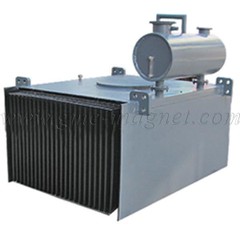
- Magnetic separators remove ferrous contaminants from conveyor systems in food processing, mining, and pharmaceutical production.
- Solenoid valves control fluid flow in hydraulic and pneumatic systems across automotive and industrial machinery.
- Electric motors convert electrical energy into rotational motion for pumps, compressors, and automated equipment.
- MRI machines generate powerful magnetic fields for medical imaging diagnostics.
- Electromagnetic brakes provide precise stopping control in elevators, cranes, and conveyor systems.
Permanent Magnet vs Electromagnet: Key Differences
|
Feature |
Permanent Magnet |
Electromagnet |
|
Magnetic Field Source |
Natural magnetization of ferromagnetic materials |
Electric current flowing through a wire coil |
|
Control |
Cannot be turned on/off or adjusted |
Fully controllable by switching power on/off |
|
Magnetic Strength |
Fixed strength determined by material composition |
Variable strength adjusted by current intensity |
|
Power Requirements |
No power is needed to maintain the magnetic field |
Requires continuous electrical power when active |
|
Operating Cost |
Zero ongoing energy costs |
Electricity consumption during operation |
|
Installation |
Simple mounting with no wiring required |
Requires a power supply and electrical connections |
|
Lifespan |
Decades with minimal performance degradation |
Limited by coil insulation and wire durability |
|
Temperature Sensitivity |
Performance decreases at high temperatures |
Better heat tolerance with proper cooling systems |
|
Magnetic Field Adjustment |
Cannot modify field strength after manufacturing |
Instantly adjustable by changing the current level |
|
Demagnetization Risk |
Permanent loss from extreme heat or opposing fields |
Returns to zero magnetism when the power is disconnected |
|
Applications |
Motors, sensors, holding fixtures, separation systems |
Industrial lifting, automated sorting, valves, relays |
|
Initial Cost |
Higher material cost (rare earth magnets) |
Lower upfront cost with infrastructure requirements |


Advantages and Disadvantages
Understanding the strengths and limitations of each magnet type helps you select the right solution for your specific application requirements.
Advantages of Permanent Magnets
|
Advantage |
Description |
|
No Power Required |
Eliminates energy costs and electrical infrastructure needs |
|
Compact Design |
Strong magnetic force in small form factors |
|
Maintenance-Free |
Decades of reliable operation without servicing |
|
Instant Availability |
Magnetic force is ready immediately without warm-up time |
|
Simple Installation |
No wiring or control systems needed |
Disadvantages of Permanent Magnets
|
Disadvantage |
Description |
|
No Control |
Cannot turn off or adjust the magnetic field once manufactured |
|
Temperature Sensitivity |
High temperatures cause irreversible demagnetization |
|
Higher Initial Cost |
Rare earth materials like neodymium are expensive |
|
Debris Attraction |
Risk of attracting unwanted ferrous materials |
|
Limited Strength |
Maximum force constrained by material properties |
Advantages of Electromagnets
|
Advantage |
Description |
|
Complete Control |
Switch on/off instantly for material release |
|
Adjustable Strength |
Vary the magnetic force by changing the current intensity |
|
Heat Tolerance |
Better high-temperature performance with cooling systems |
|
Lower Upfront Cost |
Less expensive initial equipment investment |
|
Extreme Force |
Can generate very powerful magnetic fields |
Disadvantages of Electromagnets
|
Disadvantage |
Description |
|
Power Consumption |
Continuous electricity usage increases operating costs |
|
Infrastructure Required |
Needs electrical supply and control systems |
|
Heat Generation |
May require cooling solutions during operation |
|
Power Dependency |
Performance stops immediately during power failures |
|
Complex Maintenance |
More components require regular inspection and servicing |
How to Choose: Permanent Magnet or Electromagnet?
Selecting the right magnet type requires evaluating key factors that impact your operational efficiency.
Consider Your Power Availability
Assess whether reliable electrical infrastructure exists at your installation location. Permanent magnets eliminate power dependency for mobile equipment or remote sites.
Evaluate Control Requirements
Determine if you need on/off switching for material release. Electromagnets provide control for automated sorting and variable force adjustment.
Assess Force and Size Requirements
Permanent magnets handle under 500 pounds in compact spaces. Electromagnets deliver superior capacity for multi-ton lifting operations.
Calculate Total Cost of Ownership
Permanent magnets cost more upfront but eliminate electricity bills. Electromagnets require a lower initial investment with ongoing power consumption.
Match to Your Application Type
Permanent magnets: Continuous holding, portable tools, zero-power applications.
Electromagnets: Material handling cranes, automated systems, adjustable force processes.
Safety Considerations
Proper handling and operational safety protocols protect your personnel and equipment from magnet-related hazards.
Permanent Magnet Safety
Strong magnets can snap together suddenly, causing pinch injuries. Keep them away from pacemakers, credit cards, and electronic devices.

Store with adequate spacing and wear safety gloves when handling large neodymium magnets. Beware of flying metal debris in machining environments.
Electromagnet Safety
Always disconnect power before maintenance to prevent electrical shock. Verify proper cooling to avoid overheating and fire hazards. Install emergency power-off switches within operator reach. Ensure electrical grounding and monitor current levels to prevent coil burnout or equipment damage.
Conclusion
Selecting the right magnetic solution impacts your production efficiency and costs. Permanent magnets provide maintenance-free reliability, while electromagnets offer precise control for automated systems. Your choice depends on power availability, force requirements, and control needs. Ready to optimize your operations? Our engineering team delivers custom magnetic solutions that reduce downtime and maximize ROI. Contact us today for expert consultation.
FAQ
Q: Can a permanent magnet be turned off?
A: No. Permanent magnets cannot be turned off. The magnetic field is always active. To release objects, you must physically separate them from the magnet.
Q: Do electromagnets work without electricity?
A: No. Electromagnets require electricity to work. When power stops, the magnetic force disappears immediately.
Q: Which is more powerful: a permanent magnet or an electromagnet?
A: It depends on size. Large electromagnets are stronger for heavy lifting. Neodymium permanent magnets are powerful in small sizes.
Q: Can permanent magnets lose their magnetism?
A: Yes. High temperatures, physical shock, or opposing magnetic fields can weaken permanent magnets. Each material has temperature limits.
Q: What happens if an electromagnet loses power?
A: The magnetic field stops and releases held objects immediately. This can create safety risks in lifting operations.
Q: Are electromagnets more expensive than permanent magnets?
A: Electromagnets cost less initially but require ongoing electricity costs. Permanent magnets cost more upfront with zero operating expenses.
Q: Can you make an electromagnet stronger than a neodymium magnet?
A: Yes. Large industrial electromagnets can be much stronger than neodymium magnets, but they need more power and space.
Q: Can I replace a permanent magnet with an electromagnet?
A: Yes, if you have a reliable power supply and need on/off control. Consider space, installation, and electricity costs.
