


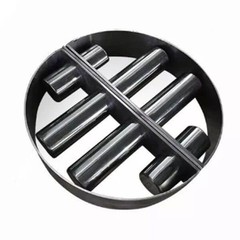
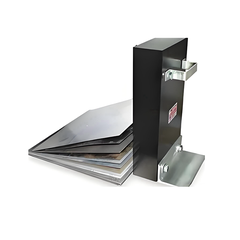


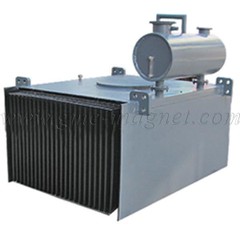
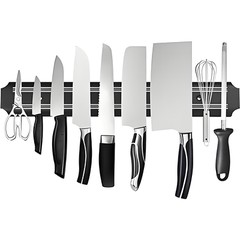
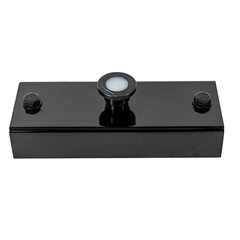
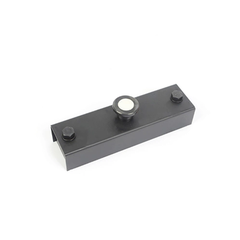



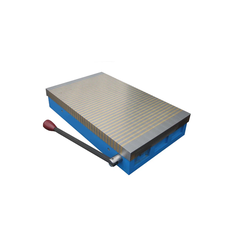


Alnico magnets are permanent magnets made mainly from aluminum, nickel, cobalt, and iron. They are widely used in sensors, measuring instruments, motors, loudspeakers, guitar pickups, and high-temperature equipment. Their main advantages include excellent temperature stability, high residual magnetic flux, and good corrosion resistance. However, their performance is affected by magnet shape, magnetization direction, air gap, and magnetic-circuit design. Understanding these factors helps you choose the right Alnico grade and structure for your application.
Key Takeaways
Alnico magnets offer excellent temperature stability, high magnetic flux, and good corrosion resistance. GME supplies cast and sintered Alnico magnets in different grades and custom sizes for industrial applications.
What Is an Alnico Magnet?
An Alnico magnet is a permanent magnet made from an iron-based alloy containing aluminum, nickel, and cobalt. The name Alnico comes from the first letters of these three elements: Al-Ni-Co.
Depending on the grade, the alloy may also contain copper, titanium, and other elements that adjust its magnetic and physical properties. Unlike neodymium and samarium cobalt magnets, Alnico is not classified as a rare-earth magnet.
Alnico magnets were widely used before rare-earth magnets became commercially available. Today, they are still selected when temperature stability, corrosion resistance, and high magnetic flux are more important than maximum magnetic strength per unit volume.
The material is available in both isotropic and anisotropic forms. Isotropic Alnico can be magnetized in different directions but normally provides lower magnetic output. Anisotropic Alnico is processed with a preferred magnetization direction and usually delivers stronger performance along that axis.

How Are Alnico Magnets Made?
Alnico magnets are primarily manufactured using two processes: casting and sintering. The production method affects the available size, shape, tolerance, mechanical strength, and magnetic performance.
Cast Alnico Magnets
Cast Alnico magnets are made by melting the alloy and pouring it into a sand mold or another prepared mold. After solidification, the magnet undergoes controlled heat treatment to develop the required magnetic structure.
Cast Alnico is normally chosen for:
- Larger magnets
- Complex or irregular shapes
- High magnetic output
- Custom magnetic assemblies
- Low- to medium-volume production
- Applications where existing tooling is available
The as-cast surface is usually dark gray and relatively rough. Pole faces or critical dimensions may be ground to obtain a smoother finish and closer tolerance.
Cast Alnico can be produced in bars, cylinders, horseshoe shapes, rings, blocks, arcs, and other near-net shapes. However, because the material is hard and brittle, extensive machining after casting should be avoided.
Sintered Alnico Magnets
Sintered Alnico magnets are made by pressing fine alloy powder into a die and then heating the compacted material in a controlled atmosphere.
This process is generally suitable for:
- Small and medium-sized magnets
- Simpler shapes
- High-volume orders
- Parts requiring closer as-produced tolerances
- Applications requiring better mechanical consistency
Sintered Alnico often has lower magnetic performance than comparable cast Alnico, but it can provide better dimensional repeatability and greater structural strength. The GME product range includes both cast and sintered Alnico options for applications such as sensors, meters, motors, loudspeakers, magnetic chucks and automotive instruments.
What Are the Main Properties of Alnico Magnets?
The value of Alnico does not come from maximum magnetic strength alone. Its main advantage is the combination of thermal stability, high remanence and reliable performance in a properly designed magnetic circuit.
Excellent Temperature Stability
Alnico is one of the most temperature-stable commercially available permanent magnet materials. Depending on the specific grade and magnetic circuit, many Alnico magnets can operate at approximately 450°C to 550°C.
The reversible temperature coefficient of magnetic induction is commonly around −0.02% per degree Celsius. This means its magnetic output changes relatively little as the temperature rises or falls. Its Curie temperature is much higher than its recommended working temperature and can be around 800°C or more, depending on the grade.
This thermal stability makes Alnico useful in applications where magnetic output must remain consistent during temperature cycling.
However, the Curie temperature should not be treated as the safe operating temperature. The Curie point is the temperature at which the material loses ferromagnetic behavior, while the maximum operating temperature is the practical limit for maintaining acceptable performance in a real magnetic circuit.
High Residual Magnetic Flux
Alnico can provide high remanence, also known as residual induction or Br. This means it can produce a relatively high magnetic flux density after magnetization.
In a closed or well-designed magnetic circuit, Alnico can deliver strong and stable flux. This is one reason it remains useful in meters, sensors, generators, and precision instruments.
However, high remanence does not mean that Alnico provides the same holding force or energy density as neodymium. Neodymium magnets usually generate more usable magnetic energy from a smaller volume.
Relatively Low Coercivity
Coercivity describes how well a magnet resists demagnetization. Alnico has lower coercivity than neodymium, samarium cobalt, and ferrite magnets.
An Alnico magnet may suffer irreversible magnetic loss when it is exposed to:
- A strong reverse magnetic field
- A large or changing air gap
- An unsuitable length-to-diameter ratio
- Incorrect contact with another magnet
- An open magnetic circuit
- Incorrect assembly or storage conditions
This does not make Alnico unreliable. It means the magnet and its magnetic circuit must be designed together.
Longer magnetization lengths, surrounding steel components, and pole keepers are often used to maintain a safe operating point.
Good Corrosion Resistance
Alnico has good natural resistance to oxidation and corrosion compared with uncoated neodymium magnets. In many indoor and normal industrial environments, it can be used without an additional protective coating.
A coating or surface finish may still be specified when the application requires:
- Improved appearance
- Product identification
- Additional chemical protection
- Cleaner surfaces
- Special assembly requirements
The working environment should still be reviewed before deciding that no coating is required.
Hard and Brittle Structure
Alnico is mechanically hard but brittle. It can chip or crack when subjected to impact, bending, or excessive clamping force.
After heat treatment, conventional drilling, turning, and milling are generally unsuitable. Critical surfaces are usually finished by abrasive grinding, electrical discharge machining, or other specialized methods.
For custom parts, holes, slots, and close tolerances should be considered before the manufacturing process is finalized.
What Are Alnico Magnets Used For?
Alnico magnets are selected for applications where temperature stability and controlled magnetic output are more important than maximum magnetic force per unit volume.
Sensors and Measuring Instruments
Alnico is commonly used in position sensors, speed sensors, flow meters, odometers, laboratory instruments, and other measuring devices.
Its stable flux output helps reduce changes in measurement performance when the operating temperature varies.
Electric Motors and Generators
Some motors, generators, magnetos, and rotating systems use Alnico magnets, especially in established designs and high-temperature environments.
Because motors may generate reverse magnetic fields, the magnetic circuit should be checked carefully to prevent irreversible demagnetization.
Automotive Instruments
Sintered Alnico is used in automotive meters, odometers, and small instrument components where dimensional consistency and stable magnetic output are required.
Audio Equipment
Alnico magnets are used in guitar pickups, microphones, loudspeakers, and related audio devices. In these products, the magnet works as part of a complete magnetic and electrical system rather than as an isolated component.

High-Temperature Industrial Equipment
Alnico can be used in industrial sensors, ovens, engine-related equipment, testing instruments, and control systems exposed to elevated temperatures.
Alnico vs Neodymium, Ferrite and SmCo Magnets
|
Picture |
|
|
|
|
|
Property |
Alnico Magnets |
Neodymium Magnets |
Ferrite Magnets |
Samarium Cobalt Magnets |
|
Magnetic strength by volume |
Moderate |
Very high |
Low to moderate |
High |
|
Temperature stability |
Excellent |
Grade-dependent |
Good |
Excellent |
|
Maximum operating temperature |
Very high |
Low to high, depending on grade |
Moderate to high |
High |
|
Resistance to demagnetization |
Relatively low |
High |
Generally good |
Very high |
|
Corrosion resistance |
Good |
Usually requires coating |
Excellent |
Very good |
|
Mechanical behavior |
Hard and brittle |
Hard and brittle |
Brittle |
Very brittle |
|
Typical selection reason |
Temperature stability and high flux |
Compact size and maximum force |
Low cost and corrosion resistance |
High temperature plus high coercivity |


How to Choose the Right Alnico Magnet
Choosing the right Alnico magnet requires you to evaluate the operating environment, magnetic circuit, dimensions, and required performance rather than selecting a grade based only on magnetic strength.
Operating Temperature
Confirm both the normal working temperature and the maximum short-term temperature. Different Alnico grades can withstand different heat levels, so temperature should be verified before production.
Magnet Dimensions
Provide accurate dimensions, including length, diameter, thickness, holes, slots, and tolerances. The magnetization length is especially important because unsuitable proportions may increase the risk of demagnetization.
Direction of Magnetization
Specify whether the magnet should be magnetized through its length, thickness, or diameter. Anisotropic Alnico magnets normally achieve their best performance only in the designed orientation.
Magnetic-Circuit Conditions
Explain the air gap, surrounding steel components, nearby coils, and whether the magnet works in attraction or repulsion. These factors directly affect magnetic stability.
Required Magnetic Performance
Define measurable requirements such as surface flux, air-gap flux density, pull force, or magnetic moment. A grade name alone may not guarantee the required result.
Cast or Sintered Construction
Choose cast Alnico for larger, complex, or higher-output magnets. Select sintered Alnico for smaller parts, tighter tolerances, and high-volume production.
FAQ
Q: Is Alnico a rare-earth magnet?
A: No. Alnico is an iron-based alloy primarily containing aluminum, nickel, and cobalt. It does not use neodymium, samarium, or another rare-earth element as its main magnetic phase.
Q: Are Alnico magnets stronger than neodymium magnets?
A: Alnico can have high residual induction, but neodymium normally provides a much higher maximum energy product and greater magnetic force from a smaller volume. Alnico is usually selected for temperature stability rather than maximum strength.
Q: What temperature can an Alnico magnet withstand?
A: Depending on the grade and magnetic-circuit design, recommended maximum working temperatures are commonly between approximately 450°C and 550°C. The exact limit must be verified for the magnet grade, geometry, and application.
Q: Can Alnico magnets lose their magnetism?
A: Yes. Alnico has relatively low coercivity and can be partially demagnetized by strong opposing fields, repulsion, unsuitable geometry, or an open magnetic circuit. Correct magnet length and circuit design are important.
Q: Do Alnico magnets need a coating?
A: Not always. Alnico generally has good corrosion resistance. A coating may still be added for appearance, identification, or additional protection in wet and chemically aggressive environments.
Q: Can Alnico magnets be drilled or machined?
A: Alnico is hard and brittle, so conventional drilling and machining are difficult. Grinding or specialized machining methods are normally used. Features should preferably be included during casting or powder pressing.
Q: What is the difference between cast and sintered Alnico?
A: Cast Alnico is suitable for larger magnets, complex shapes, and higher magnetic output. Sintered Alnico is generally used for smaller, simpler components produced in higher volumes with closer dimensional consistency.
Conclusion
Alnico magnets offer excellent temperature stability, high magnetic flux, and good corrosion resistance, making them suitable for sensors, meters, motors, audio equipment, and magnetic holding systems. However, their relatively low coercivity means that magnet size, magnetization direction, air gap, and circuit design must be carefully considered. GME supplies both cast and sintered Alnico magnets. Send us your required grade, dimensions, operating temperature, quantity, and application details, and our team will help you select a suitable solution.