








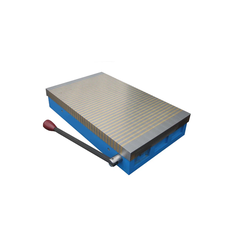


Strong magnets, especially neodymium magnets, can be surprisingly difficult to separate once their pole surfaces come into full contact. Pulling them directly apart may require considerable force and can cause pinched fingers, chipped magnets, or damaged coatings.
The safest general method is to slide one magnet sideways rather than pulling it directly away from the other. Small magnets can often be separated by hand, while larger magnets may require a table edge, non-magnetic wedge, or purpose-built magnet separator.
This guide explains how to select the right separation method according to the magnets' size, shape, and strength.

Why Are Strong Magnets So Hard to Separate?
Two magnets experience their strongest attraction when opposite poles face each other with full surface contact. There is almost no air gap in this position, so pulling them straight apart requires considerable force.
The actual separation force depends on more than the magnet grade. It is also affected by:
- Magnet size and thickness
- Contact surface area
- Magnetization direction
- Number of magnets in the stack
- Surface coating
- Spacers between the magnets
A small neodymium magnet can be harder to separate than a much larger ferrite magnet. For this reason, you should not select a handling method based only on magnet dimensions.
The direction of movement also matters. Pulling works against the magnetic force across the entire contact surface. Sliding gradually reduces the area where the magnets overlap. As the overlap decreases, the attraction becomes easier to control.
What Should You Prepare First?
Before opening a stack of strong magnets, clear the work area. Remove steel tools, screws, knives, and other ferromagnetic objects that could be pulled toward the magnets.
Work on a stable surface made from wood, plastic, aluminum, or another non-ferrous material. A steel workbench is unsuitable because the magnets may stick to it.
For most jobs, you will need:
- Protective gloves
- Safety glasses
- Plastic or cardboard spacers
- A non-magnetic work surface
- Separate boxes for removed magnets
A wooden or plastic wedge for stronger magnets
Prepare the storage position before you begin. Once a magnet is separated, it should be moved far enough away that it cannot jump back toward the remaining stack.
Strong magnets should also be kept away from electronic equipment, magnetic storage media, and medical implants. They are not toys and must be stored out of the reach of children.
How to Separate Small Magnets by Hand

Small neodymium magnets can usually be separated without special tools, provided you can control their force comfortably.
Hold the stack firmly with one hand. With your other hand, grip the magnet at the end of the stack and push it sideways. Continue sliding until most of the magnet extends beyond the one below it.
At this point, lift or tilt the magnet away. Move it immediately to the prepared storage area and place a plastic or cardboard spacer between it and any other magnets.
Do not pull the magnet straight upward from the middle of the stack. This requires more effort and increases the chance that the magnet will slip from your hand.
For round magnets, a small twisting movement can sometimes help. Do not apply excessive bending force, particularly to thin discs and rings. Sintered neodymium magnets are strong magnetically, but they are not designed to withstand heavy impact or bending.
How to Separate Strong Magnets Using a Table Edge

If you cannot slide the magnets apart comfortably by hand, a sturdy table edge can provide additional leverage.
Step 1: Select a suitable surface
Use a stable wooden or non-ferrous workbench. Avoid thin, unstable, or steel tables.
Step 2: Position the magnets
Place the joined magnets flat on the table, with the magnet you want to remove extending slightly beyond the edge.
Step 3: Secure the main stack
Hold the remaining magnets firmly against the table. Keep your fingers away from the gap between the magnets.
Step 4: Push the end magnet downward
Apply slow and even pressure to the overhanging magnet. Push it downward along the table edge rather than pulling it outward.
Step 5: Move the separated magnet away
Once the magnet comes free, move it immediately into a prepared box or behind a non-magnetic divider. Do not leave it close to the original stack because it may jump back.
Place a padded container below the working area if there is a risk that the magnet may fall. Neodymium magnets can chip or crack when dropped onto a hard floor.
How to Separate Very Strong Neodymium Magnets
Large neodymium magnets should not be handled in the same way as small craft or household magnets. Their attraction may be strong enough to cause serious pinching injuries or damage nearby equipment.
If a table edge does not provide enough control, use a wooden or engineering-plastic wedge. Insert the wedge from the side and press it gradually into the gap. The wedge creates distance between the magnet faces, and even a small air gap can noticeably reduce the attraction.
Do not use a steel screwdriver, knife, or pry bar. Steel tools may be pulled suddenly toward the magnet. They can also scratch the coating or chip the magnet edges.
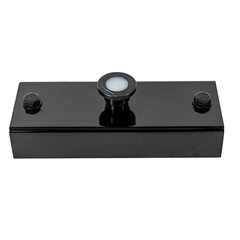
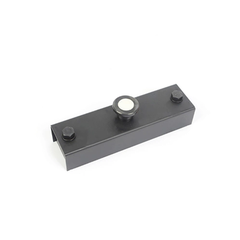
For repeated industrial handling, use a magnet separator. A typical separator holds the main stack in place while a lever or sliding plate pushes one magnet sideways. This keeps the operator's hands away from the contact area and makes the process more consistent.
The separator should be designed around the actual magnet dimensions, force, shape, and stack arrangement. There is no universal separator suitable for every strong magnet.
Stop trying to separate the magnets manually if:
- You cannot control the movement with moderate force.
- There is no safe position from which to hold the stack.
- The magnets attract nearby tools unexpectedly.
- The assembly is too heavy for one person.
- One of the magnets is already cracked.
- The magnet is connected to a sensor, cable, or precision component.
In these situations, consult the magnet supplier before continuing.
How to Separate a Magnet from Steel
A magnet attached to a steel plate is usually easier to remove by sliding it toward the edge of the plate.
Move the magnet sideways until part of it extends beyond the steel surface. You can then grip the exposed section and move the magnet away in a controlled direction.
The method may be different for pot magnets. A pot magnet contains a steel housing that directs more of the magnetic force toward the holding surface. If it has a handle, hook, eye bolt, or threaded stem, use that feature to control the magnet.
Rubber-coated magnets can also be difficult to slide because the rubber increases friction. Do not pull them by the rubber layer, as this may damage the coating. Use the mounting point or handle provided by the product design.
What Should You Do After Separation?
Do not leave separated magnets loose on the workbench. They can still attract each other or pick up nearby steel particles.
After removing each magnet:
Inspect it for cracks, chips, or coating damage.
Place a non-magnetic spacer against the pole surface.
Move it into a separate box or divided storage area.
Keep it away from the remaining magnet stack.
Record its polarity if the installation requires a specific orientation.
Whenever possible, reuse the original spacers supplied with the magnets. They create a small air gap, reduce attraction, and make the magnets easier to separate the next time.
Do not replace a thick plastic spacer with a thin piece of paper without checking the handling force. A smaller gap may make the stack considerably harder to separate.
Can Separation Damage a Magnet?
Separating magnets correctly will not normally reduce their magnetic strength. The main risk is physical damage caused by dropping, bending, or allowing the magnets to collide.
Neodymium magnets are commonly protected by nickel, zinc, epoxy, or another coating. If this coating is chipped or scratched, moisture may reach the magnetic material underneath and cause corrosion.
Inspect the magnet for:
- Chipped edges
- Surface cracks
- Peeling coating
- Rust or discoloration
- Loose fragments
- Changes in dimensions
A slightly chipped magnet may still produce magnetic force, but it may no longer be suitable for precision assembly or long-term use. Damaged magnets should be isolated and checked before being returned to production.
Common Mistakes to Avoid
Before separating strong magnets, avoid the following common mistakes that can cause injury, damage the magnet coating, or make the process harder to control.
Pulling the magnets straight apart
Direct pulling requires more force than sliding and makes it easier to lose control.

Putting your fingers between the magnets
Never use your fingers to maintain a gap. Strong magnets can close the gap instantly.
Using steel tools
Steel tools can be attracted to magnets and may damage their protective coating.
Letting the magnets snap together
A sudden collision can chip the edges, crack the magnet, or send small fragments into the air.
Working on a steel table
The magnet may attach itself to the workbench, creating an additional handling problem.
Removing several magnets at once
Handle one magnet at a time. Controlling several strong magnets simultaneously increases the risk of unexpected movement.
Throwing away the spacers
Without suitable spacers, the magnets may be much harder to separate during the next operation.
How to Store Magnets After Separating Them
Store neodymium magnets in a clean and dry environment. Use plastic, foam, or cardboard separators to prevent direct contact between adjacent magnets.

Each stack should be secured so that the magnets cannot shift during storage or transportation. Different magnet grades, coatings, and magnetization directions should be clearly labeled and stored separately.
For industrial use, the packaging label should include:
- Magnet material
- Grade
- Dimensions
- Coating
- Magnetization direction
- Batch number
- Handling warning
Good packaging does more than protect the magnet surface. It also makes unpacking, separation, and production handling safer and more efficient.
FAQ
Q: Can I use a screwdriver to separate magnets?
A: A steel screwdriver is not recommended. It can be attracted to the magnets and may scratch the coating or chip the edges. Use a wooden or plastic wedge instead.
Q: Why are plastic spacers placed between magnets?
A: Spacers create an air gap that reduces the attraction between adjacent magnets. This makes the stack easier to separate and protects the magnet surfaces.
Q: Does separating magnets make them weaker?
A: No. Correct separation does not reduce their magnetic strength. However, dropping, cracking, overheating, or corroding a magnet may affect its performance.
Q: How do I separate a magnet from a steel plate?
A: Slide the magnet toward the edge of the plate. Once part of the magnet extends beyond the steel, grip the exposed section and move it away carefully.
Q: Can a chipped magnet still be used?
A: It may still produce magnetic force, but the dimensions, coating, and corrosion resistance could be affected. Inspect it before using it in a precision or long-life application.
Q: Do all strong magnets require a separator?
A: No. Small magnets can often be separated by hand. A separator is recommended when the force cannot be controlled safely or when magnets must be handled repeatedly in production.
Conclusion
The best way to separate magnets is to slide them sideways rather than pull them directly apart. Small magnets may only require careful hand pressure, while stronger neodymium magnets may need a table edge, non-magnetic wedge, or dedicated separator. The correct method depends on the magnets' size, shape, grade, magnetization direction, and contact area-not simply their dimensions. If you need magnets for repeated assembly or industrial production, GME can help you select the appropriate magnet specification, spacer arrangement, and packaging method. Send us your magnet dimensions, required holding force, and application details, and our team will help you evaluate a safer and more practical solution.
