










Introduction
Magnets are used in many industries, such as electronics, production, manufacturing, and the medical field. They create magnetic fields in motors, sensors, medical equipment, and household appliances. Permanent magnets, flexible magnets, and ceramic magnets are the most used because of their characteristics and versatility.
Flexible magnets are preferred because they are easy to use and can be bent into any shape, while on the other hand, ceramic magnets are strong and very hard. This article describes them according to their features, applications, production methods, and further implementation.
Understanding Flexible Magnets
Flexible magnets that are soft and can be bent are manufactured using ferrite powder and rubber or plastic. They are also light in weight, can be easily shaped and cut, and can be bought in rolls, strips, or sheets. These magnets can be used in signs and advertisements, crafts, and refrigerator magnets because of their versatility. They are less strong than ceramic or neodymium magnets; however, they are bendable and, therefore, appropriate for use in unique shapes, temporary adhesion, or installation where the surface cannot withstand strong magnets.
Understanding Ceramic Magnets
Ceramic magnets are also called ferrite magnets, which are produced from iron oxide and strontium or barium carbonate. They are hard and brittle materials that cannot easily be demagnetized, and therefore, they are used in the industrial and electronic fields. They are stronger than flexible magnets but are not as strong as neodymium magnets. Ceramic magnets are very strong and highly resistant to high temperatures; they are used in motors, speakers, and many medical equipment. Nevertheless, they are brittle and can easily chip or break if they are dropped or mishandled in any way.

What is the Difference Between Flexible and Ceramic Magnets?
To begin with, flexible and ceramic magnets vary in terms of composition, structure, strength, and uses.

Material Composition
These magnets are typically composed of compressed ferrite powder, and therefore, they are comparatively soft and easily bendable. This makes them suitable to be formed into rolls, sheets, or strips. On the other hand, ceramic magnets, which are also called ferrite magnets, are made of iron oxide mixed with strontium or barium carbonate. This makes them rigid and brittle like ceramics due to their composition of clay-like material.
Structure and Strength
Flexible magnets are comparatively light in weight, easy to cut, and can stick to curved as well as flat surfaces. However, they are less magnetic than ceramic magnets in terms of the degree of magnetism. Ceramic magnets are denser and more brittle than ferrite magnets, and they boast a higher pull. They are also easily broken or chipped if dropped due to their fragile structure.

Cost and Applications
Flexible magnets are cheap and can be applied in various sectors, such as signage, advertising, craft, and refrigerator magnets. The advantage of the two types is that they can be easily adapted to suit the user's needs. Ceramic magnets are stronger and can withstand high temperatures, and thus can be used in motors, loudspeakers, medical equipment, and industries. Flexible magnets are most suitable when you need a lightweight magnet that you can use for a short period. In contrast, ceramic magnets are most suitable for a strong magnet that can be used in demanding applications.
Key Advantages and Disadvantages of Flexible and Ceramic Magnets
Both flexible and ceramic magnets have their merits and demerits when it comes to the use of the magnets in terms of their ability to handle abrasive forces, corrosion, ease of handling, and the way they cope with high temperatures.
Durability and Corrosion Resistance
These flexible magnets are quite strong because they are made from rubber or plastic. It can be bent in various forms, shaped in different ways, and twisted and turned without the possibility of breaking. They also do not corrode because they do not have any exposed metal surface to be corroded. Ceramic magnets are relatively weak, and the material is easily breakable and can crack or chip when dropped. While fragile, they offer excellent resistance to corrosion due to their oxide-based composition, making them ideal for long-term applications.
Ease of Use
They are also easy to manipulate, lightweight, and can be bent to any form, hence used in advertising, arts, and labeling. Ceramic magnets are rigid and need to be molded using special tools and instruments, and should not be exposed to rough handling as they are fragile.
Strength and Temperature Stability
The pull forces could be compared to understand their strength. A ¾-inch flexible magnet has a pull strength of 0.50 pounds for high energy and 0.44 pounds for standard energy in this case. However, a ceramic magnet of the same size has a greater pull strength of 1.10 pounds; hence, it is more suitable for industrial applications. Also, ceramic magnets can handle temperatures of up to 250 degrees celsius, while flexible magnets become demagnetized at temperatures of up to 100 degrees celsius.
How Are Flexible and Ceramic Magnets Manufactured?
There are differences in the manufacturing processes of flexible and ceramic magnets due to their difference in composition and usage.
Flexible Magnet Manufacturing (Extrusion and Calendaring Process)
The process makes ferrite flexible magnets by blending ferrite powder of strontium or barium with a flexible polymer material that could be rubber or plastic. The process involves:
Compounding: Ferrite powder is then added to rubber or plastic in order to create a homogenous material.
Extrusion or calendaring – the compound is extruded into long strips and calendared into thin sheets of the required calendar thickness.
Magnetization – the material is subjected to a strong magnetic field to align the ferrite particles and hence become magnetic.
Cutting and finishing – the flexible sheet or strip is cut into particular shapes or rolls, depending on the need it will be used for.
Ceramic Magnet Manufacturing (Sintering Process)
Ceramic magnets apply a powder metallurgy process known as sintering:
Sintering – the mixture of iron oxide and strontium or barium carbonate is ground to a fine powder.
Molding – the powder is shaped in the required form at high pressure.
Baking – the shaped material is heated to a temperature above 1000 degrees centigrade in a furnace to bond the particles into a solid magnet.
Magnetization and finishing –the hardened ceramic piece is magnetized and then polished, sanded, and cut to the required size.
These processes help the flexible magnets to be light and flexible, while the ceramic magnets are strong and rigid.
What are the common applications of flexible and ceramic magnets?
Flexible and ceramic magnets are used in almost every field due to the various characteristics that they possess.
Flexible Magnet Applications

Flexible magnets have several advantages, such as flexibility, light weight, and ease of affixing them to other surfaces. They are commonly used in:
Vehicle adverts – magnetic calendars, car stickers, refrigerator magnets, business cards, car window stickers, and flyers.
Retail & packaging – retailers' labels and closures for product identification, packaging, and shelf labels.
Medical devices – used in removable attachments for orthopedic supports and medical imaging applications.
Consumer electronics – in seal, sensor strips, and low-power magnet fixing.
Automotive industry – used in temporary magnetic decals and flexible magnetic gaskets.
Ceramic Magnet Applications
The ceramic magnets, which are more durable and possess a high magnetic strength, are used in the following:
Motors & generators – key components in DC motors, alternators, and small electric motors.
Loudspeakers and microphones – since the elements of these gadgets produce magnetic fields.
Medical equipment – found in MRI machines and magnetic therapy devices.
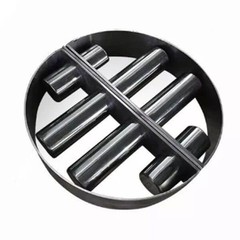
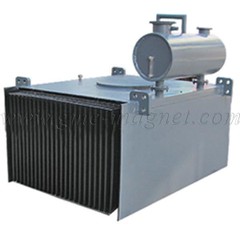
Industrial uses – in magnetic filters, magnetic lifting, and holding arrangements.
Motor vehicles – found extensively in ignition coils, sensors, and braking systems.
Flexible magnets are ideal for advertising and any application that does not require heavy loads, while ceramic magnets come in handy in the industrial and high-performance industries.
Which Magnet Is Best for Your Needs?
The decision to use flexible magnets or ceramic magnets will greatly depend on factors such as strength, durability, application, and cost.
If you need a very strong magnetic attraction, it is advisable to use ceramic magnets. It has higher magnetic strength and is commonly used in industries such as motors, generators, and loudspeakers. On the other hand, flexible magnets have comparatively less magnetic force, and therefore, they find their use in signs, arts and crafts, and light duties.
Ceramic magnets are hard and rigid and, therefore, easily breakable when they come into contact with another surface. But, they are suitable for high-temperature applications and are not prone to rusting. Flexible magnets are relatively easier to trim and form and can be easily imprinted, thus being suitable for advertisements, labeling, and other related arts and crafts. Ceramic magnets are not flexible and, therefore, cannot be bent or shaped in any way as desired.
Flexible magnets are cheaper when applied in applications that require lightweight materials, whereas ceramic magnets are cheaper when applied in applications that require strength. When it comes to signs, labels, and consumer products, flexible magnets are the most appropriate. When seeking a material with high strength and durability, ceramic magnets are the best to go for.
Conclusion
In this case, flexible and ceramic magnets are used for different purposes because of their characteristics and uses. Flexible magnets are light in weight, easy on the pocket, and easily bendable and thus can be used in signage, advertisements, and consumer items. ceramic, on the other hand, has better magnetic force and permanence and is thus used in motors, electronics, and industries.
If you are looking for high-quality ceramic magnets, you can visit great magtech's catalog right now to choose the best product for yourself!