










What are Metal Separators?
Metal separators are specialized devices that identify and remove metallic contaminants from various materials. These devices are engineered to maintain the purity of wood products, safeguard machinery, and enhance operational efficiency. The technology behind metal separators incorporates magnetic, electromagnetic, or mechanical principles to detect and extract both ferrous and non-ferrous metals from wood streams. Their role extends across diverse applications in the wood processing industry, ranging from protecting sawmill equipment to improving the quality of recycled wood products.
Metal separators are integral to modern production facilities, ensuring that even the smallest metallic impurities are detected and removed. By addressing these challenges, separators contribute to a seamless production cycle while reducing waste and operational interruptions. Whether operating at high volumes or in specialized settings, metal separators adapt to various scales and complexities, showcasing their versatility and indispensability.

Why are Metal Separators Used in Wood Processing?
Wood processing often involves handling raw materials that are prone to contamination by metals, such as nails, screws, staples, and other debris. Such contaminants can severely damage expensive machinery, compromise the quality of wood products, and pose safety hazards to workers. The strategic use of metal separators mitigates these risks by:
Protecting Equipment: Safeguarding shredders, chippers, saws, and other critical machinery from damage, thus reducing repair and replacement costs.
Enhancing Product Quality: Delivering cleaner, higher-grade wood products by removing unwanted impurities.
Ensuring Safety: Minimizing the risks posed by sharp or hazardous metal contaminants.
Improving Efficiency: Reducing downtime caused by equipment failure and streamlining production processes for uninterrupted operations.
The adoption of metal separators has become a standard practice in the wood processing industry, contributing to consistent product quality and enhanced productivity. Their presence ensures compliance with industry standards and customer expectations while maintaining the economic viability of operations.

Types of Metal Separators
The wood processing industry employs a variety of metal separators, each tailored to specific operational needs and material characteristics. The following types are among the most commonly used:
Overband Magnets
Overband magnets are highly efficient devices suspended above conveyor belts to remove ferrous metals from wood streams. Their powerful magnetic fields attract and lift metallic contaminants, depositing them into separate collection bins. Overband magnets are ideal for high-volume operations and provide continuous, automated separation, minimizing manual labor and maintaining a steady workflow. They excel in environments where rapid processing and efficiency are paramount.
Eddy Current Separators
An eddy current separator operates based on the principle that an induced current is generated when a conductor is exposed to a high-frequency alternating magnetic field. During operation, the surface of the magnetic rotor produces this high-frequency alternating magnetic field.
When non-ferrous metals pass through the field, eddy currents are induced within them. These eddy currents create their magnetic field, which opposes the magnetic field of the rotor. This opposition generates a repulsive force that propels the non-ferrous metals away from the magnetic field. As a result, non-ferrous metals are effectively separated and can be recycled efficiently.
Electromagnets
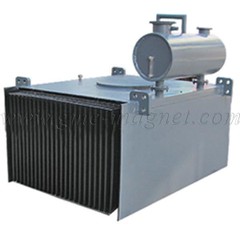
Electromagnets generate adjustable magnetic fields, making them versatile for a wide range of applications. Unlike permanent magnets, their magnetic strength can be modulated to suit specific operational requirements. Electromagnets are often used in combination with other separation systems to enhance overall efficiency. Their flexibility allows them to adapt to changing material compositions and processing demands.
Drum Magnets
Drum magnets consist of a rotating magnetic drum that continuously separates ferrous metals from wood materials. As materials pass over the drum, metallic contaminants are captured and removed. Drum magnets are particularly suitable for continuous operations and are commonly integrated into conveyor systems. Their durability and efficiency make them a reliable choice for handling diverse material sizes and volumes.
Pulley
Magnetic pulleys replace standard pulleys at the head of conveyor belts, serving as a cost-effective solution for removing ferrous metals. As materials exit the conveyor, the magnetic pulley attracts and separates metallic contaminants. This simple yet efficient mechanism ensures the consistent removal of small metal particles, contributing to cleaner wood streams.
Metal Detectors
Metal detectors are exceptionally sensitive and can identify both ferrous and non-ferrous metals within wood streams. Upon detecting a metallic contaminant, the system triggers an automated response, such as activating a rejection mechanism or stopping the conveyor for manual extraction. Metal detectors are valued for their precision and ability to detect even the smallest metallic particles, making them indispensable in quality control processes.
 |
 |
|
Eddy Current Separators |
Drum Magnets |
How do Metal/Magnetic Separators Work?
The operation of metal separators involves a series of well-coordinated processes that leverage magnetic fields, material flow, and mechanical design to isolate and remove metallic contaminants effectively:
Magnetic Field Generation
Magnets or electromagnets create a magnetic field strong enough to attract metallic particles. The nature of the magnetic field-whether static or dynamic-depends on the specific type of separator in use. Advanced systems allow for adjustable magnetic field strength to accommodate varying material compositions.
Flow and Exposure
Wood materials are introduced into the separator through conveyors, chutes, or feeders. This ensures consistent exposure to the magnetic field, allowing for thorough separation of contaminants. Proper alignment and flow regulation are critical to optimizing the separation process and ensuring minimal loss of valuable materials.
Metal Attraction and Retention
Ferrous metals are drawn to the magnetic field, while non-ferrous metals are separated using techniques like eddy current repulsion. Captured metals are securely held within the separator until they are ready for discharge. Retention mechanisms ensure that contaminants do not re-enter the clean material stream.
Discharge
Once separated, metallic contaminants are discharged into collection bins or removed manually, depending on the system design. The discharge process is designed to isolate contaminants efficiently, ensuring that the clean wood materials are ready for subsequent processing stages without interruption.
Use Cases of Separators within the Wood Processing Industry
Metal separators find application across various stages of the wood processing industry, playing a crucial role in ensuring product integrity and operational efficiency:

Sawmills
In sawmills, metal separators are used to extract nails, screws, and other metallic debris from raw timber. This protects cutting tools and machinery from damage, ensuring smooth and uninterrupted operations. By preserving the integrity of equipment, separators contribute to the long-term sustainability of sawmill operations.
Wood Pellet Production
During wood pellet production, separators eliminate metallic contaminants to produce high-quality pellets. Removing impurities ensures the efficiency of pelletizing machinery and enhances the marketability of the final product. Clean wood pellets are essential for meeting industry standards and consumer expectations.
Recycled Wood Processing
Recycled wood often contains residual metallic impurities from previous uses. Metal separators play a vital role in extracting these contaminants, ensuring that recycled materials are safe and suitable for reuse. Their application supports sustainable practices and reduces reliance on virgin raw materials.
Pulp and Paper Production
In the pulp and paper industry, metal separators prevent metallic contaminants from damaging processing equipment or compromising product quality. By ensuring a clean input stream, separators enhance the efficiency of pulp production and contribute to the consistent quality of paper products.
Advantages of Metal Separators in Wood Processing
Metal separators offer a multitude of benefits that significantly impact the wood processing industry:
Equipment Protection
By effectively removing metallic contaminants, separators safeguard machinery from damage, reducing maintenance costs and minimizing downtime. This ensures the longevity and reliability of critical equipment.
Elevated Product Quality
The removal of metallic impurities enhances the purity and value of wood products, meeting stringent quality standards and consumer expectations. Clean products are essential for maintaining a competitive edge in the market.
Cost Efficiency
Metal separators contribute to cost savings by minimizing equipment damage, reducing material waste, and streamlining production processes. Their efficiency translates to lower operational expenses and higher profitability.
Operational Efficiency
Separators reduce the need for manual intervention by automating the detection and removal of metal contaminants. This streamlines production workflows and ensures consistent material flow, resulting in higher productivity and reduced labor costs.
Conclusion
Metal separators are indispensable in the wood processing industry. They ensure the purity of wood products and the efficiency of operations. By leveraging cutting-edge technologies, these devices protect machinery, enhance product quality, and drive cost savings. Whether used in sawmills, pellet production, or recycled wood processing, metal separators play a pivotal role in modern wood processing facilities. Their adaptability and effectiveness underscore their value as essential tools for achieving operational excellence and maintaining industry standards.