








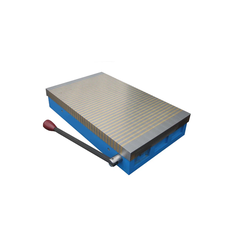


Sintered NdFeB permanent magnets, as one of the substances that promote contemporary technology and social progress, are widely used in the following fields: computer hard disks, nuclear magnetic resonance imaging, electric vehicles, wind power generation, industrial permanent magnet motors, consumer electronics (CD, DVD , mobile phones, stereos, copiers, scanners, video cameras, cameras, refrigerators, televisions, air conditioners, etc.) and magnetic machinery, magnetic levitation technology, magnetic transmission and other industries.
In the past 30 years, the permanent magnet material industry has developed vigorously, the magnetic performance has continuously broken records, and the variety and grades of materials have continued to increase. With the expansion of the market, its manufacturers are also increasing day by day, and many customers will inevitably fall into such confusion. How to judge the quality of the product?
Comprehensive judgment methods: 1. Magnet performance; 2. Magnet size; 3. Magnet coating.
First of all, the guarantee of magnet performance comes from the control of raw material production process
1. According to the requirements of the enterprise to manufacture high-grade or medium-grade or low-grade sintered NdFeB, choose raw materials according to the raw material composition stipulated in the national standard.
2. Whether the production process is advanced or not directly determines the performance and quality of the magnet. The current advanced technologies are scale casting (SC) technology, hydrogen crushing (HD) technology and jet milling (JM) technology. Small-capacity vacuum induction smelting furnaces (10kg, 25kg, 50kg) have been replaced by large-capacity (100kg, 200kg, 600kg, 800kg) vacuum induction furnaces. SC (StripCasting) quick-setting casting technology has gradually replaced large ingots (ingots with a thickness greater than 20-40mm in the cooling direction), and hydrogen crushing (HD) technology and jet milling (JM) have replaced jaw crushers and disc mills. machine, ball mill (wet milling), which ensures the uniformity of the powder, and is conducive to liquid phase sintering and grain refinement.
3. In terms of magnetic field orientation, my country is the first country to adopt two-step pressing molding. During orientation, small pressure is used for vertical molding, and then quasi-isostatic pressing is used. This is one of the characteristics of my country's sintered NdFeB industry.
4. In addition, the monitoring of the quality of the production process is very important, and can be controlled by means of SC sheet thickness measurement and JM powder particle size distribution and other detection methods. All products depend on the control of the production process, but customers will be very confused, how to judge the performance of the products I purchased? The Institute of Metrology has successively developed various types of permanent magnetic material technology magnetic parameter measuring instruments. Pulse magnetic field magnetometer (PFM) is a test instrument for testing ultra-high coercive force permanent magnets, mainly to meet the high coercive force permanent magnets required in the field of electric vehicles and large permanent magnet motors.
According to the magnet parameters Br (remanent magnetism), Hcb (coercive force), Hcj (intrinsic coercive force), (BH)max (large magnetic energy product), you can choose the NdFeB grade you need. At the same time, these four parameters It is the standard for judging whether the product is produced according to the customer's requirements.
Secondly, the guarantee of magnet size depends on the processing strength of the factory
The shapes of NdFeB permanent magnets in practical applications are various, such as discs, cylinders, cylinders (with inner holes); squares, squares, square columns; tiles, sectors, trapezoids, polygons and various Irregular shapes etc. The permanent magnets of each shape have different sizes, and it is difficult to achieve one-time molding in the production process. The general production process is: first produce large (large-size) blanks, after sintering and tempering, then through machining (including cutting, drilling) and grinding, surface coating (coating) treatment, and then carry out Inspection of magnet performance, surface quality and dimensional accuracy, then magnetization, packaging and delivery.
1. Machining is divided into three categories:
(1) Cutting processing: cutting cylindrical and square column magnets into discs and squares;
(2) Shape processing: processing circular and square magnets into fan-shaped, tile-shaped or grooved or other complex-shaped magnets;
(3) Drilling processing: process the round bar and square bar magnets into cylindrical or square tube magnets. Its processing methods include: grinding and slicing processing, electric spark cutting processing and laser processing.
2. The surface of sintered NdFeB permanent magnet components is generally required to be smooth and reach a certain precision, and the surface of the magnet delivered by the blank needs to be surface ground. The commonly used grinding methods for square NdFeB permanent magnet alloys include surface grinding, double-end grinding, internal grinding, and external grinding. Cylinders are commonly used for coreless grinding, double-end grinding, etc. Multi-station grinding machines are used for tile, sector and VCM magnets.
A qualified magnet not only needs to meet the performance standards, but also the control of dimensional tolerances directly affects its application. The guarantee of the size directly depends on the processing strength of the factory. The processing equipment is constantly updated along with the economic and market demand. More advanced equipment and the trend of industrial automation not only meet the growing demand of customers for product accuracy, but also save It reduces manpower and cost, making it more competitive in the market.
Again, the quality of the magnet coating directly determines the application life of the product
Experiments show that if a 1cm3 sintered NdFeB permanent magnet is placed in the air at 150°C for 51 days, it will be completely oxidized and corroded. It is more easily corroded in weak acid solution. In order to make the NdFeB permanent magnet durable, it is required to have a service life of 20-30 years, and it must undergo surface anti-corrosion treatment to resist the corrosion of the corrosive medium on the magnet. At present, the sintered NdFeB permanent magnet manufacturing industry generally adopts methods such as electroplating metal, electroplating + electroless metal plating, electrophoretic coating and phosphating treatment to coat the surface of the magnet with an additional separator to isolate the surface of the magnet from the corrosive medium. , to prevent the medium from invading the magnet.
1. Generally, there are three main processes of zinc plating, nickel plating + copper + nickel plating, nickel plating + copper + electroless nickel plating. For other metal plating requirements, other metal plating is generally applied after nickel plating.
2. Phosphating is also used in some special cases: (1) Phosphating is simple and easy to use when NdFeB magnet products are turned over and stored for too long and the subsequent surface treatment method is not clear;( 2) When the magnet needs epoxy glue bonding, painting, etc., the bonding force of epoxy organic substances such as glue and paint requires good wetting performance of the substrate. The phosphating process can improve the wettability of the magnet surface.
3. Electrophoretic coating has become one of the widely used anti-corrosion surface treatment technologies. Because it not only has a good bonding force with the surface of the porous magnet, but also has corrosion resistance to salt spray, acid, alkali, etc., and has excellent corrosion resistance. However, compared with spray coatings, its heat and humidity resistance is poor.
The coating can be selected according to the working requirements of its products. With the expansion of the application field of motors, customers have requirements for the corrosion resistance of NdFeB. The HAST experiment (also known as PCT experiment) is designed to test the corrosion resistance of sintered NdFeB permanent magnets in humid and high temperature environments.
And how to judge whether the coating meets the requirements? The purpose of the salt spray test is to do a quick anti-corrosion experiment on the sintered NdFeB magnet whose surface has been treated with anti-corrosion coating. At the end of the experiment, the sample is taken out of the test box, dried, and Observe with eyes or a magnifying glass whether there are spots on the surface of the sample, and the change of the size and color of the spot area.
To sum up, only by understanding the production process and the requirements of the product can we correctly judge the eligibility of the product. In a brief summary, it is the grasp of performance, the control of dimensional tolerances, the inspection of coatings and the evaluation of appearance.
In terms of performance, its Br (remanent magnetism), Hcb (coercive force), Hcj (intrinsic coercive force), (BH)max (magnetic energy product) and demagnetization curve can be detected through performance; dimensional tolerances can be measured by vernier calipers Its accuracy; on the coating, the color and brightness of the coating can be observed with the naked eye and through detection methods such as binding force and salt spray test; the overall appearance is mainly used with the naked eye or a magnifying glass, or an optical microscope (for products with a line size less than 0.2mm), magnets The appearance is qualified if the surface is smooth, free of particles and foreign objects visible to the naked eye, no spots, and no edges or corners.