












With the continuous expansion of the application fields of sintered NdFeB and the rapid growth of output, the corresponding rare earth resources have also been exploited in large quantities. Various rare earth elements in rare earth ores are symbiotic, but in the preparation process of NdFeB, praseodymium Pr and neodymium Nd elements with a mass fraction of 25% in light rare earths are mainly used. In this way, the proportion of light rare earths is The utilization rate of cheap rare earths such as 49% cerium Ce and 23% lanthanum La is very low.
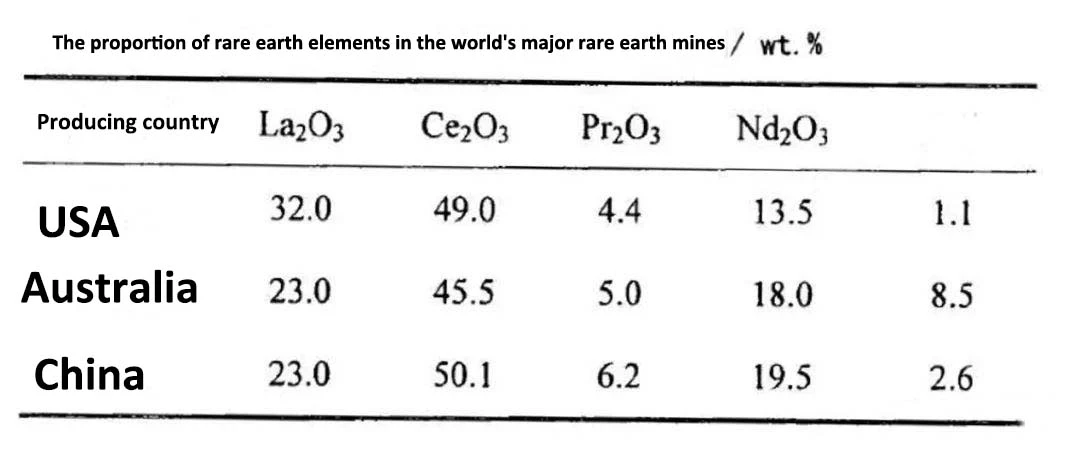
In recent years, the market prices of rare earth materials such as praseodymium and neodymium have fluctuated greatly, which has caused great troubles and constraints to production companies in terms of raw material costs. Since the birth of sintered NdFeB, the search for substitute elements for Nd has begun. Ce is the most abundant metal element among all rare earth elements. Its price is less than one-tenth of Pr and Nd, and the various properties of Ce2Fe14B The anisotropy field and phase stability are also higher than that of La2Fe14B. The advantages of high reserves and low cost of Ce naturally make Ce replace Pr-Nd a hot spot in industry research.
The intrinsic properties of the RE Fe14B compound at room temperature (22°C) are
| Compound | Bi (T) | Aeolotropism (kA/m) | Tc (K) |
| Y2Fe14B | 1.41 | 2720 | 565 |
| La2Fe14B | 1.38 | 1592 | 530 |
| Ce2Fe14B | 1.17 | 2070 | 424 |
| Pr2Fe14B | 1.56 | 5970 | 565 |
| Nd2Fe14B | 1.61 | 5810 | 585 |
| Gd2Fe14B | 0.89 | 1910 | 661 |
| Tb2Fe14B | 0.70 | 17512 | 620 |
| Dy2Fe14B | 0.71 | 11940 | 698 |
| Ho2Fe14B | 0.81 | 5970 | 573 |
The picture above shows the intrinsic properties of RE2Fe14B compounds of different rare earth elements at (22°C). It can be seen that the saturation magnetic polarization intensity, magnetocrystalline anisotropy field, and Curie temperature of Ce2Fe14B are lower than those of Pr2Fe14B and Nd2Fe14B. The introduction will inevitably cause the decline of magnet performance and the deterioration of temperature resistance. Since the activity of cerium element is higher than that of praseodymium and neodymium, the requirements for anti-oxidation during the preparation process are higher; and cerium-containing magnets easily form the paramagnetic CeFe2 phase in the grain boundary phase. The emergence of the CeFe2 phase on the one hand reduces the volume fraction of the main phase and on the other hand On the one hand, this phase has a high melting point and poor fluidity and wettability, which is not conducive to the uniform distribution of the rare earth-rich phase. All these increase the difficulty of preparing high-performance cerium magnets.
In the early stages of cerium magnet industrialization, N35-N42 and even low-end N25-N30 magnets with coercivity less than 10kOe were mostly produced. In addition, cerium magnets are often combined with scrap magnetic steel processes, and cerium magnets once became the representative of low-grade magnetic steel. With the iterative upgrading of production equipment, the promotion and application of advanced technologies such as low-oxygen technology, grain refinement, and dual-alloy technology, as well as the understanding of production and R&D personnel's understanding of the mechanism affecting the performance of cerium magnets, more scientific cerium magnets have been developed. Magnet formula system and preparation process, various types of high magnetic energy product cerium magnets have been introduced to the market. Combined with grain boundary diffusion technology, SH, SHT, UH, and even EH high-temperature resistant products can be produced.
The application of sintered NdFeB permanent magnets can be divided into the following directions according to the mechanism:
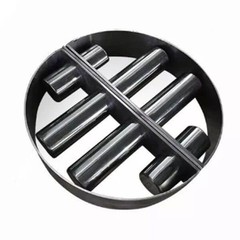
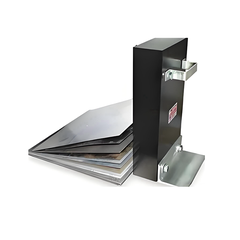
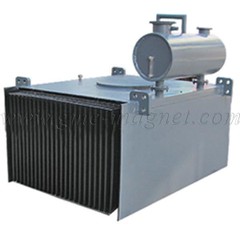
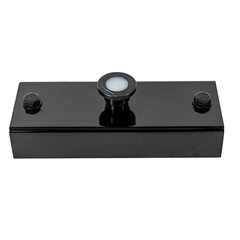
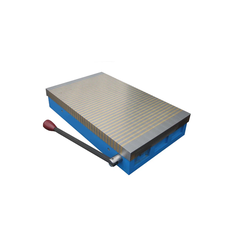
Utilizing the attraction of magnetic steel to iron, cobalt, nickel, and other materials, it mainly includes magnetic chucks, magnetic separators, sewage treatment machines, smart wearables, luggage buckles, door buckles, educational toys, etc.;
Use Faraday's law of electromagnetic induction and the Lorentz force principle. Magnetic steel is used as the magnetic source of permanent magnet motors and permanent magnet generators, including new energy synchronous motors, electric bicycle hub motors, traction machines, servo motors, air conditioning compressors, direct drive and semi-direct drive wind turbines, etc.;
The coil magnetic field is adjusted by changing the coil current, and interacts with the magnetic field generated by the magnet to produce vibrations, including audio horns, speakers, receivers VCM motors, etc.;
Utilizing magnetic physics principles such as nuclear magnetic resonance and Hall effect, including nuclear magnetic resonance instruments, various sensors, etc.
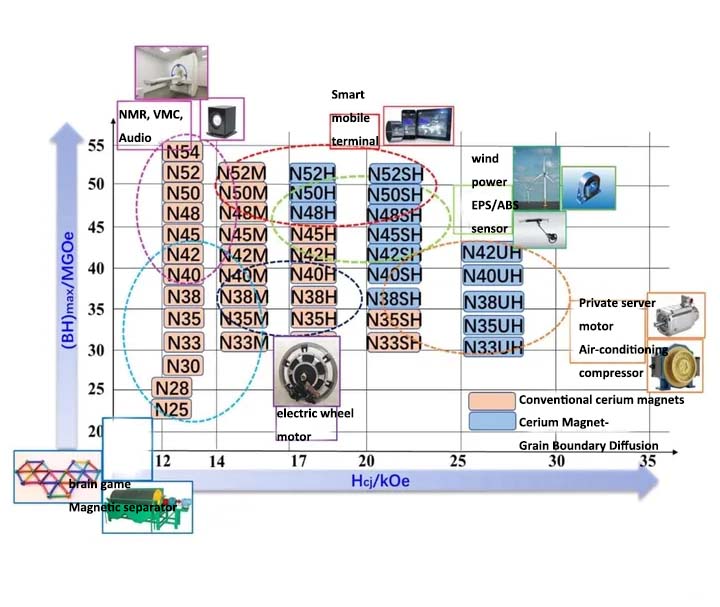
As shown in the figure above, the application scenarios of cerium magnets have become diversified. In the early stages of large-scale production, magnetic steels were mostly low-end grades such as N25-N42, filling the performance gap between high-performance magnets and ferrites in the demand for permanent magnet materials. Applications focus on magnetic adsorption toy magnets, door buckles, luggage buckles, magnetic separators, and other fields.
With the cerium-containing magnet grades covering high-performance products such as N45H, N48M, and N52, product applications have expanded to the fields of electroacoustics, mobile smart terminals, wind power, and nuclear magnetic resonance. In particular, the 38M-38H grades are widely used in the field of electric bicycle hub motors.
High coercivity products produced by combining grain boundary diffusion technology can be used in mining machinery, industrial motors, traction machines, air conditioning compressors, and other fields.