



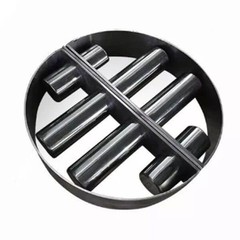
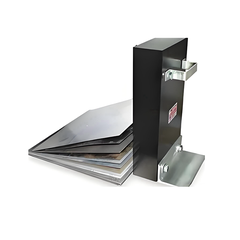


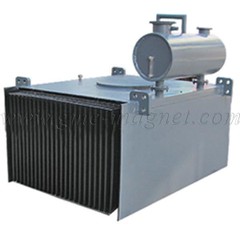



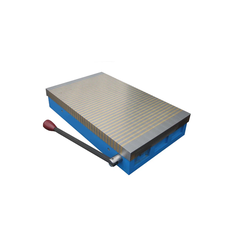


If you are a part of the manufacturing industry or offer machining and milling services, a magnetic chuck can greatly enhance your output. Grinding machines are high-powered tools that require the workpiece to be kept still to perform their work. As the name suggests, magnetic chucks use magnetic force to hold the workpiece in place for grinding work. This means there are no clamps or other securing mechanisms involved. You just have to place the workpiece in the correct orientation, and it gets fixed in place until it needs to be removed. Magnetic chucks are commonly used for grinding, milling, and other machining applications. When you start researching magnetic chucks for grinding, you realize that there are multiple types of chucks available. Not to mention the type of workpieces you work on and their intended purposes affect your choice for a magnetic chuck. So if you want to make sure you are buying the correct magnetic chuck that fits your grinding applications, then keep reading.

1. Introduction of magnetic chuck for grinding
Magnetic chucks are a revolutionary alternative to traditional work-holding equipment such as soft/hard jaws, toggle clamps, and jigs. The problem with these traditional methods of holding workpieces is that they require workers to manually secure and remove the clamping mechanism every time.
That is where magnetic chucks come into play, as there is no complex clamping mechanism involved. When a magnetic chuck is activated, it uses magnetic flux to attach the workpiece to its top plate. Once you are done with your grinding working on the piece, simply deactivate the magnetic chuck and the finished item can be removed with ease.
When you use magnetic chucks for grinding, you can increase productivity and make the process simpler for the workers. As long as you work with ferrous metal workpieces, you can benefit from magnetic chucks.
2. Types of magnetic chucks
There are multiple types of magnetic chucks that you can choose from. Here are the key types of magnetic chucks you can use for grinding:
2.1 Permanent magnetic chucks:

A permanent magnetic chuck uses a high-powered magnet that can hold items in place without requiring electric current. The magnet used in permanent magnetic chucks doesn't lose its magnetic force and has an indefinite lifespan.
The way a permanent magnetic chuck is turned on or off is by changing the position of the magnetic poles. When the magnetic poles are aligned correctly, the permanent magnetic chuck keeps the workpiece in place. However, once the position of the poles is changed, the magnetic field is broken, and the workpiece can be released from the chuck.
Key benefits of permanent magnetic chucks include safety, ease of installation, and portability.
However, a permanent magnetic chuck is only suitable for small to medium-sized work pieces. In addition, they can only work pieces up to a certain weight limit. Apart from these limitations
2.2 Electromagnetic chucks:

Electromagnetic chucks require power to generate a magnetic field. These chucks contain coils that require current to pass through them in order to operate.
Since these chucks use electrical power to generate a strong magnetic field, they are easy to magnetize and demagnetize. So if your work application requires you to frequently clamp and remove workpieces from the chuck, then the electromagnetic chucks are an ideal option for you.
Not to mention these types of chucks can be operated manually, via a control unit, or using a hybrid system. Control units can also control the strength of the magnetic field. Being electrically powered, electromagnetic chucks can handle much heavier workpieces as their electromagnetic field is stronger.
However, you have to make sure that there is a backup power source connected to the chuck to prevent the workpiece from falling off in case of a power outage. So the operators need to take safety precautions when operating these chucks.
2.3 Semi-permanent/Electropermanent magnetic chucks:
The electro-permanent magnetic chucks, also known as semi-permanent chucks, are a cross between permanent and electromagnetic chucks. While these semi-permanent magnetic chucks do require current to magnetize and demagnetize themselves, they don't need a constant flow of current to hold the workpiece in place.
Instead, once an electric current is applied to the ferromagnetic element for a short period of time, it becomes a permanent magnet. The powerful current flows through alloys of aluminum, nickel or cobalt-based elements for around 1 to 2 seconds. This short pulse of current turns on the electro-permanent magnetic chuck, and it clamps the workpiece securely in place.
When a second pulse of current is applied to the element, it losses it, becomes demagnetized and releases the workpiece.
There are permanent magnets used within electro-permanent magnetic chucks that rely on the magnetizing element in order to work. The presence of additional magnets further enhances the strength of these types of chucks. The high strength of electro-permanent chucks makes them ideal for heavy-duty grinding applications.
Since these chucks don't rely on a constant flow of current to operate, they are cheaper to operate. Not to mention there aren't a lot of power cables to manage when working with electro-permanent chucks. In addition, there aren't any moving parts within these chucks which mean you don't have to worry about wear and tear and frequent parts replacement.
With that said, electro-permanent chucks are more expensive than the other types of magnetic chucks. Unlike electromagnetic chucks, it can be difficult to adjust the strength of the chuck to the desired level.
3. Things to consider when choosing the best magnetic chuck for grinding
Now that you know the different types of magnetic chucks that are used for grinding, you are one step closer to choosing the best one for your manufacturing process. However, before you can go ahead and purchase your magnetic chuck, you have to know what factors you need to consider. Here are some key factors you should keep in mind if you want to select the right magnetic chuck:
3.1 Material of workpiece:
Not all materials can be used with a magnetic chuck. That is because some materials have more magnetic permeability than others. In most cases, ferromagnetic metals are best suited for use in magnetic chucks.
So before you purchase a magnetic chuck for grinding, you have to make sure that the material you are working on has ample magnetic permeability. Most steels are ferromagnetic, and therefore, if you work with steel, you can definitely use a magnetic chuck for grinding purposes.
However, nonmagnetic materials such as aluminum, glass, wood, and brass aren't compatible with magnetic chucks. So if you are working with the previously mentioned or any other nonmagnetic materials, you should avoid using magnetic chucks.
3.2 Thickness of the workpiece:
Magnetic chucks have the ability to securely hold metals as thin as 12mm. That is because magnetic flux needs to be properly absorbed by the workpiece in order for it to be secured to the chuck. Workpieces that are thinner than 12mm can't absorb enough flux, and therefore, the hold is not as strong.
Therefore it is best to make sure your workpieces are thick enough to be used with a magnetic chuck. With that said, you can hold thinner workpieces on a magnetic chuck by using a magnet with denser poles. Or you can use an additional pole plate with the imprint of the workpiece to enhance the hold for a thinner workpiece on the magnetic chuck. Either way, it is essential to consider the thickness of your workpiece so you can purchase a magnetic chuck accordingly.
3.3 Surface of the workpiece:
The surface of your workpiece directly impacts how well it can be secured to a magnetic chuck. Ideally, workpieces with a completely flat surface are the best match for magnetic chucks. In addition, if the material has additional layers of paint or polish on top, it can reduce its ability to be secured by the magnetic chuck.
Since most grinding operations involve raw metals without any loss of magnetism due to surface finishes, however, if you are working with workpieces with uneven surfaces, you will require high-strength magnetic chucks to overcome the uneven surface contact.
3.4 Shape of the Workpiece
The shape of the workpiece directly affects the choice of the magnetic chuck. When working with a rectangular workpiece, you are better off using a rectangular-shaped magnetic chuck that can easily hold it. Similarly, round workpieces are best suited for round workpieces such as cylinders, saw blades, and bearings.
The size of the workpiece will also impact the choice of the magnetic chuck. You should make sure that the magnetic chuck is large enough to fit the workpiece. If there is not enough space on the chuck, the hold won't be as strong. So when you are buying a magnetic chuck for grinding, you should take the shape and size of the workpiece into consideration.
4. Best magnetic chucks for grinding applications
At GREAT MAGTECH ELECTRIC, we offer a wide range of magnetic chucks. We have a dedicated range of magnetic chucks designed specifically for machining applications. Here are our best magnetic chucks for grinding applications:
4.1 Electro Permanent Magnetic Chuck
Since grinding is one of the most demanding machining functions, you need a magnetic chuck that can firmly secure workpieces during the grinding process. Our Electro Permanent Magnetic Chuck offers the perfect blend of strength and precision. You can hold heavier workpieces with ease without compromising on safety.
This magnetic chuck is based on electro-permanent technology, which means it only needs a small amount of electricity to operate.
Material: Carbon steel with less than 0.12% carbon
Type: Electro peramanent
Features:
· Low heat output
· Precise operation
· Low magnetism
4.2 High Precision Electro Permanent Magnetic Chuck
If you regularly work with larger workpieces, you need a high-precision magnetic chuck with a large surface area. Our High Precision Electro Permanent Magnetic Chuck is designed specifically to hold larger workpieces with ease.
The electro-permanent mechanism and pole extensions of this chuck make sure that you can easily hold heavier workpieces.
Material: Carbon steel
Type: Electro permanent
Features:
· High clamping capacity
· T-slots
· Rigid construction
· Adhesive force upto 350 kg per pole
4.3 Radial-Pole Magnetic Round Chucks For Turning and Grinding

If you regularly work with circular workpieces, then our Radial-Pole Magnetic Round Chucks For Turning and Grinding are ideal for you. Designed specifically for use in turning and grinding applications, this single-magnet circuit chuck offers high magnetic power.
Ideal for turning circular workpieces, this chuck comes with offers uniform clamping even when rotating.
Material: Steel
Type: Permanent magnet
Features:
· No power needed
· It can be turned at high rpms
· Easy to use with little training requirements
FAQs about magnetic chucks
Do magnetic chucks have a separate control unit?
You can integrate the control unit of the magnetic chuck with the control unit of the machining device, or you can have it separately. At GREAT MAGTECH ELECTRIC, we can design magnetic chucks with a separate control unit or design it so that it can be integrated into the central unit of the machine.
How long can a magnetic chuck last?
Magnetic chucks made out of high-quality materials, such as the ones we sell at GME, can last for many years. With regular maintenance you can make a magnetic chuck last for a long time.
Can you use coolant with a magnetic chuck?
Yes, our magnetic chucks are designed to be used with flood coolant if you are using a wet grinder. The top plates keep the coolant from entering the body of the magnetic chuck. So any liquid can be kept away from the vital components, and the top steel plate is designed to withstand exposure to coolant.
Can the top plate of a magnetic chuck get damaged?
The top plate of a magnetic chuck is made out of high-quality steel or brass, which gives it high strength and durability. So in case of regular use, the top plate of the chuck will not get damaged easily. In case of a grinder malfunction, a magnetic chuck may get chipped or damaged. Precautions must be taken when using a magnetic chuck for grinding applications.