










Many magnets appear visually identical upon leaving the factory; without N/S markings, it is impossible to distinguish their North and South poles by sight alone. Whether you are assembling magnetic components, testing samples, or verifying the polarity orientation of a bulk order, correctly identifying the magnetic poles is crucial. This article outlines several simple methods and explains how to verify polarity and magnetization direction when sourcing magnets for industrial applications.
What are the North and South Poles of a Magnet?
Before you identify magnet polarity, it helps to understand what the north and south poles actually mean and why they matter in real applications.
Every Magnet Has Two Poles
Every magnet has a north pole and a south pole. These two poles are the areas where the magnetic force is strongest. In a simple bar magnet, the poles are usually at the two ends. In disc, block, ring, or custom magnets, the pole positions depend on the magnetization direction.
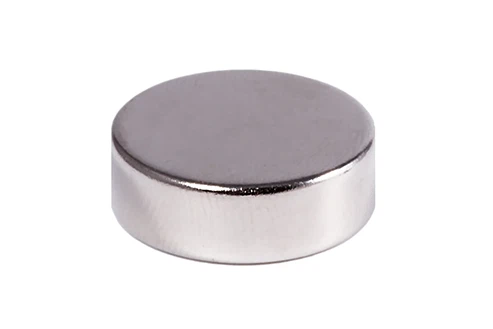
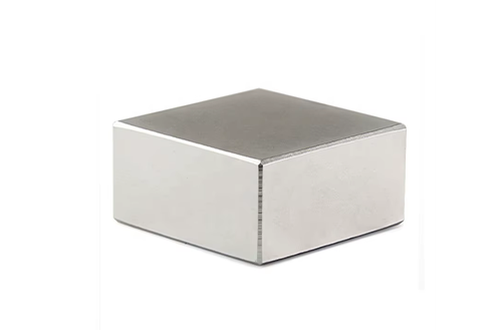
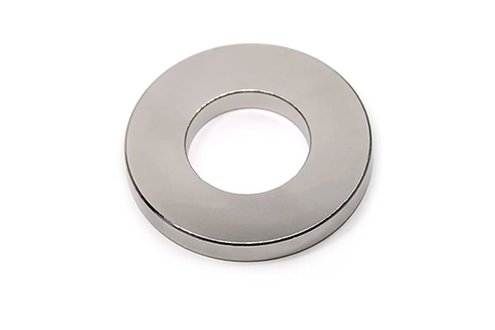
Opposite Poles Attract, and Same Poles Repel
A magnet's north pole attracts another magnet's south pole. Two north poles or two south poles will repel each other. You can use this basic rule to check an unknown magnet with a marked reference magnet.

Why Magnet Poles Cannot Be Judged By Appearance
You usually cannot identify magnet poles just by looking at the surface. Many magnets have the same coating, shape, and color on both sides. If the poles are not marked, you should test them before assembly or ordering custom magnets. This helps you avoid wrong installation, weak holding force, or poor product performance.
Why Identifying Magnet Polarity Matters
Identifying magnet polarity is not only a simple checking step; it directly affects how your magnet performs in the final application.
It Helps Avoid Wrong Assembly Direction
If you install a magnet in the wrong direction, the product may not work as expected. In some assemblies, the magnet may repel instead of attract, or the magnetic field may face the wrong side. This can cause fitting problems, unstable positioning, or complete assembly failure. Checking the north and south poles before installation helps you avoid unnecessary rework.
It Affects The Magnetic Holding Force
Magnetic holding force is not only related to magnet size, grade, or material. Pole direction and contact surface also matter. If the working face is not the correct magnetic pole surface, the actual holding force may be much lower than expected. This is especially important for holding magnets, pot magnets, magnetic fixtures, and magnetic mounting parts.
It Is Important For Motors, Sensors, And Magnetic Assemblies
In motors, sensors, magnetic couplings, and magnetic assemblies, polarity direction can affect movement, signal accuracy, torque, and magnetic field distribution. Even if the magnet is strong, the product may fail if the pole position is wrong.
It Reduces Risk In Custom Magnet Production
When you order custom magnets, polarity should be confirmed before production. You should clearly define the magnetization direction, the north and south pole positions, and the marking requirements. This helps your supplier make the magnet correctly and reduces the risk of sample mistakes, batch errors, or assembly delays.
Method 1: Use a Compass to Identify Magnet Poles
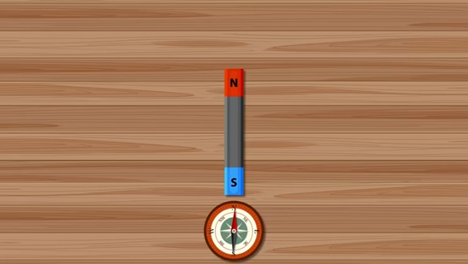
A compass is one of the easiest tools you can use to identify the north and south poles of a magnet, especially when the magnet has no clear N/S marking.
How The Compass Method Works
A compass needle is also a small magnet. Its north end is attracted to the south pole of the magnet you are testing, while its south end is attracted to the magnet's north pole. In simple words, if the compass north end points to one face of your magnet, that face is the south pole. If the compass south end points to the face, that face is the north pole.
Step-by-step Guide
① Place the magnet on a non-metallic table, such as a wooden or plastic surface.
② Keep the magnet away from other strong magnets, iron parts, steel tools, and electronic devices.
③ Slowly move the compass close to one face of the magnet.
④ If the compass north end points to this face, this face is the magnet's south pole.
⑤ If the compass south end points to this face, this face is the magnet's north pole.
⑥ After checking, mark the poles with a label, marker pen, or color dot so you do not need to test again.
Common Mistakes When Using A Compass
① Testing on an iron or steel table may disturb the compass reading.
② Other strong magnets nearby can make the compass needle rotate incorrectly.
③ Moving the compass too close to a strong neodymium magnet may cause the needle to swing sharply.
④ Many users remember the rule backwards: the compass north end points to the magnet's south pole, not its north pole.
Method 2: Use a Marked Magnet as a Reference
A marked magnet can be used as a simple reference tool when you need to check the polarity of an unmarked magnet quickly.
Prepare A Magnet With Known Polarity
If you already have a magnet with clear N/S markings, you can use it as a reference magnet. Before testing, make sure the marked magnet is accurate. A wrong reference magnet will lead to wrong results, especially when you are checking samples or preparing magnets for assembly.
Use Attraction And Repulsion To Identify Poles
You can identify the unknown magnet by testing attraction and repulsion. If the north pole of the marked magnet attracts one face of the unknown magnet, that face is the south pole. If the north pole of the marked magnet repels one face of the unknown magnet, that face is also the north pole. This method follows the basic rule: opposite poles attract, and same poles repel.
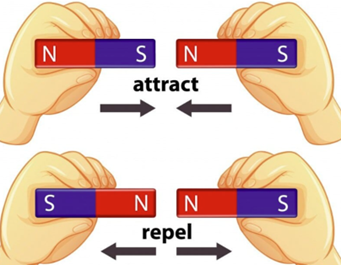
Best For Quick Sample Checking
This method is useful for sample confirmation, warehouse inspection, and quick checking before assembly. It is simple and does not require special equipment. However, it is only reliable when your reference magnet has correct N/S markings.
Method 3: Use a Magnetic Pole Detector
For industrial use, a magnetic pole detector is a more reliable choice when you need faster, clearer, and more repeatable polarity checking.

What Is A Magnetic Pole Detector?
A magnetic pole detector is a tool used to show whether a magnet surface is the north pole or the south pole. Some are simple mechanical pole identifiers, while others are electronic pole finders. An electronic pole finder can show the pole direction clearly, often through LED lights or a digital display. This makes it easier for operators to check magnets without guessing.
When should you use a pole detector?
You should consider using a pole detector in these situations:
① Incoming inspection for bulk magnet orders
② Polarity checking before magnet assembly
③ Testing strong neodymium magnets
④ Checking very small magnets
⑤ Identifying multipole magnetization
⑥ Quality inspection for custom magnetic assemblies
Why It Is Better For Production Checking
A compass is useful for simple testing, but it is not ideal for long-term industrial checking. For batch orders, assembly lines, and customer inspections, a pole detector gives more stable and consistent results. It also helps your team build a standard checking process, reduce polarity mistakes, and improve assembly efficiency.
Method 4: Check Magnetization Direction, Not Only N/S Poles
For industrial magnets, identifying the north and south poles is only the first step; you also need to confirm the magnetization direction to make sure the magnet fits your real application.
What is magnetization direction?
Magnetization direction refers to the internal magnetic direction of a magnet. It shows how the magnetic field flows between the north pole and the south pole. This direction decides where the poles appear on the magnet and how the magnetic field works in your product.
Common Magnetization Directions
① Axial Magnetization
Common for disc, cylinder, and ring magnets. The north and south poles are usually on the two flat faces.

② Diametrical Magnetization
Common for cylinder or disc magnets. The north and south poles are on opposite sides of the curved surface.

③ Radial Magnetization
Common for ring magnets, arc magnets, and motor magnets. The magnetic field is arranged from the inner side to the outer side, or around the arc structure.
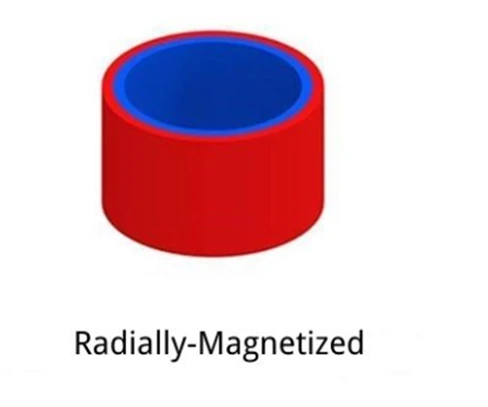
④ Thickness Magnetization
Common for block magnets. The north and south poles are on the two faces across the thickness direction.
⑤ Multipole Magnetization
Common for sensors, motors, magnetic encoders, and special custom magnets. Several north and south poles may appear on one surface.
Why This Matters For Custom Magnets
① You should not only say, "I need a neodymium block magnet" or "I need N52 disc magnets."
② You should confirm the magnet shape, size, tolerance, material, grade, and coating.
③ You should clearly define the magnetization direction and the north/south pole position.
④ You should also share the working temperature, assembly method, and final application.
⑤ With this information, your supplier can recommend the right magnet structure and reduce the risk of wrong polarity, weak performance, or assembly failure.
How to Mark Magnet Poles After Testing
After you identify the north and south poles, marking them clearly can help you avoid repeated testing, wrong assembly, and unnecessary production delays.
Use Simple Marks For Samples
For sample checking, you can use a marker pen, label, sticker, or color dot to mark the N/S poles. This is a simple but useful step, especially when several magnets look the same. After marking, you can test, compare, and assemble the samples more easily.
Use Color Marking For Batch Production
For batch production, you can use color marking, printed N/S marks, or separate packaging to show polarity clearly. This helps your operators identify the correct side quickly and reduces assembly mistakes.
Confirm marking requirements before production
If your magnets will be used in assembly, you should confirm the marking method during the sample stage. If the bulk order arrives without clear polarity marks, your team may need extra time to test each magnet again, increasing labor cost and assembly risk.
Common Problems When Identifying Magnet Poles
When you identify magnet poles, you may find that the result is not always as clear as expected. This usually happens because of a strong magnetic force, a special magnetization direction, small size, or the magnet being installed inside an assembly.
The Compass Needle Moves Too Fast
If the compass needle moves too fast, the magnet may be too strong or too close. Keep more distance first, then move the compass closer slowly.
The Magnet Attracts From More Than One Side
This may be related to magnetization direction. Axial, radial, or multipole magnetization can create different magnetic field patterns.
The Magnet Is Already Inside An Assembly
If the magnet is inside a steel shell, plastic part, or magnetic assembly, the outside field may be affected. Use a professional detector or ask your supplier to confirm polarity before shipment.
The Magnet Has Multiple Poles
Some magnets have several N/S pole areas. A normal compass may only show local polarity, not the full pole layout.
The Magnet Is Very Small
Small magnets are easy to flip, attach, or lose direction. A pole detector or pre-shipment polarity marking is safer.
FAQ
Q: Can you identify magnet poles by looking at the magnet?
A: No. Most magnets do not have visible N/S poles; a compass, a known magnet, or a magnetic pole detector is required.
Q: Which side of a magnet is the north pole?
A: If the magnet can rotate freely, the end pointing geographically north is usually called the north pole. However, in practice, a compass or detector is more commonly used for confirmation.
Q: Does the north pole attract the south pole?
A: Yes. Unlike poles attract, like poles repel.
Q: Can a magnet have more than one north and south pole pair?
A: Yes. Some magnets are multi-pole magnetized, and their surfaces may have multiple alternating N/S poles.
Summarize
Identifying magnet's north and south poles may look simple, but it can directly affect your assembly accuracy, holding force, and final product performance. For basic checking, you can use a compass, a marked reference magnet, or a magnetic pole detector. For industrial or custom magnet projects, you should go further and confirm magnetization direction, pole position, marking method, and inspection requirements before production. If you are not sure which magnet structure or polarity design is right for your application, GME can help you review your drawings, samples, or working conditions and provide a suitable custom magnet solution to reduce assembly risk and improve reliability.