











Rubber-coated magnets are designed for applications where secure magnetic mounting must be combined with surface protection. Compared with exposed metal pot magnets, their rubber contact surface helps reduce scratches, improve friction, and cushion repeated installation. They are commonly used for vehicle accessories, industrial equipment, work lights, signs, cameras, and display systems. Here are seven practical reasons to choose rubber-coated magnets and the key factors you should check before ordering.
What Are Rubber-Coated Magnets?
Rubber-coated magnets are magnetic assemblies used to hold, mount, or position objects on ferromagnetic steel surfaces.
A typical structure contains several components:
- Neodymium magnets for compact magnetic strength
- A steel backing plate that directs magnetic flux toward the mounting surface
- A threaded insert, stud, or mounting bush
- An outer rubber or TPE layer
The neodymium magnets provide strong magnetic performance in a compact structure. The steel components help direct the magnetic flux toward the contact surface, while the rubber coating protects the magnet and improves its practical mounting performance.
Unlike flexible rubber magnet sheets, these products are designed as concentrated mounting points for brackets, lights, cameras, signs, hooks, and other accessories.
1. Protect Painted and Finished Surfaces
One of the main reasons to choose rubber-coated magnets is to reduce damage to painted, polished, or powder-coated steel.

A standard pot magnet normally has an exposed steel housing. When the magnet is installed, removed, or repositioned, its metal edge may leave scratches, pressure marks, or visible wear on the contact surface.
The rubber layer separates the steel housing from the mounting surface. This makes rubber-coated magnets a suitable option for:
- Painted vehicle panels
- Powder-coated machinery
- Steel cabinets and enclosures
- Retail display frames
- Finished equipment housings
- Polished metal structures
This protection is especially valuable when the magnet is removed and reinstalled frequently.
However, the mounting surface should still be cleaned before installation. Metal chips, sand, or other hard particles trapped beneath the rubber may scratch the finish when the magnet is moved.
2. Improve Grip and Reduce Sliding
Pull force is not the only measure of magnetic mounting performance.
Catalog pull-force values are normally measured by pulling a magnet directly away from a flat steel plate. In many real applications, however, the magnet is installed on a vertical surface, and the load acts downward.
For example, a work light attached to the side of a machine may slide before the magnet pulls away from the steel.
Rubber provides more friction than smooth metal-to-metal contact. This increased friction helps the magnetic base resist downward and sideways movement, making rubber-coated magnets useful for:
- Vertical machine panels
- Vehicle-mounted accessories
- Cameras and inspection equipment
- Portable work lights
- Hanging signs
- Tool and cable holders
Industrial product data distinguishes between perpendicular holding force and vertical shear force, confirming that load direction can produce very different results.
The actual anti-slip performance still depends on the rubber material, contact area, surface condition, load direction, and presence of oil or moisture.
3. Prevent Permanent Changes to Equipment
Drilling, welding, and permanent adhesives are not suitable for every installation.
Drilling into a vehicle body or machine enclosure may damage the finish, affect corrosion protection, or make future repositioning difficult. Welding can also damage coatings and increase installation time.
Rubber-coated mounting magnets allow you to attach equipment directly to magnetic steel without permanently modifying the supporting structure.
This gives you several practical benefits:
- Faster installation
- No drilling holes
- No welding marks
- Easy repositioning
- Convenient maintenance
- Reusable mounting points
- Fewer installation tools
They are particularly suitable for temporary fixtures, rental equipment, mobile systems, maintenance accessories and products with adjustable mounting positions.
Magnetic mounting should not automatically replace mechanical fasteners in safety-critical applications. If detachment could cause injury or equipment damage, a secondary cable, mechanical stop, or backup fixing may still be required.
4. Cushion Impact and Repeated Handling
Neodymium magnets provide high magnetic strength for their size, but sintered neodymium material is brittle. Direct impact can cause an unprotected magnet to chip, crack, or break.
In a rubber-coated magnetic assembly, the magnets are supported by a steel structure and surrounded by a softer outer layer. This helps cushion the product during:
- Repeated installation and removal
- Transportation between work areas
- Contact with steel surfaces
- Light vibration
- Product assembly
- Regular repositioning
The rubber also reduces direct metal-to-metal impact, which can lower contact noise and protect the mounting surface.
The coating does not make the magnet indestructible. Sharp edges, excessive impact, overloading, and repeated dragging can still damage the rubber or internal structure.
5. Provide Flexible Mounting Connections
Rubber-coated magnets are available with several mechanical interfaces, allowing them to connect directly with brackets, lights, signs, and other accessories.
External Thread
An external threaded stud can pass through a bracket or mounting plate and be secured with a nut. It is commonly used for lights, cameras, signs, antennas, and equipment accessories.

Internal Thread
An internal threaded bush accepts a bolt, hook, or threaded fitting. This provides a compact connection when the accessory is mounted directly above the magnet.
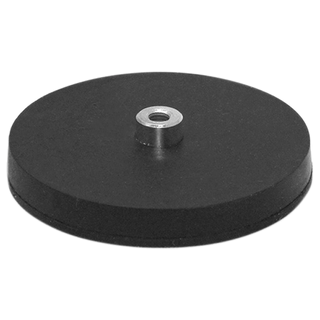
Screwed Bush
A raised screwed bush creates clearance between the rubber surface and the mounted component. It is useful when a bracket cannot sit directly against the magnetic base.

Magnetic Hook
A removable hook converts the magnet into a temporary hanging point for tools, cables, hoses, signs, and workshop equipment.

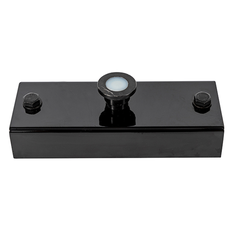
Rectangular Magnetic Base
A rectangular rubber-coated magnet provides a longer mounting footprint and may offer better resistance to rotation for extended signs or brackets.
GME's current range includes screwed-bush, external-thread, internal-thread, hook, and rectangular configurations, giving buyers several standard connection options.
6. Support a Wide Range of Mounting Applications
Rubber-coated magnets give you a flexible mounting solution across many industries without drilling or damaging finished steel surfaces.
Automotive and Fleet Equipment
You can use them for warning lights, antennas, cameras, and temporary vehicle signs.

Industrial Equipment
They help you mount sensors, work lights, guards, and cable holders on machine housings.
Warehouse and Workshop Organization
You can attach tools, hoses, labels, and maintenance accessories to steel racks or workstations.
Retail and Exhibition Displays
They allow you to reposition signs, promotional boards, and display fixtures without leaving permanent marks.
Inspection and Monitoring Equipment
You can quickly install cameras, sensors, and portable inspection devices, then move them when your monitoring position changes.
7. Reduce Tooling Costs for Standard Products
Choosing standard rubber-coated magnets can help you reduce tooling costs and shorten product development time. Instead of creating a new mould for every project, you can select from existing diameters, holding forces, and mounting structures. This allows you to test samples, compare several models, and enter the market faster. GME offers a broad range of standard sizes with internal threads, external studs, and screwed bushes, so many common requirements do not need additional tooling. If no standard model matches your application, you can still customise the dimensions, thread, rubber colour, magnetic structure, and packaging.
When Are They Not the Best Choice?
Rubber-coated magnets are versatile, but you should check the following conditions before selecting them for your application.
Maximum Direct Pull Is the Only Priority
If you only need the highest possible perpendicular holding force, an exposed pot magnet may perform better because there is no rubber gap.
The Surface Is Non-Magnetic
They will not attach effectively to aluminium, plastic, wood, glass or many stainless-steel grades unless you add a suitable steel plate.
The Operating Temperature Is High
High temperatures can affect the magnet, rubber, and adhesive, so you should confirm the complete assembly's temperature limit.
Permanent Outdoor Exposure Is Required
Standard rubber coatings may not withstand continuous UV, rain, salt spray, or chemical exposure without a specially designed structure.
The Installation Is Safety-Critical
For overhead or moving equipment, do not rely on magnetic force alone. Use an appropriate safety factor and secondary mechanical retention.
How to Choose the Right Rubber-Coated Magnet
To select the right model, you should evaluate the actual mounting conditions rather than relying only on the catalog pull-force value.
Confirm the Load Direction
Check whether the load pulls directly away from the steel or acts downward along a vertical surface.
Check the Steel Surface
Consider the steel thickness, coating, flatness, curvature, rust, and any air gap that may reduce holding force.
Consider Bracket Leverage
A long bracket or lamp arm creates additional peeling force, so you may need a larger magnet or multiple mounting points.
Select the Correct Thread
Confirm the thread type, diameter, pitch, stud length, and installation clearance.
Evaluate the Working Environment
Review temperature, humidity, oil, chemicals, UV exposure, and vibration.
Test the Final Installation
You should test samples on the actual surface with the final load, bracket, and working conditions before approving bulk production.
FAQ
Q: Are rubber coated magnets stronger than standard pot magnets?
A: Not necessarily. The rubber layer may reduce direct pull force, but it improves friction and protects the mounting surface.
Q: Do rubber-coated magnets scratch painted metal?
A: They reduce the risk of scratching because the rubber separates the metal housing from the painted surface. Both contact surfaces should still be kept clean.
Q: Are rubber-coated magnets waterproof?
A: Standard rubber-coated magnets should not automatically be treated as fully waterproof. They may resist normal moisture and splashes, but permanent immersion requires a specially designed and sealed product.
Q: Can rubber-coated magnets be used outdoors?
A: They may be suitable for temporary or normal outdoor applications. Long-term exposure to rain, UV, salt spray and large temperature changes should be evaluated separately.
Q: Why is the actual holding force lower than the catalog value?
A: Catalog values are normally measured on thick, flat, and clean steel. Thin steel, paint, curvature, contamination, air gaps, and sideways loading can reduce actual performance.
Q: Can rubber-coated magnets attach to stainless steel?
A: Only magnetic stainless-steel grades provide reliable attraction. Many 304 and 316 stainless steel surfaces are weakly magnetic or nonmagnetic.
Conclusion
Rubber-coated magnets are a practical choice when you need secure, removable mounting without damaging painted steel. Their rubber surface improves grip, cushions repeated installation, and supports a variety of threaded connections. To select the right model, consider the load direction, steel surface, bracket leverage, working environment, and required thread, not only the catalog pull force. GME offers standard and custom options for industrial and distribution requirements.
