











In modern industrial production, the removal of iron impurities is crucial and is a key link related to product quality, production safety, and equipment life. Whether it is food processing, plastic manufacturing, or the pharmaceutical industry, tiny metal impurities can lead to serious consequences - from product defects to equipment damage, and even safety accidents. Therefore, efficient and reliable iron removal equipment is indispensable for ensuring production quality and improving production efficiency.
Traditional iron removal methods can no longer meet the needs of modern production. Enterprises are constantly increasing their requirements for production efficiency and product quality. Among many iron removal equipment, bullet iron removers stand out with their unique design and excellent performance.
Definition and principle of Bullet Magnet
Bullet Magnets are magnetic separation devices designed specifically for removing iron from free-flowing materials. They get their name from their unique bullet-shaped housing design. Compared to conventional iron removal devices, bullet magnets can handle higher volumes of material in a shorter time while maintaining very high iron removal rates.
Its working principle seems simple, but it contains an ingenious design:
Material Entry: Material enters the entrance of the bullet magnet by gravity or pneumatic means. During this process, the material conveying method is carefully designed to ensure that it can enter the equipment smoothly and continuously.
Magnetic Adsorption: The powerful magnetic core inside the device generates a strong magnetic field, which can effectively attract and fix iron impurities. When materials containing iron impurities pass through, these iron impurities will be quickly attracted by the magnetic field.
Clean Material Outflow: After magnetic separation, the clean material flows out smoothly from the outlet, while the iron impurities are firmly adsorbed inside the equipment, waiting for subsequent cleaning.
The structure and key components of the Bullet Magnet
The reason why bullet magnets can work efficiently is inseparable from their unique structure and key components. Let's take a closer look at the Internal structure of the industrial iron removal tool:
The bullet-shaped housing is made of 304 or 316 food-grade stainless steel and is the first line of defense for the device. It is not only corrosion-resistant and easy to clean, but more importantly, its non-magnetic properties ensure that the external magnetic field will not interfere with the working performance of the internal magnetic core. Its bullet-shaped shell is its distinctive feature, and it is this unique shape that has earned it the name "Bullet Magnet".
The magnetic core is the core component of the bullet magnet and is the key component that determines its iron removal ability. Made of high-performance permanent magnetic materials such as neodymium iron boron or strontium ferrite, these materials have extremely high magnetic energy products and can generate a strong magnetic field, thereby efficiently adsorbing iron impurities. You can flexibly choose the appropriate magnetic material according to the specific application requirements.

In addition to the magnetic core and shell, the bullet magnet is also equipped with a diverter cone and guide strips. The internally designed diverter cone and guide strip system is the key to ensuring efficient iron removal. The diverter cone is located at the entrance to evenly disperse the material flow; the guide strip allows the material to pass through the strongest magnetic field area in the form of a thin layer. This design can increase the iron removal efficiency by more than 40%. Their design has been carefully calculated to minimize the dead angle of the material in the equipment and ensure that every particle of material can fully contact the magnetic field.
To facilitate maintenance and allow you can regularly clean the adsorbed iron impurities, the bullet magnet is equipped with a quick-opening maintenance door. This design fully considers the daily maintenance needs of the equipment. With just a few simple steps, the maintenance door can be easily opened, and the staff can conveniently and regularly clean the iron impurities adsorbed inside the equipment to ensure the long-term stable operation of the equipment.
Wide Range of Application Areas
Bullet magnets are widely used in many industries due to their excellent performance.
Food processing industry
During food processing, iron impurities mixed in grains, flour, seeds, and other materials will not only affect the taste and quality of the food, but also threaten the health of consumers. Bullet magnets can effectively remove impurities such as metal fragments, screws, and iron wires mixed in the raw materials. Not only does it ensure the safety of food, but it can also prevent iron impurities from entering the processing equipment, avoid equipment damage due to impurities, and extend the service life of the equipment.
Plastic Manufacturing
The plastic manufacturing industry is also significantly dependent on bullet magnets. Iron impurities in plastic raw materials may cause black spots, color differences, and other problems in the products, seriously affecting product quality. In the plastic manufacturing industry, product quality requires extremely high purity of raw materials. Bullet iron removers can efficiently remove these impurities and ensure the purity and consistency of plastic products.
Pharmaceutical Industry
In the pharmaceutical industry, the safety and purity of drugs are of vital importance. Any tiny iron impurity may cause the drug to become ineffective or cause adverse reactions, or even endanger the patient's life. The bullet magnet's high separation efficiency makes it a key piece of equipment for raw material pre-processing. Especially for Chinese medicine powder, Western medicine raw materials, etc., it can remove metal particles that may be mixed in during the processing, ensure the purity and safety of the medicine, and provide a reliable guarantee for the quality of the medicine.

Recycling Industry
During the recycling process, the materials often contain a large amount of iron impurities. The bullet magnet can efficiently separate the iron impurities in the recycled materials, improve the purity and value of the recycled materials, and enable the recycled resources to be better reused.
Ceramic Industry
The application in the ceramic industry cannot be ignored either. Iron impurities mixed in ceramic raw materials will affect the color and texture of ceramic products. Traditional iron removal methods are inefficient and costly, while bullet magnets can achieve an iron removal rate of up to 99.5% with extremely low energy consumption. Bullet iron removers can efficiently remove iron impurities from ceramic raw materials, ensuring that the quality of ceramic products meets the expected standards.
Comparative Analysis with Other Types of Magnetic Separators
In the field of industrial iron removal, the comparison between bullet magnets and traditional equipment is like the difference between smartphones and feature phones. You can understand the advantages of bullet magnets more comprehensively by comparing several key dimensions.
Compared with the Suspended Magnetic Separators
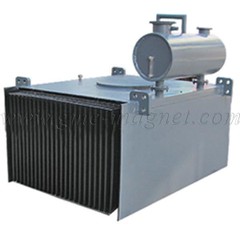
In actual industrial production, the choice of iron remover often depends on the specific material processing conditions. Take the common hanging iron remover as an example. Although this equipment is easy to install and can be directly set up above the conveyor belt, it is found in actual use that when encountering a thicker material layer (more than 5cm) or a faster conveying speed (more than 2.5m/s), its iron removal effect will be greatly reduced, and the efficiency may drop below 60%. What's more troublesome is that workers have to clean it every 2-4 hours, which is inconvenient in continuous production.
The bullet magnet has shown stronger adaptability. when conveying powder in pipelines, even with a 100mm thick material layer or a high-speed conveying of 4m/s, it can still maintain an iron removal rate of more than 98%. The most prominent advantage of this equipment is its flexible installation - it can be installed horizontally or vertically, and is particularly suitable for factories with limited space. It is also much easier to maintain, and stable operation can be guaranteed by cleaning it once every 8 hours.
From the practical application point of view, if it is only dealing with simple working conditions of a thin material layer and low-speed conveying, the hanging iron remover is completely sufficient. However, when encountering complex conditions of thick material and high speed, the advantages of the bullet iron remover are very obvious. It can make the material fully contact with the magnet, the adsorption effect is stable and reliable, and the risk of metal impurities mixing is greatly reduced.
Compared with a magnetic drum
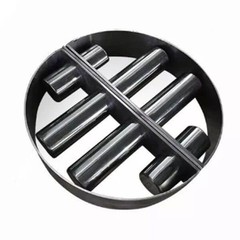
Magnetic drum and bullet magnet are two common iron removal equipment, each with its own applicable scenarios and characteristics. The magnetic drum adopts a rotating magnetic roller design, which is suitable for processing materials with large flow and continuous conveying, but its structure is relatively complex, the maintenance cost is high, and it mainly targets the iron impurities on the surface of the material, and has limited effect on the fine metal particles mixed in the material. In contrast, the bullet iron remover, with its unique internal guide structure and static magnetic core, can handle metal impurities on the entire cross-section of the material and can effectively capture even 0.1mm fine iron powder. Although the processing volume is not as large as the magnetic drum, it performs better in the iron removal operation of medium flow materials, with higher iron removal accuracy and easier maintenance. For working conditions that require high-precision iron removal or iron impurities in the material, the bullet iron remover is undoubtedly a more ideal choice; while in situations that emphasize continuous large-scale processing, the magnetic drum is more advantageous. When choosing, enterprises should consider factors such as actual material characteristics, processing volume requirements, and budget.

Compared with a flat Magnetic separator
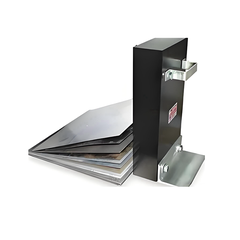
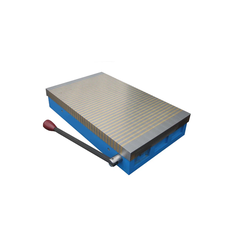
There are significant differences in the actual use effects of the flat plate magnet and the bullet magnet. In terms of iron removal capability, flat iron removers are more suitable for processing iron impurities with a flat surface and uniform distribution, but they are unable to handle metals embedded inside the material or with irregular shapes. In contrast, the bullet iron remover can effectively absorb iron wire, iron filings, and other special-shaped metal impurities with its three-dimensional magnetic field design and unique material flow channel. In terms of actual installation, the flat iron remover not only requires a large space to be reserved, but is also limited to a specific installation angle, while the bullet iron remover can be directly embedded in the pipeline for vertical or horizontal installation, saving more than 60% of the space. Actual measured data from a grain and oil company showed that under the same operating conditions, the metal capture capacity of the bullet remover was three times that of the flat plate type, but the energy consumption was reduced by half. This high efficiency and energy-saving feature makes it more competitive in modern production lines.
Selection and Installation of Bullet Magnetic Separator
Choosing the right bullet magnet and installing it correctly is the key to maximizing its effectiveness. Users need to pay attention to the following points when choosing and installing it:
In terms of model selection, the pipe diameter (100-500mm) should be considered first to ensure that the model matches the actual pipe diameter. The choice of magnet material is critical: NdFeB magnets are suitable for high-demand fine iron removal, but the cost is relatively high; ceramic ferrites are more cost-effective and suitable for general iron removal needs. Special working conditions also require attention to material properties - high-viscosity materials require larger diverter cones, and easily oxidizable materials require sealed models.
When installing, horizontal installation is suitable for most powder and granular materials, while vertical installation is more conducive to liquid and fine powder processing. Regardless of the method, it is necessary to ensure that there is enough straight pipe section (at least 3 times the pipe diameter) upstream to evenly distribute the material. Actual cases show that the correct installation method can improve the iron removal efficiency by more than 25%.
In terms of use and maintenance, the material flow rate should be controlled between 0.5-4m/s. For high-temperature materials, attention should be paid to the temperature resistance limit of the magnet. It is recommended to clean once per shift, and the frequency should be increased for materials with high iron content. Check the magnetic field strength regularly, and replace the magnetic core if the attenuation exceeds 15%. Smart models are becoming popular now. Although they are 20-30% more expensive, they can monitor data in real time and are particularly suitable for production lines with high quality requirements.
In general, from model selection to installation to daily maintenance, each link will affect the final iron removal effect. Make targeted choices based on actual material characteristics and production needs, and establish standardized maintenance records, to maximize the performance of the equipment and extend its service life.
Bullet Magnetic Separator Maintenance
To ensure the long-term stable operation of the bullet magnet, you need to perform regular maintenance :
Regular Cleaning: According to the content of iron impurities, regularly open the maintenance door to clean the adsorbed impurities. It is recommended that you formulate a weekly or monthly regular cleaning plan based on the actual content of iron impurities in the material. For working conditions with high impurity content, the cleaning interval should be appropriately shortened. When cleaning, the equipment maintenance door must be opened to thoroughly remove the adsorbed magnetic impurities to avoid accumulation that affects the iron removal efficiency.
Check the Magnetic Strength: Maintenance personnel should regularly check whether the magnetic core has weakened. Establish a record of magnetic attenuation. Magnetic strength is the key to the iron removal ability of bullet magnets. Once the magnetic force is significantly weakened, the magnetic material should be replaced immediately.
Avoid High-temperature Environments: Temperature control of the operating environment is crucial. The equipment should be avoided from being exposed to high temperature environment for a long time. If necessary, high temperature resistant magnetic materials should be selected and heat dissipation devices should be installed. Under high temperature conditions, the performance of the magnet may be adversely affected, reducing the iron removal efficiency of the equipment.
By implementing the above maintenance measures, you can effectively extend the service life of the equipment and ensure the continuous and stable operation of the iron remover. It is recommended that you establish a complete maintenance record to provide data support for equipment management.
Summarize
As an efficient industrial iron removal equipment, bullet magnet plays a vital role in various industries. With its unique design and excellent performance, it has solved the problems caused by iron impurities in many industries and played a key role in improving production efficiency, ensuring product quality, and equipment safety. With the continuous development of industrial automation and intelligence, the application prospects of bullet iron remover in various industries and fields will be broader in the future, bringing greater value to industrial generation.