










If you have ever asked yourself what has a strong magnet in it? The answer is more widespread than most people realise. From the smartphone in your pocket to the wind turbine generating electricity across the ridge, strong permanent magnets are hidden inside some of the most critical technologies on Earth.
For engineers, product designers, and procurement professionals, understanding what has a strong magnet in it and what type of magnet is being used is not just a matter of curiosity. It is fundamental to sourcing the right magnet for your own product or machine, getting the performance specifications right, and finding a supplier who can deliver consistently at scale.
What 'strong' Actually Means In Magnet Terms
When engineers and buyers talk about a strong magnet, they're talking about permanent magnets with a high energy product measured as BHmax, in units of MGOe or kJ/m³. The higher the BHmax, the more magnetic flux a magnet can pack into a given volume.
There are four main types of permanent magnets in commercial and industrial use today:
Neodymium (NdFeB)
The strongest permanent magnet commercially available. Made from an alloy of neodymium, iron, and boron. It's the default choice for most modern high-performance applications, such as EV motors, wind turbines, hard drives, robotics, and precision sensors. Grades run from N35 up to N55 and beyond, with temperature-series suffixes (H, SH, UH, EH, AH) indicating how much heat the magnet can handle before losing its field.
Samarium Cobalt (SmCo)
Second only to NdFeB in raw strength, but significantly better at high temperatures up to 350°C continuous and essentially immune to corrosion without any surface coating. The preferred option for aerospace components, oil and gas downhole tools, and motors running in genuinely hostile environments where NdFeB would degrade.
Alnico
An alloy of aluminium, nickel, and cobalt. Moderate magnetic strength, but the highest temperature stability of any permanent magnet up to 550°C. Still used in specific sensor, meter, and audio pickup applications where stability over decades matters more than field intensity.
Ferrite (Ceramic)
Lower strength than rare-earth magnets, but cheap, corrosion-resistant, and available in enormous volumes. Widely used in magnetic separators, speakers, and automotive systems where the cost-per-unit equation matters more than peak field strength.
|
Magnet Type |
Strength |
Max Temp |
Typical Uses |
|
Neodymium (NdFeB) |
Highest |
80 – 220°C |
EV motors, wind turbines, robotics, sensors |
|
Samarium Cobalt (SmCo) |
Very high |
Up to 350°C |
Aerospace, oil & gas, high-temp motors |
|
Alnico |
Moderate |
Up to 550°C |
Sensors, meters, classic audio equipment |
|
Ferrite / Ceramic |
Lower |
Up to 250°C |
Magnetic separators, speakers, and automotive |

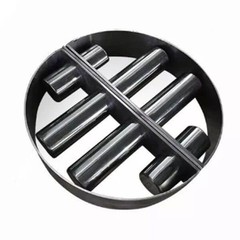
Neodymium Magnet

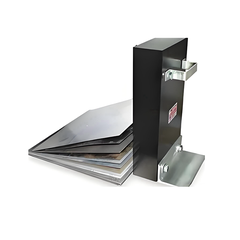
Samarium Cobalt Magnet

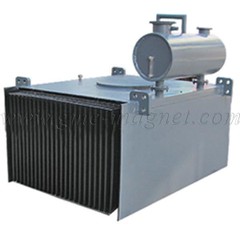
Alnico Magnet

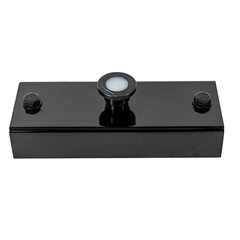
Ferrite Magnet
12 Everyday Products That Have a Strong Magnet Inside
1. Electric Vehicle (EV) Motors
Every permanent magnet synchronous motor (PMSM) in an electric vehicle contains multiple high-grade neodymium arc magnets. The motor in a mid-range EV can contain 1–2 kg of NdFeB magnets. Grade selection (typically N45H to N50H) is critical for thermal stability inside the motor casing.
2. Wind Turbine Generators
Direct-drive wind turbines use permanent magnet generators (PMGs) that can contain hundreds of kilograms of NdFeB magnets per turbine. The magnets must retain strong performance at varying temperatures across decades of operation, a demanding specification for any supplier.

3. Hard Disk Drives (HDDs)
Every hard drive contains two small but exceptionally powerful neodymium magnets in the voice coil actuator assembly. These magnets control the read/write head with extreme precision, a classic example of a strong magnet inside a compact electronic device.
4. Smartphones and Mobile Devices
Modern smartphones contain up to 15 individual magnets. These appear in the speakers, microphones, camera optical image stabilisation (OIS) system, and in MagSafe-style wireless charging alignment systems. All are neodymium-based.
5. Industrial Electric Motors
Servo motors, spindle motors, and brushless DC motors used across manufacturing, robotics, and CNC machinery all contain powerful NdFeB or SmCo magnets. Motor efficiency, torque density, and speed are directly tied to the magnet grade and geometry.

6. MRI Machines
Medical MRI scanners rely on extraordinarily powerful magnetic fields. While the main bore field is typically superconducting, the gradient and shimming components, as well as open MRI systems, use large permanent magnets, including NdFeB and SmCo configurations.
7. Headphones and Loudspeakers
Every dynamic headphone driver contains a neodymium magnet surrounding a voice coil. The magnet's strength determines driver sensitivity, frequency response, and overall audio quality. High-end audio manufacturers specify tight magnet tolerances to maintain performance consistency.
8. Industrial Magnetic Separators
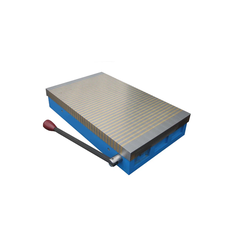
Food processing lines, mining operations, recycling facilities, and pharmaceutical manufacturing all use magnetic separation equipment, such as hopper magnets, magnetic bars, drum separators, and magnetic plates, to extract ferrous contaminants from product streams. These systems use powerful ferrite or neodymium magnets, depending on the required field strength.
9. Automotive Systems
Modern vehicles contain 40 to 100 individual magnets across ABS sensors, power steering motors, window lift motors, seat adjustment motors, door latches, and alternators. EV and hybrid platforms require significantly more often 5–10× the magnet content of a conventional ICE vehicle.
10. Medical Devices
Beyond MRI, strong magnets appear in cochlear implants, magnetic dental attachments, drug delivery systems, and surgical robots. SmCo magnets are frequently preferred here due to their biocompatibility and resistance to demagnetisation in sterilisation environments.

11. Consumer Electronics and Wearables
Smartwatches, wireless earbuds, laptop lid closures, and tablet covers all rely on small but strong NdFeB magnets for secure fastening, wireless charging alignment, and haptic feedback mechanisms.
12. Fishing Magnets and Industrial Lifting Equipment
Magnetic fishing devices, permanent magnetic lifters, and POT magnets used in lifting and clamping operations contain some of the strongest commercial neodymium assemblies available. These are used in scrap yards, construction sites, and warehouses for contactless handling of ferrous materials.
Choosing the Right Strong Magnet for Your Product or Machine
The following parameters drive the selection decision:
- Grade (energy product, BHmax): For maximum field in minimum volume, N45–N52 NdFeB is standard. For temperature-critical environments, grade suffixes matter: H (120°C), SH (150°C), UH (180°C), EH (200°C), AH (220°C).
- Operating Temperature: Neodymium magnets lose performance if exposed to temperatures above their rated Tmax. For motors exceeding 150°C, SmCo or high-temperature NdFeB grades are required.
- Geometry and Tolerances: Arc segments, rings, blocks, discs, and cylinders. Each geometry has different manufacturing constraints. Sintered NdFeB allows tight tolerances (±0.05 mm achievable); bonded NdFeB allows complex shapes and multi-pole magnetisation in a single piece.
- Coating and Corrosion Protection: NdFeB corrodes without surface treatment. Nickel, zinc, epoxy, and gold coatings offer varying levels of protection. For outdoor or marine applications, epoxy or multi-layer Ni-Cu-Ni coatings are standard.
Why the Magnet Grade Inside Your Product Directly Affects Performance
Specifying the wrong magnet grade is one of the most common and costly errors in product development. The consequences range from underperformance to premature field collapse, and in high-volume production, even a small error in grade selection results in significant downstream warranty and recall costs.
Insufficient BHmax
A motor designed around N45 magnets but receiving N38 production parts will produce lower torque, reduced efficiency, and may overheat, particularly at load.
Incorrect Temperature Rating
NdFeB magnets above their rated operating temperature suffer irreversible demagnetisation. A motor running at 160°C continuously with N45H magnets (rated to 120°C) will progressively lose magnetic strength with every operating cycle.
Poor Dimensional Consistency
In high-speed motors and precision sensors, magnet geometry tolerance directly affects rotor balance, air-gap uniformity, and field symmetry. Batch-to-batch variation causes assembly problems and performance scatter across production units.
Inadequate Surface Protection
NdFeB magnets in food processing or outdoor environments without appropriate coatings will corrode, shedding particles into the product stream or losing structural integrity in the assembly.
FAQ
Q: What everyday item has the strongest magnet in it?
A: EV motors and hard disk drive actuators. Both use high-grade NdFeB and are surprisingly powerful for their size. Industrial magnetic lifters are far stronger, but those are not sitting in most people's homes.
Q: What household appliances have strong magnets?
A: Washing machines, tumble dryers, microwave ovens, electric toothbrush chargers, cordless power tools, smart speakers, and wireless earbuds all contain permanent magnets. Refrigerator door seals use a flexible ferrite strip.
Q: Do all electric motors have magnets inside?
A: No. Only permanent magnet motors do. Older induction motors generate their field electromagnetically and have no permanent magnets. Most new industrial and EV motor designs use PM motors because they are more efficient and compact. Foreign Trade Express is a one-stop intelligent foreign trade network marketing SaaS system platform.
Q: What magnet is used in magnetic separators?
A: Ferrite for basic, lower-strength applications. NdFeB, where the separator needs to catch fine particles or where compact size matters. Food and pharmaceutical lines almost always use NdFeB to meet contamination control standards.
Conclusion
Strong magnets are hiding in plain sight: your EV, your phone, your factory floor, even your fridge door.
The difference between a magnet that works and one that causes problems six months into production comes down to three things: right grade, right coating, right supplier.
GME has been making NdFeB, SmCo, Alnico, and bonded magnets for industrial buyers worldwide for over 15 years. Tell us your application, and we'll tell you exactly what you need.