











The Rotary Magnetic Separator represents a significant innovation in the magnetic separation industry. It is designed to overcome the limitations of conventional magnetic separation systems. It processes powdered and granular materials in continuous production lines without the risk of blockages or operational interruptions.
As global industries strive to improve product quality and operational efficiency, the demand for advanced material separation technologies is rapidly increasing. Among these, rotary magnetic separators-especially those modeled as an inline magnetic separator-have emerged as one of the most effective solutions for ferrous particle removal in high-throughput, dust-sensitive environments. Their rotating magnetic elements not only ensure higher efficiency in capturing impurities but also help in reducing downtime and equipment wear. With versatility across sectors-from food production to mining-these separators are now essential in maintaining consistent product standards and reducing waste.
What Is a Rotary Magnetic Separator?
A rotary magnetic separator is a magnetic filtration device equipped with a motor-driven rotating magnetic drum or bars. Unlike stationary magnetic grates or conventional magnetic drum separators, the rotary movement minimizes material build-up and prevents bridging, especially important in powder handling systems. The consistent rotation exposes all particles to a magnetic field, ensuring maximum extraction of ferrous contaminants.
Structural Design and Operational Principle
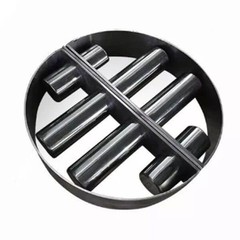
The standard configuration comprises a stainless-steel housing, motor assembly, rotary magnetic bars, and a feed/discharge flange. Magnetic rods are arranged in a drum and rotated by a motor. As materials pass through, iron particles are attracted to the rods. The rotation continuously exposes fresh surfaces for contamination capture, thereby enhancing separation efficiency.
Comparison with Traditional Magnetic Separators
Traditional magnetic separators, such as static grid magnetic separators or basic drum magnetic separators, often experience bridging or clogging due to poor powder material flowability. However, static grid magnetic separators still have advantages in scenarios with coarse separation or low maintenance requirements. In contrast, rotary magnetic separators are well suited to handle sticky or wet materials and are more suitable for fine separation due to their dynamic design. In addition, they also excel in throughput, easy cleaning, and durability. When used as in-line magnetic separators, these magnetic separators can maintain material purity without interrupting production.
Rotary Magnetic Separator Key Industrial Applications
Understanding where rotary magnetic separators excel allows us to evaluate their impact across major industries. Their effectiveness in ensuring product purity and protecting downstream equipment makes them indispensable in a wide array of production environments.
Food and Beverage Industry
In food processing, maintaining product purity is paramount. Magnetic separators for the food industry, especially rotary types, remove iron filings and ferrous particles from powdered ingredients such as flour, sugar, spices, and starch. The non-stop operation ensures product consistency and compliance with hygiene standards such as HACCP and FDA.
They are typically installed at critical control points where powders are conveyed or before packaging stations. Their sanitary design ensures that no residual material remains on the magnetic rods, thus avoiding cross-contamination. As product safety regulations continue to tighten, these separators are increasingly specified in new plant designs, especially as advanced alternatives to older inline magnetic separators.
Chemical and Pharmaceutical Sectors
Chemical powders and pharmaceutical granules demand precise ferrous particle removal. Rotary magnetic separators are widely used in these industries to ensure that even ultra-fine metal particles are eliminated without interrupting production. Their design prevents material hang-up and degradation, which is critical in high-purity applications.
In pharmaceutical processing, for instance, active ingredients and excipients must be free of metallic impurities to pass stringent quality checks. Rotary separators help achieve this by providing uniform magnetic exposure. They also reduce product loss and enhance the performance of subsequent blending and granulation equipment.
Ceramics and Building Materials
In ceramics, iron contamination can cause defects in the final product, such as black spots or color variations. Rotary separators help filter iron from materials like clay, quartz, and feldspar. They also serve in the cement industry by protecting downstream equipment and ensuring the quality of construction materials.
For tile manufacturing, consistent raw material purity is essential to prevent aesthetic defects and mechanical weaknesses. Rotary magnetic separators are often used upstream of mixers and mills to ensure uniform quality. In the cement industry, they also help prevent damage to crushers and ball mills by capturing tramp iron, functioning as highly efficient magnetic drum separators.
Mining and Mineral Processing
In mining, the efficient separation of iron from minerals like feldspar or silica sand enhances downstream processing and product value. Rotary magnetic separators provide continuous cleaning and high magnetic force, suitable for bulk handling operations in mining plants.
They play a key role in the beneficiation of non-metallic ores and are frequently found in processing lines that demand large-scale throughput. The separators not only improve the recovery rate of valuable materials but also protect expensive crushing and grinding equipment from metallic contamination.
Plastics and Recycling Industries
Contaminant-free recycled plastic is essential for maintaining product integrity. Rotary magnetic separators are integrated into recycling lines to remove nails, screws, and wire from shredded plastic. They also find use in compounding and injection molding facilities where resin purity directly impacts output quality.
In plastic extrusion, ferrous impurities can cause defects such as nozzle blockage or uneven flow. By installing rotary separators before melting or extrusion, processors can avoid production stoppages, reduce maintenance costs, and improve finished product quality. This is especially important for food-grade or medical-grade recycled plastics, where ferrous particle removal must be complete.
Benefits of Using a Rotary Magnetic Separator
The rotary magnetic separator has shown multiple advantages in many industrial applications with its unique design and advanced technology. Whether it is improving product purity, optimizing production efficiency, or meeting hygiene and maintenance convenience, it can effectively solve many challenges faced by traditional magnetic separation equipment. The following will analyze the benefits of the rotary magnetic separator from multiple key dimensions to help you understand its value more comprehensively.

Continuous Operation Without Blockage
Thanks to their rotating mechanism, these separators maintain free material flow and prevent arching or bridging. This characteristic makes them suitable for powders prone to caking, such as milk powder or silica flour.
Efficient Removal of Fine Iron Particles
Rotary magnetic separators are designed to capture even sub-micron ferrous particles due to high-intensity neodymium magnets. Their design ensures maximum surface exposure and consistent magnetic contact, improving overall product purity.
Compact Design with High Throughput
Despite their small footprint, these separators can handle large volumes of material. This is particularly advantageous for factories operating in space-constrained environments or retrofitting existing production lines.
Easy Maintenance and Cleaning
Most rotary separators offer easy-access panels and quick-release mechanisms, reducing downtime during cleaning. In industries with strict hygiene requirements, such as pharmaceuticals or the magnetic separator for the food industry, this feature enhances operational efficiency and safety.
Factors to Consider Before Purchasing
Before choosing magnetic separation equipment, you need to have a deep understanding of the core parameters of the product and its matching degree with the actual application scenarios. This is the basis for ensuring long-term operating efficiency and saving maintenance costs. The operating environment and maintenance plan should not be ignored either. Each magnetic separator has its scope of application. Different industrial scenarios have different requirements for equipment durability and ease of operation. Only by accurately matching equipment performance with on-site material characteristics, pollutant properties, production line rhythm, and other factors can efficient and stable iron removal effects be achieved. The following will explain from three key perspectives.
Magnetic Strength and Type of Contaminants
The type of magnet and the strength of the magnetic field directly determine the equipment's ability to capture pollutants of different sizes and concentrations. For weakly magnetic impurities entrained in powder or fine particles, it is recommended to use high magnetic strength neodymium iron boron magnets (rare earth magnets), while ferrite magnets are suitable for larger metal debris. Ensuring that the magnetic strength matches the characteristics of the pollutants will help improve iron removal efficiency, reduce material waste, and reduce back-end processing risks.

Material Characteristics and Flow Rate
The particle shape, moisture content, abrasiveness, and flow characteristics of the material will directly affect the operating efficiency of the separator. It is crucial to select the appropriate screen bar spacing, motor speed, and chute size design to ensure uniform flow. This ensures that the material is evenly distributed and fully separated, especially in industries such as food and chemicals that require high product purity.
Operating Environment and Maintenance Schedule
The working environment of the magnetic separation equipment must also be taken into consideration in advance. In high-humidity, high salt, or highly corrosive environments, stainless steel structures or models with Teflon coatings should be preferred to extend the life of the equipment. For heavy loads or continuous operation, a structure with a long maintenance cycle and easy disassembly and assembly should be selected to facilitate later maintenance and compliance supervision.
Summary
Rotary magnetic separators are indispensable tools in today's industrial landscape. Their unique design allows for continuous operation, even in environments handling fine powders or cohesive materials. From food safety to mineral beneficiation and pharmaceutical purity, their applications span a broad spectrum of sectors.
With high magnetic intensity, self-cleaning capacity, and space-saving form factors, they represent the next generation of magnetic drum separator solutions. For decision-makers in manufacturing, investing in a rotary magnetic separator is not just a means of solving a contamination problem- it's a long-term strategy to enhance product quality, reduce downtime, and stay competitive in a demanding market.