







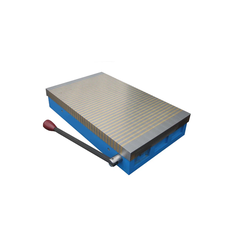


In the field of electronic components and magnetic materials, ferrite, as an important functional material, is widely used in various electronic devices. However, many engineers and purchasers are often confused when faced with the choice between "soft ferrite" and "hard ferrite". Although these two materials have similar names, they have significant differences in performance and applications. Understanding these differences is critical to optimizing electronic device design, improving energy efficiency, and reducing costs. This article will explore the essential differences between soft ferrites and hard ferrites, analyze their respective advantages and disadvantages, and provide practical selection suggestions to help you make wise material selection decisions based on your specific application needs.
The Meaning of Soft Ferrite
Soft magnetic materials with low coercivity, high magnetic permeability, and high resistivity are mainly made by sintering iron oxide (Fe2O2) with metal oxides such as manganese, zinc, and nickel. Its characteristics are that it is easy to magnetize and demagnetize in an alternating magnetic field, has small hysteresis loss, and is suitable for working under high-frequency conditions.

Common Type
1. Manganese Zinc Ferrite
It has high magnetic permeability and low coercivity, and is suitable for low-frequency (kHz range) high magnetic induction intensity occasions, such as power transformers, inductors, and common mode chokes. Its disadvantage is low resistivity and high high-frequency loss.
2. Nickel-Zinc Ferrite
With high resistivity and excellent high-frequency characteristics, Ni-Zn ferrite is suitable for MHz band anti-EMI (electromagnetic interference) devices, RF transformers, and antenna cores. Compared with Mn-Zn materials, Ni-Zn ferrite has lower loss at high frequencies.

3. Mg-Zn Ferrite
Has a certain magnetic permeability and high resistivity, and is suitable for medium and high frequency applications, such as microwave devices and some RF inductors. It has good temperature stability, but its magnetic properties are usually lower than those of Mn-Zn and Ni-Zn.
4. Copper-Zinc Ferrite
Copper-zinc ferrite has adjustable magnetic properties and is suitable for low-loss applications at specific frequencies, such as high-frequency inductors, sensors, and magnetic recording materials. Its cost is lower, but its magnetic permeability is generally not as good as that of Mn-Zn and Ni-Zn materials.
Application of Soft Ferrite
Electronic Transformers and Inductors: As key functional materials, magnetic materials are used to improve the energy conversion efficiency of transformers and inductors while achieving miniaturization and high performance.
Electromagnetic Compatibility Components: By absorbing or suppressing electromagnetic interference, magnetic materials ensure that electronic equipment complies with EMC standards and improves system stability.
Wireless Charging Technology: As an energy transmission medium, magnetic materials optimize electromagnetic coupling efficiency and promote the development of wireless charging applications such as smartphones and electric vehicles.
Communications Equipment: In base stations, antennas, and other equipment, magnetic materials support high-frequency signal processing, enhancing communication quality and data transmission rates.
Automotive Electronic Systems: Used in motors, sensors, and power management modules to help electric vehicles and intelligent driving technologies operate efficiently.

Production of Soft Ferrites
Raw Material Preparation: Soft ferrite production requires high-purity iron oxide (Fe₂O₃) and metal oxides such as manganese and zinc, which must be pre-treated by proportioning, ball milling, or spray drying to ensure uniform composition.
Pre-Sintering: The mixture is pre-sintered at 800°C~1000°C to form a spinel precursor, reduce sintering shrinkage, and then crushed and refined.
Molding: The powder is molded by dry pressing, injection molding, and other methods. The pressure is controlled to avoid cracks. Complex shapes require the assistance of binders.
Sintering: The green body is sintered at 1100°C~1300°C, optimizing the heating, insulation, and cooling processes to ensure densification and crystal structure.
Post-Processing and Testing: Sintered parts are ground, tested for magnetic properties, and microscopically analyzed, and some require annealing or coating.
Packaging and Storage: Finished products are packed in moisture-proof packaging, stored in a dry environment, and batches are recorded to ensure traceability.
What Are the Advantages of Soft Ferrites?
As an important magnetic material, it has a wide range of applications in the fields of electronics and electricity. Its advantages are mainly reflected in the following aspects:
1. High Magnetic Permeability
Soft ferrite has high magnetic permeability, which means it can efficiently concentrate and guide magnetic lines of force in a magnetic field. This property makes it excellent in applications such as transformers, inductors, and electromagnetic shielding, which can effectively enhance the conduction efficiency of the magnetic circuit while reducing energy loss.
2. Low Coercivity
Soft ferrite has a low coercivity, which means that its magnetization direction changes easily with the external magnetic field and has a small remanence. This feature makes it suitable for high-frequency switching circuits and signal processing equipment, because low coercivity can reduce hysteresis losses and improve the response speed and energy efficiency of devices.
3. Frequency Response
Soft ferrite can still maintain stable magnetic properties in a high-frequency environment, with high resistivity and low eddy current loss. Therefore, it is widely used in RF devices, anti-electromagnetic interference components, and high-frequency transformers to ensure the stability and reliability of signal transmission.
4. Cost-Effectiveness
Compared with other magnetic materials, soft ferrite has a lower production cost and is easy to process into various shapes. Its high cost-performance ratio makes it a widely used magnetic material in consumer electronics, power supply equipment, and communication systems, especially suitable for large-scale production needs.
Definition of Hard Ferrite
Hard ferrite is a type of permanent magnetic material with high coercivity and high magnetic energy product. It belongs to magnetic oxide ceramics. Its main components include alkaline earth metals such as barium and strontium, and ferric oxide. Its crystal structure is usually hexagonal magnetoplumbite type, with high magnetocrystalline anisotropy, thus showing strong anti-demagnetization ability.

Types of Hard Ferrites
1. Barium Ferrite
Barium ferrite is the most common hard ferrite, with the chemical formula BaFe₁₂O₁₉, and has high coercivity (150–300 kA/m) and good corrosion resistance. It is sintered using a ceramic process, is low-cost, and is widely used in scenarios such as speakers, small motors, and household magnets, but has relatively low magnetic properties and is easily demagnetized at high temperatures.
2. Strontium Ferrite
Strontium ferrite is an upgraded version of barium ferrite, with higher coercivity (300–400 kA/m), better remanence and temperature stability, and a Curie temperature of up to 470°C. Although the cost is slightly higher, it has gradually become the mainstream permanent magnet material for motors, magnetic separation equipment, and wind power applications due to its better overall performance.
3. Bonding Ferrite

Bonded ferrite is made by mixing ferrite powder with resin/rubber and pressing it, and can be made into complex shapes or flexible magnets. Its magnetic properties are lower than those of sintered ferrite, but it is easy to mass-produce and is often used in products with high shape requirements, such as printer rollers and magnetic patches.


Application of Hard Ferrite
Motors and Generators: Household appliances, automotive parts. Its high coercivity and low cost make it ideal for small and medium-sized motors, as well as small wind turbines and motorcycle magneto.
Electronics and Electrical Appliances: Hard ferrite is often used in the magnetic circuit system of speakers, headphones, and buzzers to provide a stable magnetic field. In addition, it is also used in magnetrons and sensors in electrical appliances such as televisions and radios to meet the needs of low cost and corrosion resistance.
Automotive Industry: Many parts in cars rely on hard ferrites, such as wiper motors, ABS sensors, and fuel pump motors. Its high temperature resistance and anti-aging properties make it suitable for long-term work in harsh environments while reducing manufacturing costs.
Consumer Products: Hard ferrites are commonly found in toys, magnetic buckles (bags, luggage locks), refrigerator magnets, and other daily necessities. Because they are non-toxic, corrosion-resistant, and inexpensive, they are very suitable for the mass consumer market.

Production Steps of Hard Ferrite
Raw Material Preparation: The production of hard ferrite first requires the preparation of suitable raw materials, mainly including iron oxide and strontium carbonate or barium carbonate. These raw materials must be strictly screened and proportioned to ensure that the chemical composition meets the requirements and are fully mixed to ensure the uniformity of subsequent reactions.
Pre-Sintering: The mixed raw materials are pre-sintered at high temperatures, usually between 1000°C and 1300°C, to cause a solid phase reaction in the raw materials to form the main phase of hard ferrite. The pre-sintering process helps to increase the reactivity of the material and reduce the shrinkage during subsequent sintering.
Fine Grinding: The pre-burned bulk material needs to be finely ground, usually by ball milling or sand milling, to crush it into micron-sized particles. The fine grinding process can optimize the particle size distribution, improve the uniformity of the material, and enhance the plasticity during molding.
Molding: The finely ground powder is pressed into shape, usually using magnetic field orientation pressing technology to align the ferrite particles in a specific direction to improve magnetic properties. The molding method can be dry pressing, wet pressing, or isostatic pressing, depending on the product shape and performance requirements.
Sintering: The formed green body is sintered at high temperature (usually 1100°C~1300°C) to form a dense microstructure between particles and improve the mechanical strength and magnetic properties of the material. The heating rate and holding time must be controlled during the sintering process to avoid deformation or cracking.
Processing and Treatment: Sintered hard ferrite may need mechanical processing, such as cutting, grinding, or polishing, to achieve the required dimensional accuracy and surface quality. Some products also need annealing to eliminate internal stress and optimize magnetic properties.
Magnetization and Testing: Hard ferrite needs to be magnetized in a strong magnetic field to obtain stable magnetic properties. Strict testing is then carried out, including magnetic performance testing, dimensional inspection, and appearance inspection to ensure that the product meets standard requirements.

What Are the Advantages of Hard Ferrites?
The advantages of hard ferrite mainly include the following, which make it widely used in many fields.
1. High Coercivity
Hard ferrite has a high coercivity (usually 1000~4000 kA/m), which means it is difficult to demagnetize and is suitable for use in strong reverse magnetic fields or dynamic working environments.
2. Low Cost
The raw materials are mainly iron, strontium, or barium, and do not contain expensive rare earth elements. Therefore, the price is much lower than rare earth permanent magnets such as neodymium iron boron or samarium cobalt, making it suitable for large-scale applications.
3. Good Temperature Stability
The operating temperature range is wide (-40 °C to +250 °C), and the magnetic properties decay less at high temperatures. The temperature coefficient is low (the temperature coefficient of remanence Br is about -0.2%/ °C), which is suitable for environments with large temperature changes.
4. Strong Corrosion Resistance
Ferrite itself is a ceramic material that is resistant to oxidation, moisture, and corrosion, and usually does not require surface coating protection like NdFeB.
Soft Ferrite vs Hard Ferrite
Soft ferrites have low coercivity and are easily magnetized, making them suitable for fast-response devices such as high-frequency transformers.
Hard ferrites have high coercivity and strong remanence and are often used in permanent magnet motors and speakers. The key difference is that soft ferrites have low losses, and hard ferrites have more stable magnetism. The following is a comparison of materials, performance, and applications.
|
Features/Classification |
Soft Ferrite |
Hard Ferrite |
|
Temperature Stability |
General (Mn-Zn is sensitive to temperature) |
Excellent (high temperature resistance up to 450 °C or above) |
|
Typical Materials |
Manganese zinc ferrite (Mn-Zn), nickel zinc ferrite (Ni-Zn) |
Barium ferrite (BaFe₁₂O₁₉), strontium ferrite (SrFe₁₂O₁₉) |
|
Hysteresis Ioop Shape |
Narrow and long shape (easy to magnetize and demagnetize) |
Wide rectangle (high remanence, difficult to demagnetize) |
|
Main Application |
High frequency transformers, inductors, EMI suppression cores, and RF devices |
Permanent magnets (speakers, motors, magnetic separators, magnetic buckles) |
|
Cost |
Medium (depends on ingredients and process) |
Low (cheap raw materials, suitable for large-scale production) |
|
Frequency Range |
High frequency (kHz~MHz, Ni-Zn can reach GHz) |
Not suitable for high frequencies (mainly used for static magnetic fields) |
|
Microstructural Properties |
The magnetic domain wall is easy to move and has low anisotropy |
Magnetic domains are pinned with high anisotropy |
Which One Is More Suitable for You, Soft Ferrite or Hard Ferrite?
You need to first clarify your application scenario, because the characteristics of the two are completely different.
Identify Application Requirements
First, determine the purpose of the material. If you need a high-frequency transformer, inductor, or electromagnetic shielding that requires fast magnetization reversal and low loss, soft ferrite is preferred; if it is used in permanent magnets, motors, speakers, and other occasions that require a strong and stable magnetic field, choose hard ferrite.
Focus on Magnetic Performance Parameters
Soft ferrites should have high magnetic permeability, low coercivity, and low hysteresis loss to ensure efficient energy transmission; hard ferrites need high coercivity, high remanence, and high magnetic energy product to ensure strong and stable magnetism.
Choose the Right Material Type
Soft ferrites commonly use manganese-zinc or nickel-zinc ferrites. Manganese-zinc is suitable for medium and low frequencies (<1 MHz), while nickel-zinc is suitable for high frequencies (>1 MHz). Hard ferrites mainly use barium or strontium ferrites, among which strontium ferrite has better performance but is more expensive.
Consider the Work Environment
Evaluate the temperature, humidity, and mechanical strength requirements. Soft ferrites are sensitive to temperature, so you need to choose a formula with good temperature stability; hard ferrites are highly corrosion-resistant, but they are brittle and need to be protected from severe vibration or shock.
Cost and Supply Factors
Soft ferrite is easy to process and has a low cost, making it suitable for mass-produced electronic components. Hard ferrite may be more expensive due to the rare earth or special process, so performance and budget need to be weighed. The final choice is made based on the specific application scenario, performance requirements, and economic efficiency.
Summarize
Soft ferrites and hard ferrites each have their own unique performance advantages and application areas. When choosing, you need to consider multiple factors such as operating frequency, magnetic field characteristics, environmental conditions, cost budget, etc. With the advancement of material science, both types of ferrite materials are constantly optimizing performance and expanding application boundaries. Understanding their essential differences is the key to correct selection and application. For high-frequency electromagnetic applications, soft ferrites are an irreplaceable choice; for permanent magnet applications that require a constant magnetic field, hard ferrites provide an economical and reliable solution.